



Hire full-stack developers in India, powered by Mira AI.
Find MERN, MEAN and TypeScript engineers in India who ship a feature end to end. Mira AI weighs each application against both halves of your stack.
Mira AI turns a sentence into a job description and a scorecard, then scores every applicant against it.
Build a career with a global team, on Indian payroll.
Trusted by 300+ Global Companies


The full-stack combinations companies hire for most.
Open the pairing your product already runs. A combination outside this list is scored on the same scorecard.
MERN Stack
MongoDB, Express, React, Node
MEAN Stack
MongoDB, Express, Angular, Node
Next.js & TypeScript
Next.js, tRPC, Prisma, typed APIs
Python & React
Django or FastAPI with a React front end
Java & Angular
Spring Boot with Angular, enterprise builds
PHP & Vue
Laravel or Symfony with Vue and Inertia
Any other combination
Rails, Elixir, Go with React, and more. Name both ends and Mira AI builds one scorecard for them.
From a stack in a sentence to a signed contract.
Four steps, and one search rather than two. Posting the role and screening what comes back are free on the Base plan.
-
01 Post
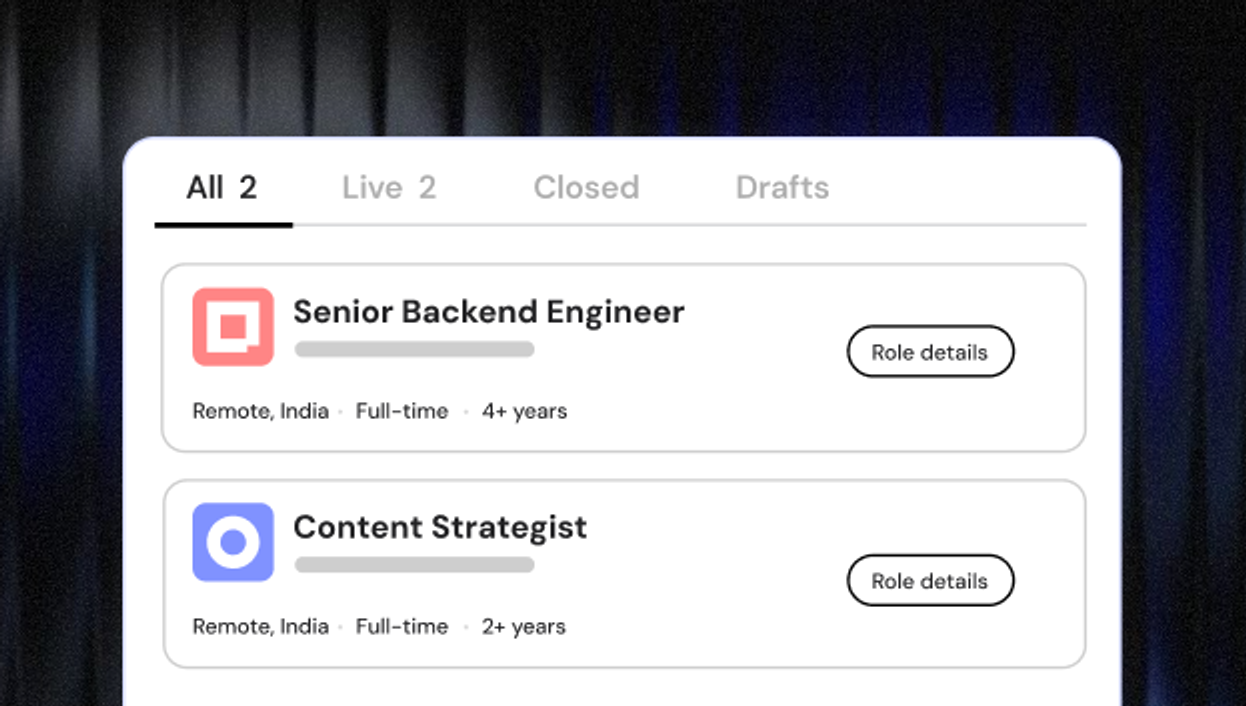
Post a role
- The front end and the back end you run, plus seniority and overlap
- Mira AI turns it into one scorecard that covers both halves
- Full-stack salary band checked against payroll data before it goes live
-
02 Screen
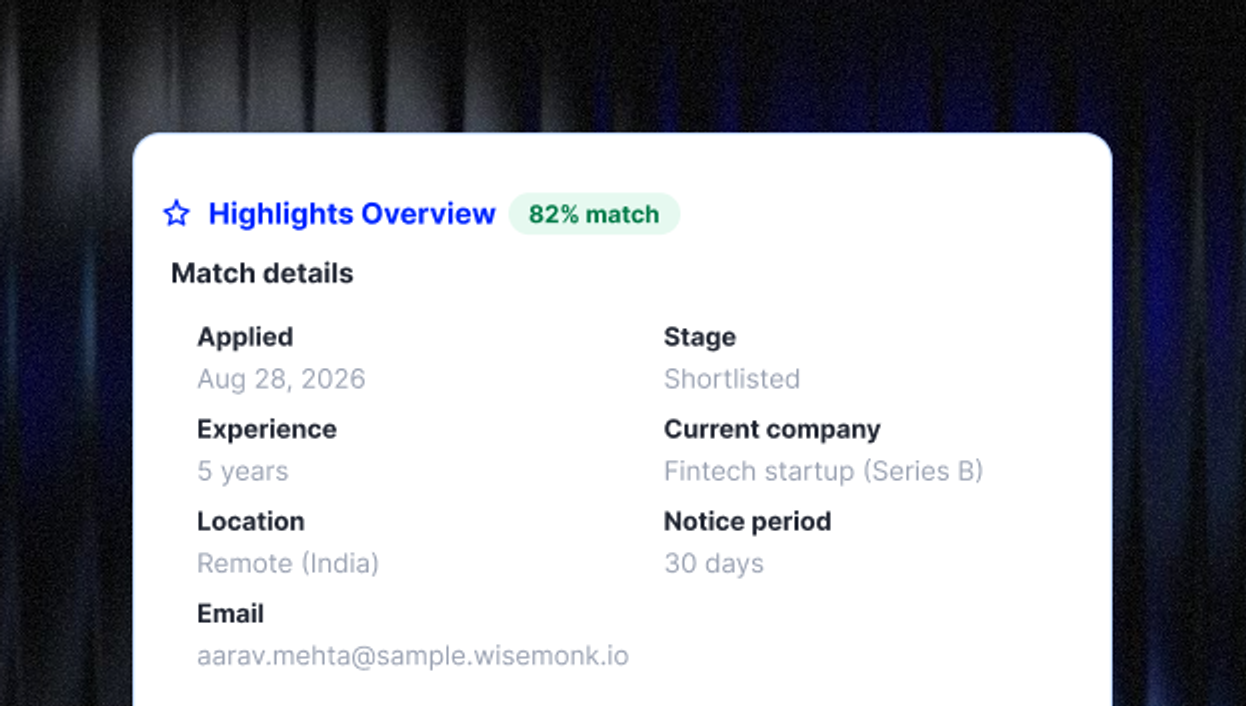
Screen with AI
- Ranked on real coverage of the stack rather than a claim of it
- Each position in the order carries its reasoning
- The weaker half is flagged, so you know what you are trading
-
03 Interview
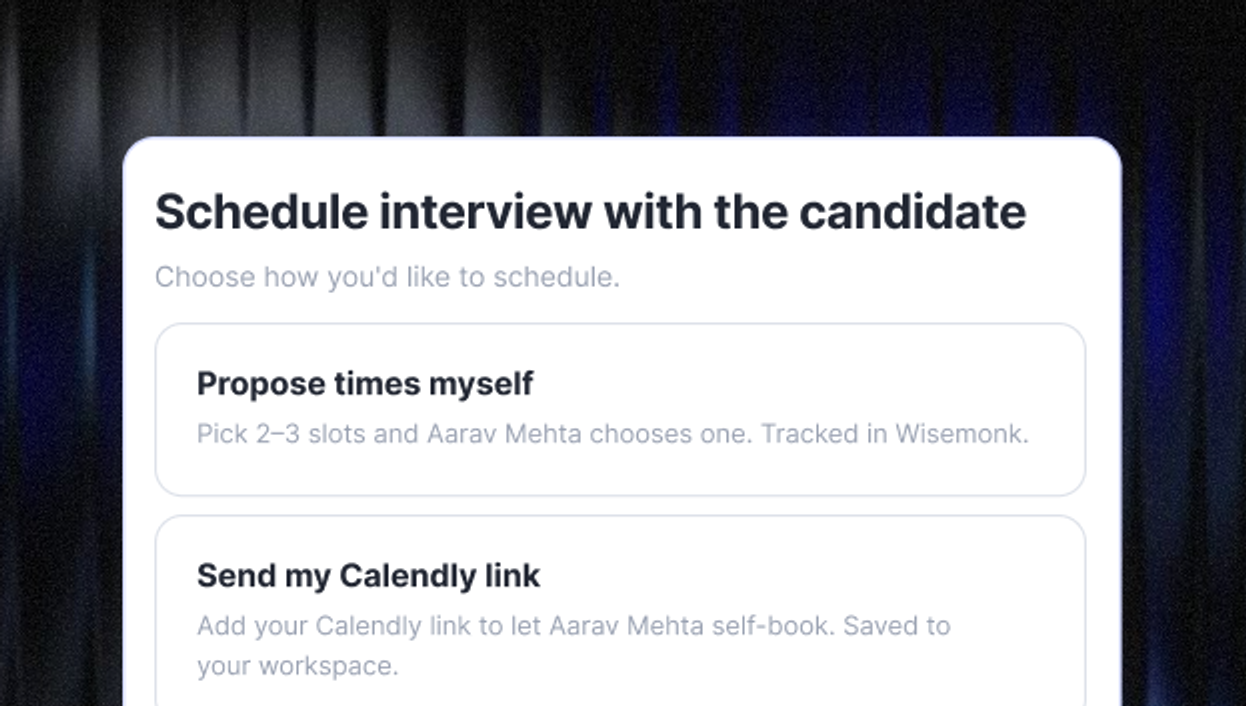
Run interviews
- Repos, live products and deployed work linked on the profile
- Book an interface round and a system design round from one screen
- Notes, recordings and team scores kept against the role
-
04 Decide
Decide together
- Wisemonk becomes the legal employer and signs the contract
- Payroll, provident fund, gratuity and tax withholding handled monthly
- No Indian entity needed, or employ through the one you have
It reads the work, not the CV.
Mira AI reads every Full-Stack application through the work that actually shipped: what the person owned, the constraints they worked inside, and the evidence they can show for both. Every applicant is measured against the same scorecard, in the same way, on the day they apply.
Proof beats a polished CV.
You describe the Full-Stack role and what success looks like in it, and Mira AI ranks each applicant with the reasoning written out in sentences you can read and disagree with. The people who rise are the ones whose work backs up the claim. A first read, never the final word.
- Weighs work someone actually shipped above the tools listed on a CV
- Every ranking carries the why, including the near-misses
- Reads for judgement and communication alongside technical depth
- Reorders the shortlist as new Full-Stack applicants arrive
Start from the product you are shipping.
Full-stack roles grouped by the job in front of you rather than by job title. A pairing not listed here can still be opened and scored the same way.
You are building an MVP with a small team
One engineer carrying a feature from screen to schema ships faster than two coordinating across a hand-off. Range beats depth at this stage.
- MERN Developers
- Next.js Developers
- MEAN Developers
- JavaScript Developers
- TypeScript Developers
You are adding features to a product that already exists
Match both halves of your stack, not only the half you feel short on this quarter. Mismatched pairings are where the onboarding time goes.
- React and Node Developers
- Django and React Developers
- Laravel and Vue Developers
- Spring and Angular Developers
- Rails Developers
You are keeping the whole team in one language
One language across the stack cuts context switching and widens who on the team can review what. JavaScript and TypeScript pools in India are deep on both ends.
- MERN Developers
- MEAN Developers
- Node.js Developers
- TypeScript Developers
- Next.js Developers
You need the same person to own deployment
On a small team the full-stack hire usually inherits CI, hosting and monitoring as well. Write it into the brief rather than hoping for it.
- Full-Stack Engineers
- AWS Developers
- Docker Developers
- Serverless Developers
Range comes standard. Depth is the variable.
Every full-stack CV claims both ends. Writing the half that matters into the scorecard is what separates them.
Junior
0 to 2 years
Builds features on both sides from a clear specification. Real depth on neither end yet, and needs review on data modelling and state.
Mid-level
3 to 5 years
Ships a whole feature alone, from schema through to screen. The largest full-stack band in India and the one that fills fastest.
Senior
6 to 9 years
Owns a product surface end to end and makes the architecture calls on both sides. Notice is usually 60 to 90 days.
Lead / Principal
10 years and up
Sets technical direction for a product team and decides where a specialist is needed instead of a generalist. A smaller pool.
One full-stack hire, or two specialists.
This is the decision most teams get wrong, and it costs more than picking the wrong candidate. A rough guide by situation.
| Situation | One full-stack engineer | Two specialists |
|---|---|---|
| Early product, under five engineers | Usually right. One person carries a feature with no hand-off | Overkill, and the coordination costs more than the depth buys |
| Heavy interface work or a design system | Workable, but the interface ends up the weaker half | Better. A dedicated front-end engineer repays itself quickly |
| High traffic or complicated data | Risky. Back-end depth is what protects you here | Better. Hire the back-end specialist first |
| Budget for one hire only | The safer choice, because the gaps it leaves are smaller | Not an option at this budget |
| An existing team with a clear gap | Only if the gap genuinely spans both ends | Better. Hire for the actual gap rather than for flexibility |
| Hiring pool in India | Very deep, and priced below two specialists | Deeper per role, but it means running two searches |
What to name in a full-stack brief.
Pick the ones that matter for your product and every applicant is weighed against them the moment they apply.
Where the depth sits
Almost every full-stack engineer leans one way. Say which half your product needs more of and screen for that, rather than screening for balance.
Contracts between the halves
The point of one engineer owning both ends is that the API fits the interface. Look for someone who has designed both sides of a contract together.
Data modelling
Schema design and indexing. An interface can be rebuilt in a sprint, whereas a poor data model tends to outlive the team that wrote it.
State and rendering
Where state lives, what renders on the server and what ships to the browser. Full-stack engineers make this call more often than anyone else on the team.
Deployment and environments
Continuous integration, environment config, migrations and rollbacks. On a small team the full-stack hire usually inherits all of it.
Knowing when to ask
The risk of one person owning everything is that nothing gets reviewed. The good ones ask for help on the half they are weaker on.
Start with the tool. Add reach. Add people.
Every plan includes Mira. What changes is how far your roles travel and how much of the work you hand over.
Base
For a team running its own hiring and tired of doing it in spreadsheets.
- Full pipeline and candidate tracking
- Your own hosted careers page
- Mira in Slack, with monthly credits
- Unlimited open roles
Boost
For teams whose problem is candidate flow, not candidate tracking.
- Everything in Base
- Your roles listed on the Wisemonk talent community
- Mira on the strongest models available
- Uncapped screening and scheduling
- Salary benchmarks from live India payroll data
Bespoke
Some roles need a person on the phone. Our recruiters take over sourcing and interview coordination, working the pipeline Mira has already built — so you're paying for judgment and conversations, not for admin.
Contingent fee of 10%, 12.5% or 15% of first-year salary, set by role seniority. Under a talent agreement, billed only on a joined hire.
Frequently asked questions
What founders and engineering leads ask before opening a first full-stack role in India.
How do I hire full-stack developers in India?
Open the role with both halves of your stack named, plus the seniority and the timezone overlap you want. Mira AI drafts the job description and one scorecard covering the front end and the back end, the role reaches our candidate community, and each application is scored as it arrives. You interview the ranked shortlist, and Wisemonk employs whoever you pick, so an Indian entity is not required.
Should I hire a full-stack developer or a front-end and a back-end developer?
It depends on the size of the team and the shape of the work. Below roughly five engineers, one full-stack hire almost always wins, because a feature moves without a hand-off. Once the interface is complex enough to need a design system, or the data is complex enough to need real back-end depth, two specialists start to pay for themselves. Budget matters too: one full-stack engineer in India costs meaningfully less than two specialists, and the gaps it leaves are usually survivable early on.
How much does it cost to hire a full-stack developer in India?
Seniority and city drive the number more than the stack does. A mid-level MERN engineer costs less than a senior one who owns a product surface and its deployment, and Bengaluru prices above Pune, Hyderabad and the smaller hubs. Full-stack engineers usually sit slightly above a single specialist of the same seniority and well below two. When you open a role we check your band against our payroll data and say whether it will fill before it goes live.
What is the difference between MERN and MEAN?
The front-end framework is the only real difference: MERN uses React, MEAN uses Angular. Both run MongoDB, Express and Node underneath. In India the MERN pool is larger and skews younger, while MEAN talent tends to sit in enterprise and services firms and often comes with more structured project experience. Hire for the one your codebase already uses, because the back-end overlap does not make the front-end halves interchangeable.
Which full-stack combination is easiest to hire for in India?
JavaScript and TypeScript pairings are the deepest by a distance, which makes MERN, MEAN and Next.js the quickest to fill. Python with React is next and draws from a strong Django pool. Java with Angular is deep but concentrated in enterprise and services firms, so expect longer notice periods. PHP with Vue is cheap and quick to staff. Go or Elixir paired with anything is a genuinely narrow search.
Do full-stack developers in India work US or UK hours?
Overlap with the UK and Europe is routine and easy to staff. A full US shift comes from a smaller group, so name the overlap when the role opens and only candidates who accept it will apply. Full-stack hires on small teams tend to need more live overlap than a pure back-end engineer, because they are usually closer to product decisions.
How do you check whether someone is genuinely full-stack?
Look for work where the same person owned both ends of a feature, rather than a CV that lists technologies from both halves. Mira AI scores each application on the front end and the back end separately and then together, and says which side is stronger. In interviews the fastest test is asking someone to explain a decision at the boundary: why an endpoint returns what it does, or where a piece of state ended up living.
Do I need an entity in India to employ a full-stack developer?
No. Wisemonk acts as the legal employer, issues the employment contract and takes care of payroll, provident fund, gratuity, ESI and income tax withholding. The engineer works to your direction. If your company already has an Indian entity, the hire can sit on that instead, and you decide which at offer stage rather than upfront.
What does senior mean for a full-stack engineer in India?
Around six to nine years, owning a product surface rather than a queue of tickets: making the architecture calls on both sides, deciding what belongs on the server, and reviewing the people around them. Titles move quickly here, so put the surface you want owned into the scorecard instead of trusting the title.
Can one full-stack developer cover deployment as well?
On a small team they usually end up doing it, and many full-stack engineers in India are comfortable with CI, containers and a cloud provider. The thing to avoid is assuming it. If deployment is part of the role, name it in the scorecard so it is screened for and priced in. If the infrastructure has grown past one person maintaining it on the side, that is the point to hire a DevOps engineer rather than stretch the full-stack hire further.
Find your next full-stack engineer in India.
Name both ends of your stack and the product you are shipping. Mira AI builds one scorecard, ranks everyone who applies, and Wisemonk handles the employment.
