



Hire data engineers in India, powered by Mira AI.
Find engineers who have built pipelines that still run without anyone watching them. Mira AI scores each application against the stack your data runs on.
Mira AI turns a sentence into a job description and a scorecard, then scores every applicant against it.
Build a career with a global team, on Indian payroll.
Trusted by 300+ Global Companies


The data stacks companies hire for most.
Open the one your data already sits in. A tool not shown here is measured against the same scorecard.
Spark & Databricks
PySpark, Delta Lake, cluster tuning
Warehouses
Snowflake, BigQuery, Redshift
Orchestration
Airflow, Dagster, Prefect
Analytics Engineering
dbt, SQL modelling, data tests
Streaming & CDC
Kafka, Flink, Debezium
Cloud Data Platforms
Azure Data Factory, AWS Glue, Dataflow
Any other data role
Informatica, Talend, Hadoop, Iceberg and more. Name the stack and Mira AI scores for it.
From scattered data to pipelines you can trust.
Four steps, from naming the sources to a signed contract. Opening a role and screening what lands are free on the Base plan.
-
01 Post
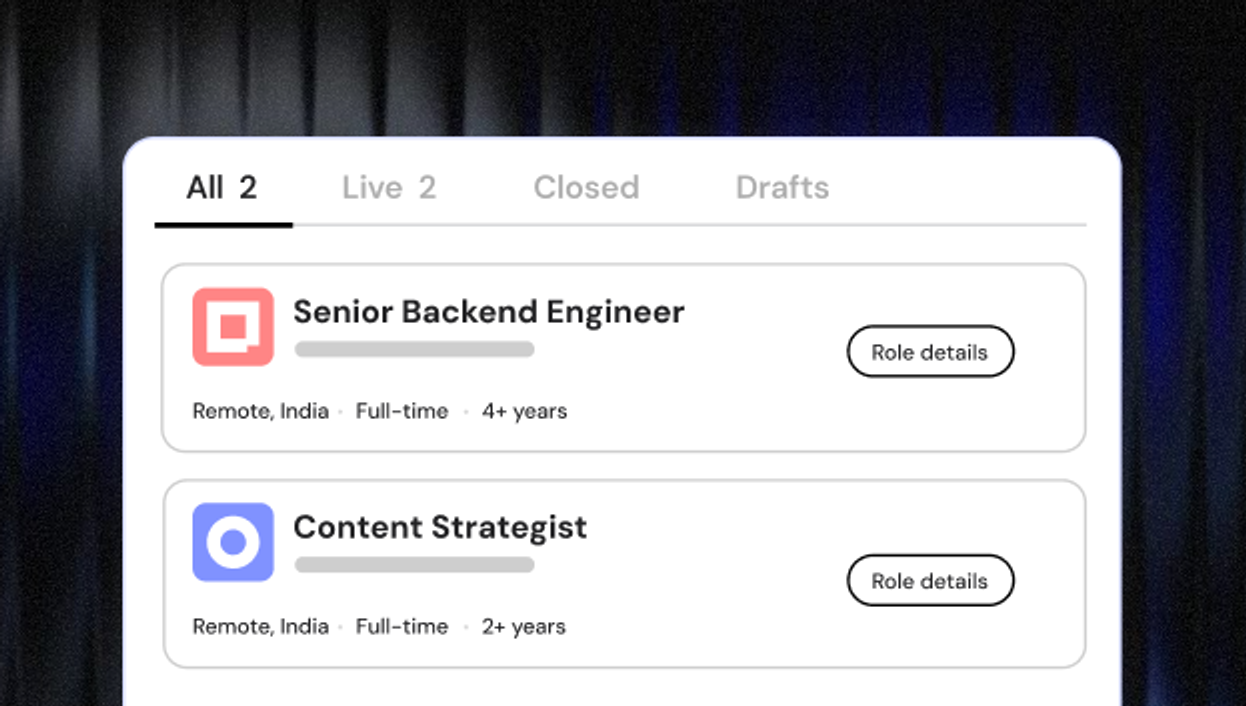
Post a role
- Where the data comes from, where it has to land, and how fresh it must be
- Mira AI turns it into a scorecard around your stack rather than a list of tools
- Data engineering salary band checked against payroll data before the role goes live
-
02 Screen
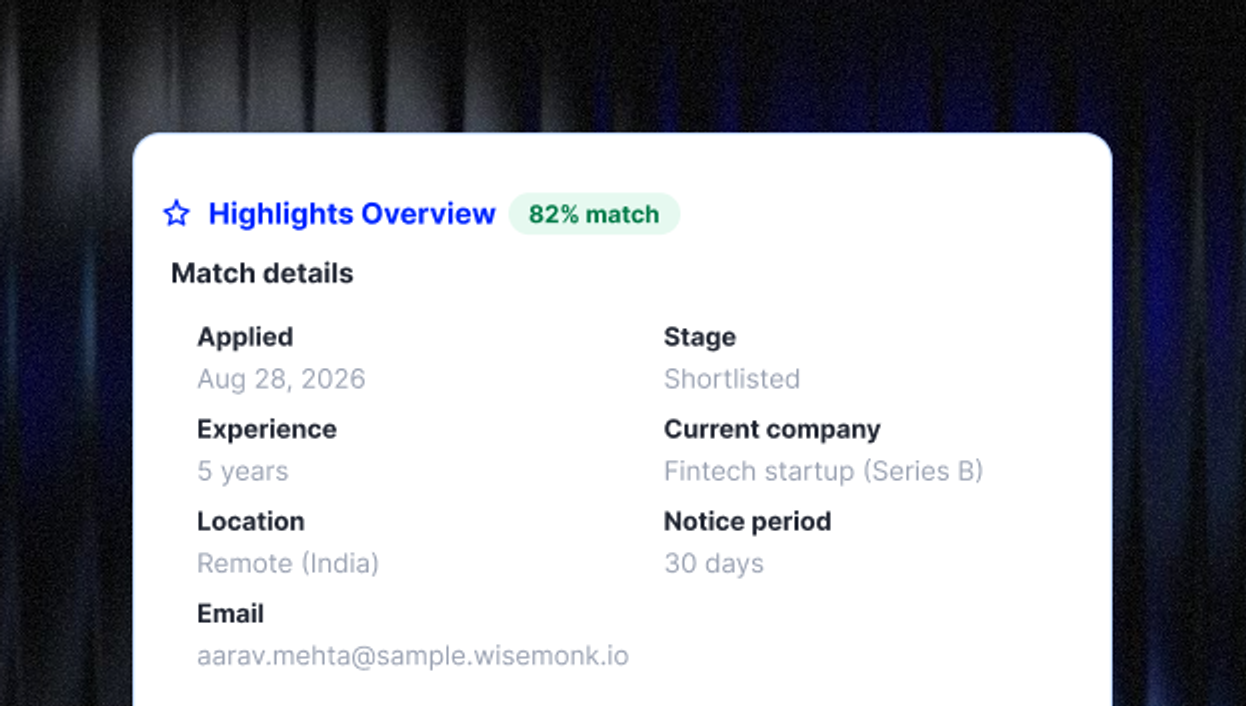
Screen with AI
- Ranked on systems still running rather than proof-of-concept projects
- Each position in the order carries its reasoning
- Referrals and agency submissions scored on the same scale
-
03 Interview
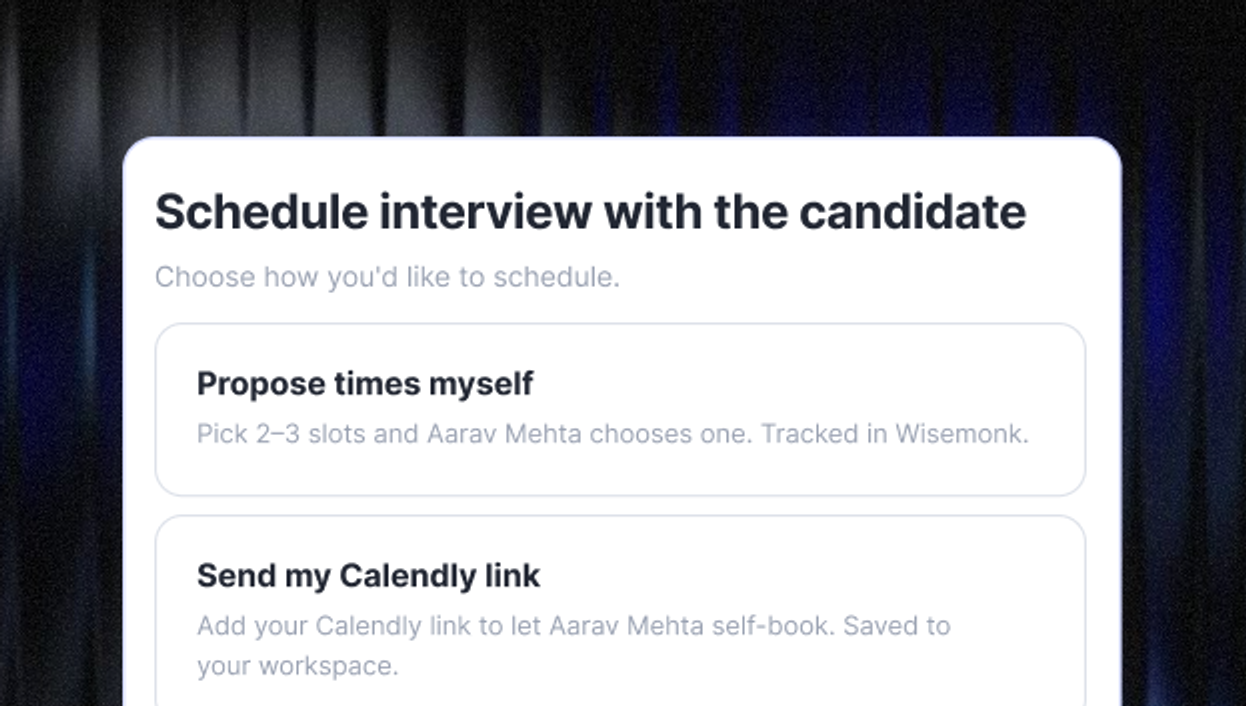
Run interviews
- Repos, architecture write-ups and shipped platforms linked on the profile
- Book a data modelling round or a debugging exercise in a click
- Notes, recordings and team scores kept against the role
-
04 Decide
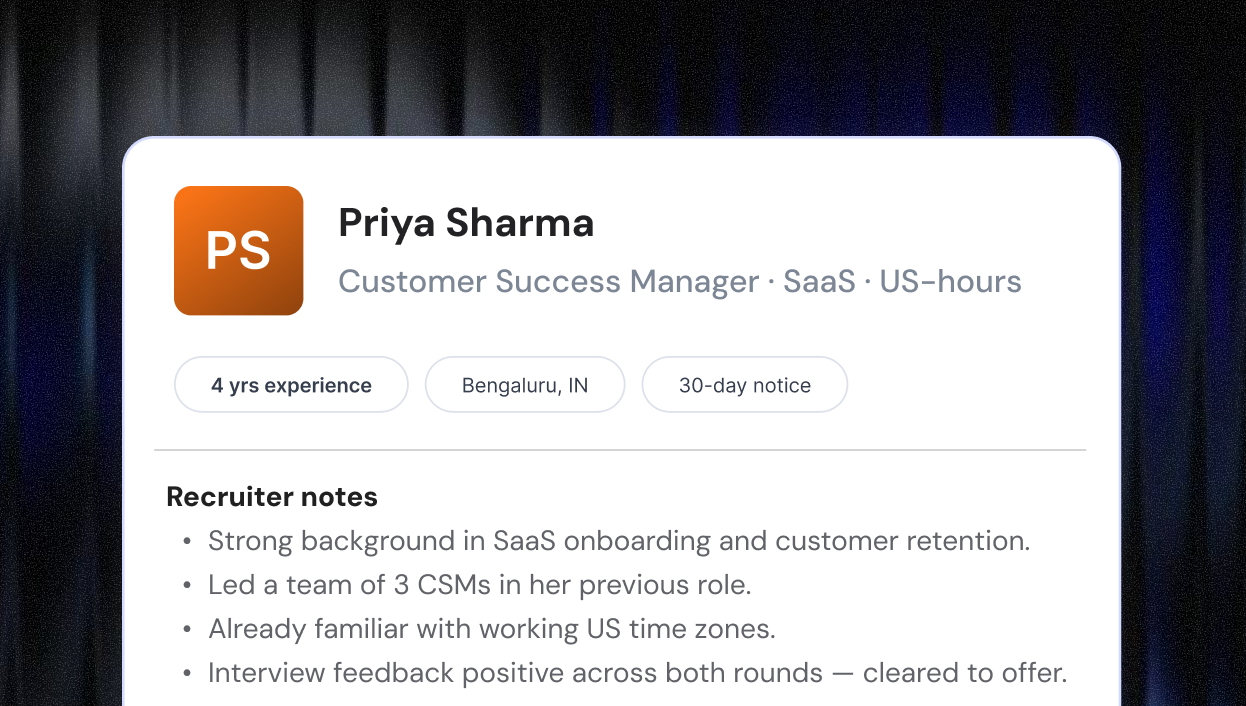
Decide together
- Wisemonk stands as the legal employer on the contract
- Payroll, provident fund, gratuity and tax withholding are ours to run monthly
- No Indian entity is needed, though yours can be used if you have one
It reads the work, not the CV.
Mira AI reads every Data Engineering application through the work that actually shipped: what the person owned, the constraints they worked inside, and the evidence they can show for both. Every applicant is measured against the same scorecard, in the same way, on the day they apply.
Proof beats a polished CV.
You describe the Data Engineering role and what success looks like in it, and Mira AI ranks each applicant with the reasoning written out in sentences you can read and disagree with. The people who rise are the ones whose work backs up the claim. A first read, never the final word.
- Weighs work someone actually shipped above the tools listed on a CV
- Every ranking carries the why, including the near-misses
- Reads for judgement and communication alongside technical depth
- Reorders the shortlist as new Data Engineering applicants arrive
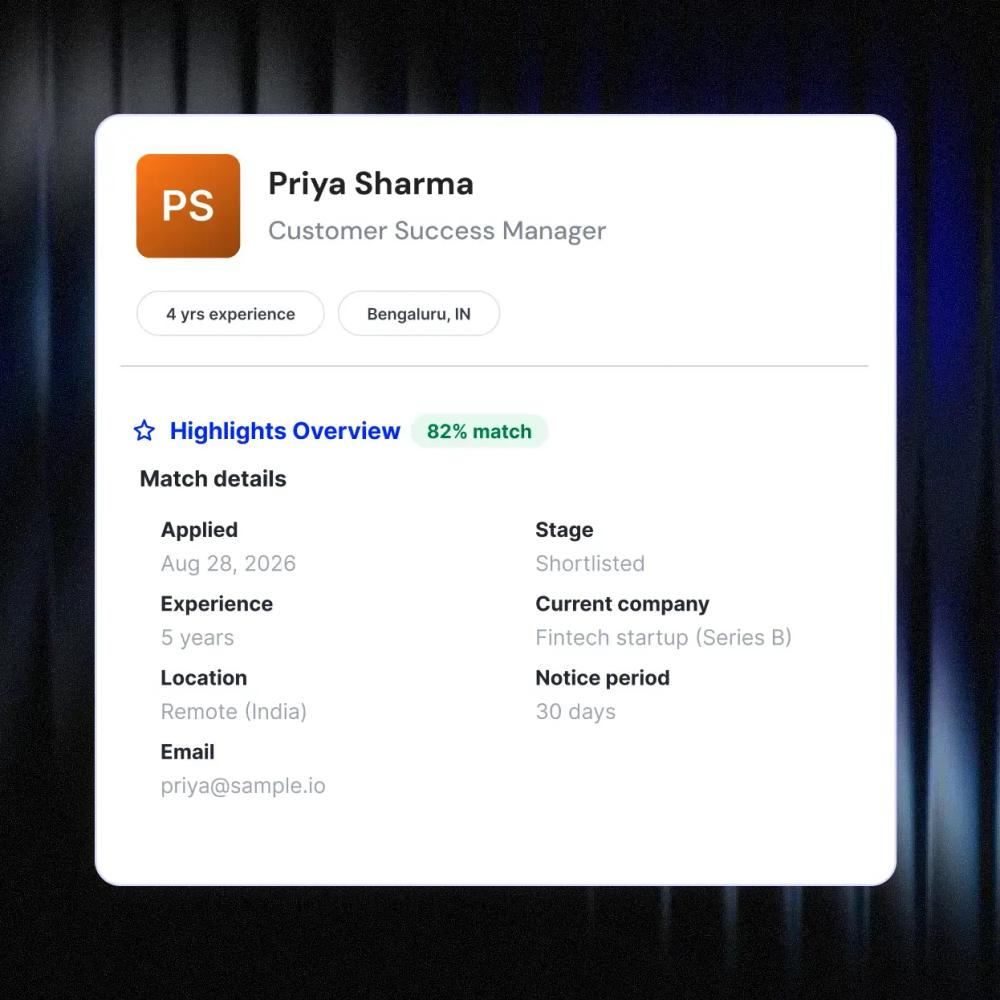
Start from where your data has to go.
Data roles grouped by the problem in front of you rather than by job title. A stack not listed here can still be opened and scored the same way.
You are pulling data into one place for the first time
Ingestion and modelling matter far more than scale at this point. A warehouse that stays simple early is worth more than a clever one you cannot explain.
- Data Engineers
- ETL Developers
- Analytics Engineers
- SQL Developers
- Snowflake Developers
You are processing more data than one machine can hold
This is where Spark and the lakehouse tools start justifying their cost. Hire for genuine distributed experience rather than for the logo on a CV.
- Spark Developers
- Databricks Developers
- Big Data Engineers
- PySpark Developers
- Hadoop Developers
You need data to move in seconds rather than overnight
Streaming is a separate discipline with its own failure modes. Delivering each event exactly once is considerably harder than it sounds in a diagram.
- Kafka Developers
- Streaming Data Engineers
- Flink Developers
- Change Data Capture Engineers
Your dashboards disagree with each other
This is a modelling and testing problem rather than a tooling one. Analytics engineering exists precisely to settle which number is the real one.
- Analytics Engineers
- dbt Developers
- SQL Developers
- Data Modellers
Scale changes what the job actually is.
Naming the systems you want owned filters far harder than naming a warehouse or an orchestrator in the advert.
Junior
0 to 2 years
Writes queries and maintains pipelines someone else designed. Needs review on modelling, idempotency and what happens when a job runs twice.
Mid-level
3 to 5 years
Owns pipelines end to end, from source system through to warehouse table, along with the tests around them. The deepest band in India.
Senior
6 to 9 years
Owns the data model and the platform decisions, sets the orchestration patterns, and keeps an eye on the cloud bill. Notice is usually 60 to 90 days.
Lead / Principal
10 years and up
Owns the data platform, its governance, and the build against buy calls across several teams. A smaller pool, mostly from product companies.
Snowflake, Databricks or BigQuery.
The platform decides what the role involves day to day, and how deep the pool of people who have done it really is.
| Platform | Hiring pool in India | What the role involves | Best fit |
|---|---|---|---|
| Snowflake | Growing fast, drawn from SQL and warehousing backgrounds | SQL-heavy modelling, warehouse design and cost control | Analytics-led teams who want the warehouse to stay simple |
| Databricks | Deep, particularly anywhere Spark already runs | PySpark, Delta Lake, notebooks and cluster tuning | Large volumes, and machine learning sitting beside analytics |
| BigQuery | Mid-sized, concentrated in Google-first teams | SQL, partitioning, and watching query spend closely | Teams already on Google Cloud with bursty query loads |
| Redshift | Steady, though no longer growing | SQL and cluster maintenance, plus a good deal of migration work | Existing AWS estates rather than anything being built new |
| Postgres / MySQL | The deepest SQL pool of all by a wide margin | Straight SQL and modest extract and load work | Early teams whose data still fits inside one database |
| Open lakehouse (Iceberg) | Narrow and weighted heavily to senior people | Table formats, catalogues and choosing the query engine | Teams avoiding lock-in at genuine scale |
What a data engineering brief should name.
Choose the ones that matter for your platform and every applicant is measured against them as soon as they apply.
Idempotency
What happens when a job runs twice. Pipelines that cannot be safely rerun turn every small failure into a manual repair job at an unsociable hour.
Data modelling
Grain, keys and slowly changing dimensions. Warehouses rarely collapse under load; they collapse under a model nobody can reason about any more.
Testing the data, not just the code
Row counts, nulls, freshness and referential checks. Broken data is far quieter than broken code, and it travels much further before anyone notices.
Backfills
Reprocessing history without taking production down with it. This is the task that separates people who have run a platform from people who have only built one.
Cost awareness
Cloud data bills grow quietly. An engineer who has had to halve one thinks differently about partitioning, file sizes and cluster configuration.
Handover to analysts
The warehouse exists for the people querying it. Documentation and sensible table names are part of the job rather than a nice afterthought.
Start with the tool. Add reach. Add people.
Every plan includes Mira. What changes is how far your roles travel and how much of the work you hand over.
Base
For a team running its own hiring and tired of doing it in spreadsheets.
- Full pipeline and candidate tracking
- Your own hosted careers page
- Mira in Slack, with monthly credits
- Unlimited open roles
Boost
For teams whose problem is candidate flow, not candidate tracking.
- Everything in Base
- Your roles listed on the Wisemonk talent community
- Mira on the strongest models available
- Uncapped screening and scheduling
- Salary benchmarks from live India payroll data
Bespoke
Some roles need a person on the phone. Our recruiters take over sourcing and interview coordination, working the pipeline Mira has already built — so you're paying for judgment and conversations, not for admin.
Contingent fee of 10%, 12.5% or 15% of first-year salary, set by role seniority. Under a talent agreement, billed only on a joined hire.
Frequently asked questions
What data and engineering leads ask before opening a first data engineering role in India.
How do I hire data engineers in India?
Open the role around the movement of data rather than the tools: where it comes from, where it has to land, how fresh it needs to be, and who breaks if it stops. Mira AI drafts the job description and a scorecard built on that, the role reaches our candidate community, and each application is scored as it arrives. You interview in Mira AI's order and Wisemonk employs whoever you pick.
What is the difference between a data engineer and an analytics engineer?
A data engineer moves data and keeps it moving: ingestion, orchestration, streaming, storage and the infrastructure beneath. An analytics engineer works inside the warehouse once the data has landed, turning raw tables into models the business can query with confidence, usually in dbt and SQL. Teams with messy sources need the engineer first. Teams whose dashboards disagree with each other usually need the analytics engineer.
How much does it cost to hire a data engineer in India?
Data engineering prices close to strong back-end engineering and above analytics roles. Streaming and platform specialists sit at the top, warehouse and SQL-focused engineers at the more affordable end, and Databricks or Spark experience carries a premium because those pools are smaller than the CVs imply. When you open a role we check your band against our payroll data and say whether it will fill before the role goes live.
Do I need a data engineer or a back-end engineer?
A back-end engineer builds the systems that create data; a data engineer builds the systems that collect, reshape and serve it for analysis. The two overlap in SQL and Python and diverge almost everywhere else, particularly around modelling, backfills and orchestration. If your problem is that the product needs a new service, that is back-end work. If the problem is that nobody can answer a question about the product, that is data engineering.
Should I hire for Snowflake, Databricks or BigQuery specifically?
Name the platform in the brief, because the day-to-day work genuinely differs, but treat it as a preference rather than a hard filter below senior level. A strong SQL and Python engineer moves between warehouses in a few weeks. Where the platform really matters is Spark and Databricks, since distributed processing is a skill in itself and not something picked up over a weekend.
Do data engineers in India work US or UK hours?
Overlap with the UK and Europe is easy to arrange. A full US shift narrows the field somewhat, though data engineering tolerates offset hours better than most roles, because the pipelines run overnight anyway and much of the work is asynchronous. Where overlap matters is incident response, so say plainly whether the role carries any on-call expectation.
How do you check whether someone has run pipelines in production?
Ask about a failure. Anyone who has genuinely operated a pipeline has a story about a silent data quality problem, a backfill that went wrong, or a bill that arrived larger than expected, and they can tell you what they changed afterwards. Mira AI weighs systems still running above migrations and proofs of concept, and explains each ranking so you can see who has operated rather than only built.
Do I need an entity in India to employ a data engineer?
No. Wisemonk signs as the legal employer and carries payroll, provident fund, gratuity, ESI and income tax withholding on your behalf. The engineer takes direction from your team throughout. If your company already runs an Indian entity, the hire can sit on it instead, and you decide that at the offer rather than upfront.
What does senior mean for a data engineer in India?
Around six to nine years, owning the model and the platform rather than a set of jobs: how the warehouse is structured, which orchestration patterns the team follows, what gets tested, and what the whole thing costs to run each month. Service-company titles move quickly here, so put the ownership you need into the scorecard instead of trusting the label.
When should I hire a data engineer instead of using a tool like Fivetran?
Managed ingestion tools are genuinely good and worth using for standard sources. They stop helping when your sources are unusual, when the volume makes per-row pricing painful, or when the real work has moved from getting data in to modelling it properly once it is there. Most teams should start with the tool and hire the engineer when the bill or the modelling backlog makes the case for itself.
Find your next data engineer in India.
Tell us where the data comes from and what depends on it. Mira AI writes the scorecard, orders every applicant against it, and Wisemonk handles the employment.
