



Hire cybersecurity engineers in India, powered by Mira AI.
Find penetration testers, AppSec engineers and compliance specialists in India. Mira AI scores each application against the risk you are actually carrying.
Mira AI turns a sentence into a job description and a scorecard, then scores every applicant against it.
Build a career with a global team, on Indian payroll.
Trusted by 300+ Global Companies


The security work companies hire for most.
Open whichever matches the risk in front of you. Specialisms beyond this list are judged on the same scorecard.
Application Security
Code review, threat modelling, SAST and DAST
Penetration Testing
Web, API, network and red team exercises
Security Operations
SIEM, detection engineering, triage, response
Cloud Security
IAM, posture management, workload protection
DevSecOps
Pipeline scanning, secrets, supply chain
GRC & Compliance
ISO 27001, SOC 2, audits, policy
Any other security role
Identity, mobile, operational technology, privacy and more. Describe the risk and Mira AI scores for it.
From an audit you are dreading to one you pass.
Four steps, from naming the risk to a signed contract. Listing the role and reviewing who applies cost nothing on the Base plan.
-
01 Post
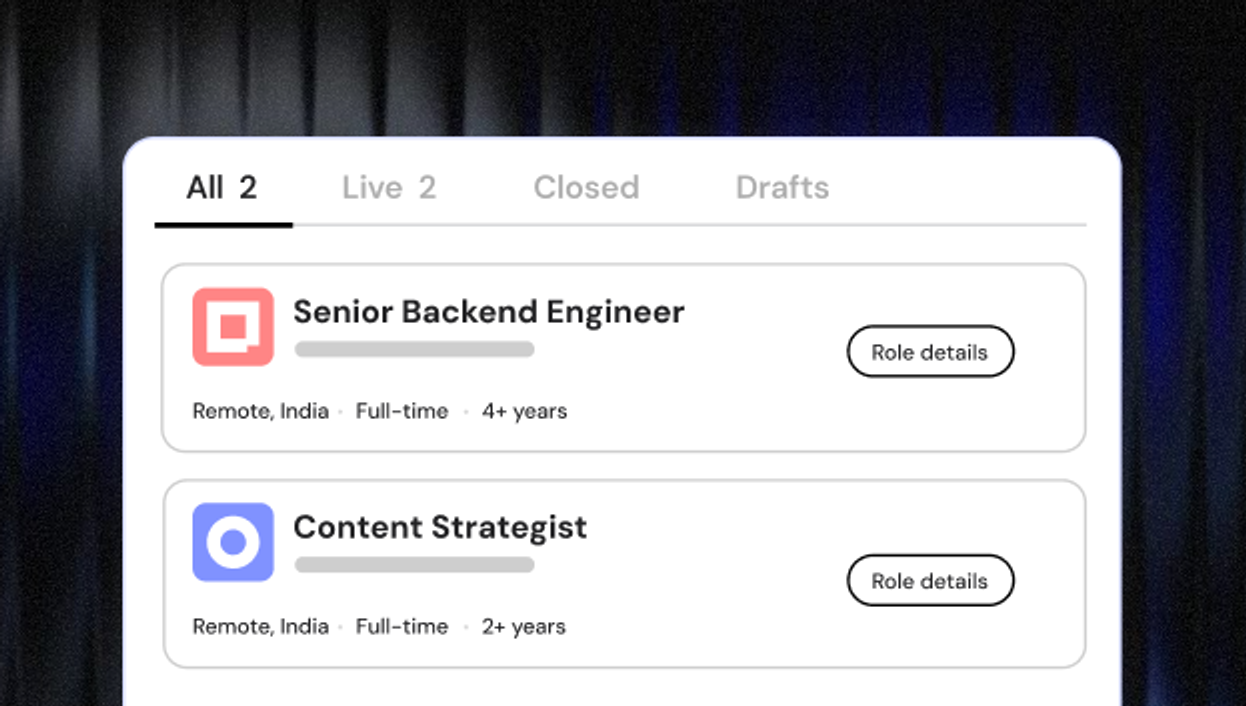
Post a role
- What your systems hold, which framework you answer to, and whether this is build or defend
- Mira AI turns it into a scorecard around your risk rather than a certification list
- Security salary band checked against payroll data before the role goes live
-
02 Screen
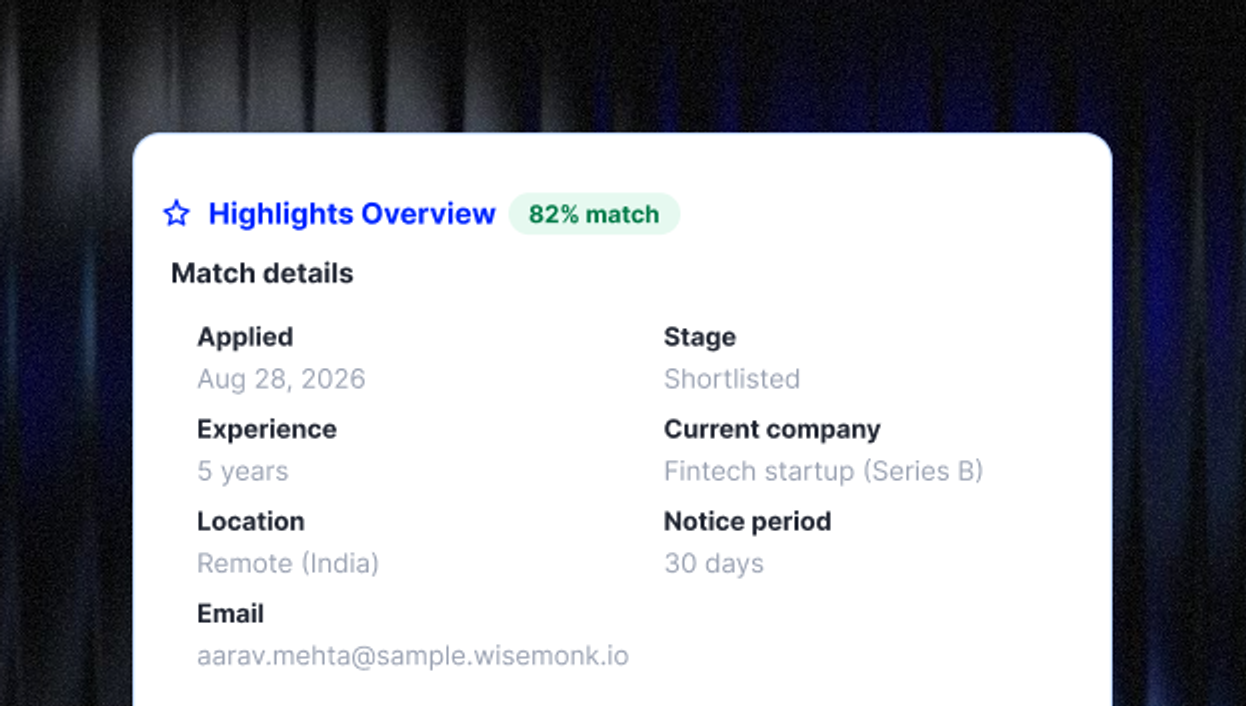
Screen with AI
- Ranked on work that changed a system, not on certificates or competition scores
- Each position in the order carries its reasoning
- Referrals and agency submissions scored on the same scale
-
03 Interview
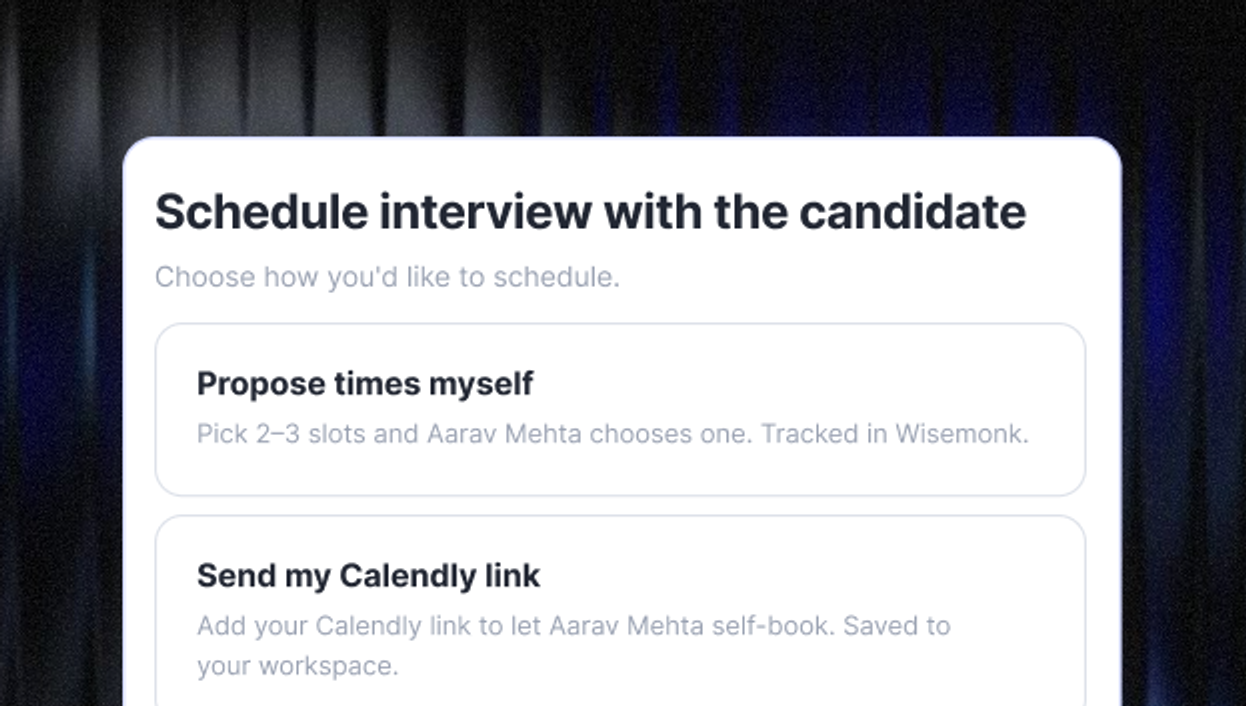
Run interviews
- Reports, disclosures, CVEs and certifications linked on the profile
- Book a code review or a threat modelling session in a click
- Notes, recordings and team scores kept against the role
-
04 Decide
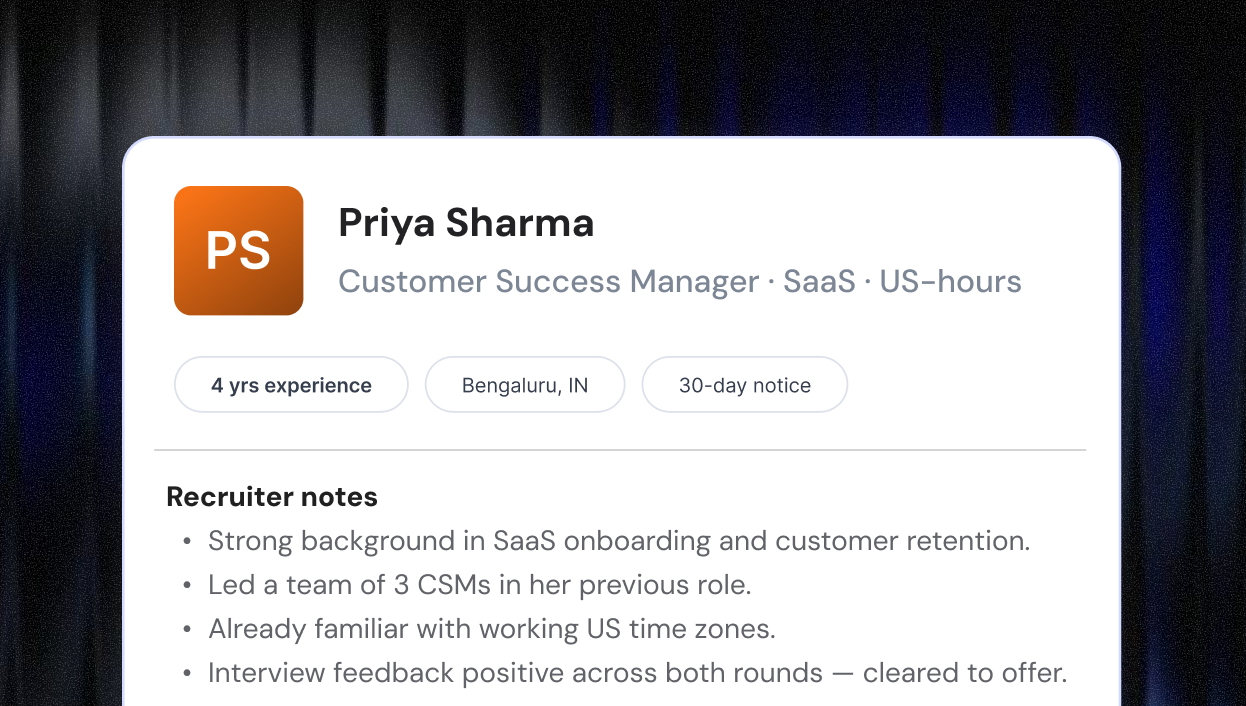
Decide together
- Wisemonk signs the employment contract as legal employer
- Payroll, provident fund, gratuity and tax withholding run every month
- Background checks and confidentiality terms settled before day one
It reads the work, not the CV.
Mira AI reads every Cybersecurity application through the work that actually shipped: what the person owned, the constraints they worked inside, and the evidence they can show for both. Every applicant is measured against the same scorecard, in the same way, on the day they apply.
Proof beats a polished CV.
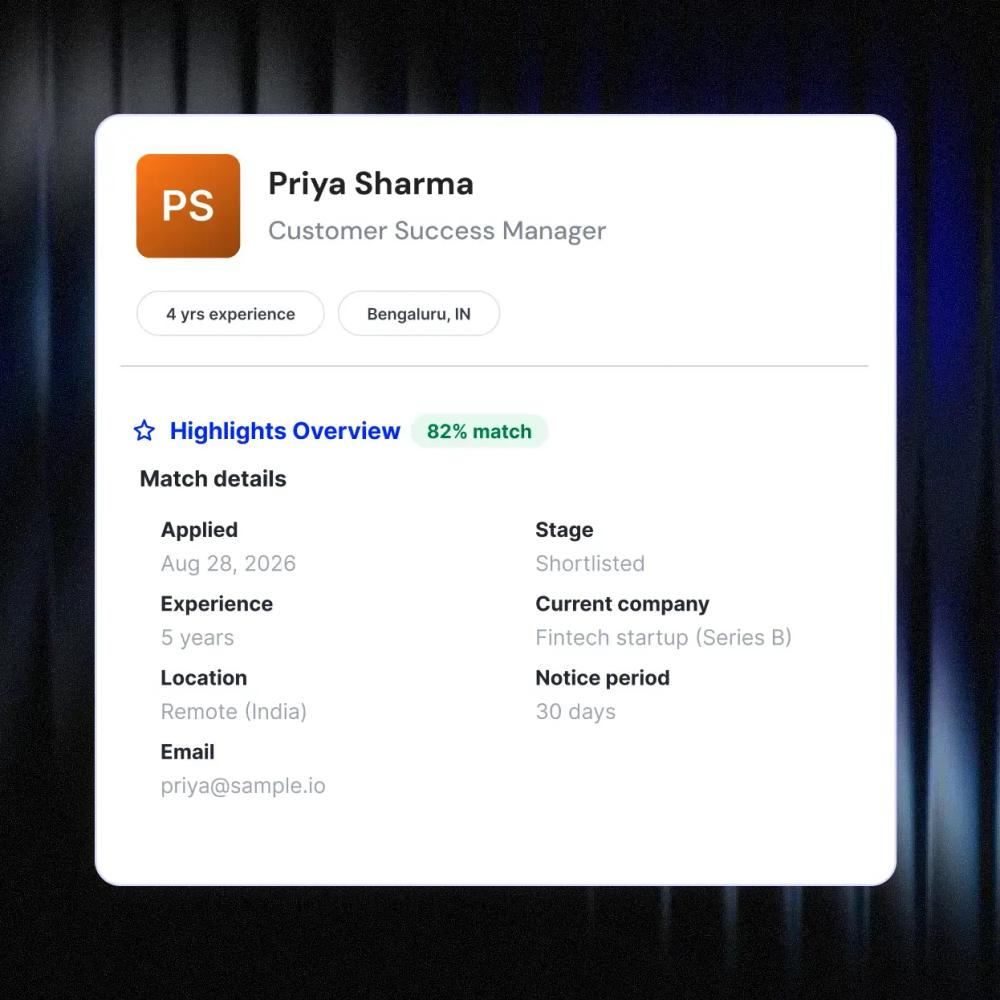
You describe the Cybersecurity role and what success looks like in it, and Mira AI ranks each applicant with the reasoning written out in sentences you can read and disagree with. The people who rise are the ones whose work backs up the claim. A first read, never the final word.
- Weighs work someone actually shipped above the tools listed on a CV
- Every ranking carries the why, including the near-misses
- Reads for judgement and communication alongside technical depth
- Reorders the shortlist as new Cybersecurity applicants arrive
Start from what you are protecting.
Security roles grouped by the risk in front of you rather than by job title. A specialism not shown here can still be opened and scored the same way.
You ship software and nobody reviews it for security
Application security comes first. You want somebody who can read the code, threat model a design, and be genuinely useful inside a pull request rather than after it.
- Application Security Engineers
- Security Engineers
- Secure Code Reviewers
- DevSecOps Engineers
A customer or an auditor is asking for SOC 2 or ISO 27001
This is governance work, and it is as much writing and evidence-gathering as it is technology. Hiring a penetration tester for it is a common and expensive mistake.
- GRC Analysts
- Compliance Analysts
- ISO 27001 Specialists
- Security Programme Managers
You need somebody to test your defences properly
Penetration testing is a specialism with its own certifications and a genuinely smaller pool. Be clear whether you want a one-off assessment or a permanent capability.
- Penetration Testers
- Ethical Hackers
- Red Team Engineers
- Application Pen Testers
Alerts are firing and nobody is watching them
Security operations: detection engineering, triage, and the discipline to tune the noise down until the alerts that remain are worth waking up for.
- SOC Analysts
- Detection Engineers
- Incident Responders
- SIEM Engineers
Judgement about risk takes years.
Naming the risk you want owned filters far harder than naming a certification in the advert.
Junior
0 to 2 years
Runs scans, triages alerts and works through findings somebody else prioritised. Needs review on severity and on what is genuinely exploitable in context.
Mid-level
3 to 5 years
Owns a security domain, writes findings engineers can act on, and follows remediation through to closed. The deepest band in India.
Senior
6 to 9 years
Owns the threat model and the security roadmap, decides which risks are acceptable, and is trusted to say no to a release. Notice is usually 60 to 90 days.
Lead / Head of Security
10 years and up
Owns the programme, the audits, and the conversation with the board or a customer's security team. A small pool and a well-paid one.
Which security role you actually need.
Security job titles hide more than they reveal. The right hire depends almost entirely on which of these problems is actually yours.
| Role | What they do | Hiring pool in India | Best fit |
|---|---|---|---|
| Application Security | Code review, threat modelling and secure design | Growing, and drawn largely from developers | Product companies shipping their own software |
| Penetration Tester | Finding exploitable weaknesses on demand and reporting them | Mid-sized and heavily certification-driven | Point-in-time assurance and customer security requirements |
| Security Operations | Monitoring, detection engineering and incident triage | Deep, much of it from managed service providers | Anyone with enough traffic to need somebody watching it |
| Cloud Security | Identity, posture and workload protection across cloud accounts | Narrow and rising in price quickly | Cloud-first companies, and almost everyone after an incident |
| GRC / Compliance | Policies, evidence, audits and customer questionnaires | Deep, and frequently the quickest of these to hire | SOC 2, ISO 27001 and unblocking enterprise sales |
| DevSecOps | Security inside the pipeline: scanning, secrets and supply chain | Small, and overlapping heavily with DevOps | Teams shipping quickly who need security to keep pace |
What a security brief has to be clear about.
Choose the ones that matter for your risk and every applicant is measured against them the moment they apply.
Which framework you answer to
SOC 2, ISO 27001, HIPAA, or nothing formal yet. This single line changes the hire completely and it is the one most often left out of the brief.
Reports engineers act on
A finding nobody fixes is not really a finding. Look for somebody who writes for developers rather than for auditors, and can tell the difference.
Severity judgement
Knowing what is genuinely exploitable in your particular context. Scanners produce volume; a good engineer produces a short list worth arguing about.
Access and least privilege
What the security hire themselves may reach. These roles need scoping more carefully than most, not less, and it is easier to set at the start.
Working with engineering
Security fails politically more often than it fails technically. The best hires make the secure path the easy one rather than the enforced one.
Incident readiness
What happens at three in the morning on a Sunday: who is called, what gets decided, and whether anybody has ever rehearsed it.
Start with the tool. Add reach. Add people.
Every plan includes Mira. What changes is how far your roles travel and how much of the work you hand over.
Base
For a team running its own hiring and tired of doing it in spreadsheets.
- Full pipeline and candidate tracking
- Your own hosted careers page
- Mira in Slack, with monthly credits
- Unlimited open roles
Boost
For teams whose problem is candidate flow, not candidate tracking.
- Everything in Base
- Your roles listed on the Wisemonk talent community
- Mira on the strongest models available
- Uncapped screening and scheduling
- Salary benchmarks from live India payroll data
Bespoke
Some roles need a person on the phone. Our recruiters take over sourcing and interview coordination, working the pipeline Mira has already built — so you're paying for judgment and conversations, not for admin.
Contingent fee of 10%, 12.5% or 15% of first-year salary, set by role seniority. Under a talent agreement, billed only on a joined hire.
Frequently asked questions
What engineering and compliance leads ask before opening a first security role in India.
How do I hire cybersecurity engineers in India?
Open the role around the risk rather than the tooling: what your systems hold, which framework you answer to, and whether you need somebody building defences or watching them. Mira AI drafts the job description and a scorecard built on that risk, the role reaches our candidate community, and each application is scored as it arrives. You review the ranked list and Wisemonk employs whoever you choose.
Which security role should I hire first?
Follow the pressure. If a customer or auditor is asking for SOC 2 or ISO 27001, hire GRC. If you ship your own software and nobody reviews it, hire application security. If alerts are firing into an empty room, hire security operations. The common error is hiring a penetration tester as a first security employee, which gives you a list of problems and nobody whose job it is to fix them.
How much does it cost to hire a security engineer in India?
Security prices above general engineering in India, and the gap widens with seniority because the senior pool is genuinely small. GRC and compliance analysts are the most affordable, security operations sits in the middle, and cloud security and application security carry a premium. Heads of security are priced close to engineering leadership. Open a role and we will compare your band against our security payroll data before anyone sees it.
Can I hire someone in India to get us SOC 2 or ISO 27001?
Yes, and it is one of the more common security hires we see. A GRC analyst or compliance specialist maps the controls, writes the policies, gathers the evidence and manages the auditor relationship. What they cannot do is invent controls that do not exist, so expect the engineering work that comes out of the gap analysis to land on your existing team. Wisemonk holds SOC 2 and ISO 27001 certifications, so the people we employ are used to working inside that kind of regime.
Is it safe to give a security engineer in India access to our systems?
It is the same question you would ask of any employee, and the answer is handled the same way. Wisemonk runs background verification before the start date and writes confidentiality and intellectual property terms into every contract, so the obligations sit directly with the individual. Beyond that, scope the access properly: read-only where possible, separate credentials, logged sessions, and no standing production access. A security hire should expect to be held to those controls and be slightly suspicious of you if they are not.
Should I hire a penetration tester or use a testing firm?
Use a firm for point-in-time assurance, particularly where a customer or auditor wants an independent report with somebody else's letterhead on it. Hire in-house when testing needs to be continuous, when the system changes weekly, or when you want the findings fixed rather than merely documented. Many teams do both: an annual external test for the report, and an internal engineer who keeps the surface small in between.
Do security engineers in India work US or UK hours?
A shared working window with the UK and Europe is simple enough to arrange. Security operations is the exception worth thinking about, because monitoring roles often suit deliberately offset hours, giving you cover while your own team sleeps. For everything else, the question that matters more than the working day is whether the role is expected to respond to incidents outside it.
Do I need an entity in India to employ a security engineer?
No. Wisemonk acts as the legal employer, signs the contract and handles payroll along with provident fund, gratuity, ESI and income tax withholding, and runs background verification as part of onboarding. Day to day, the work and the priorities come from you. Companies that already hold an Indian entity can place the hire on it instead.
What does senior mean for a security engineer in India?
Roughly six to nine years, owning the threat model and the roadmap rather than a queue of tickets: deciding which risks are worth carrying, which releases should wait, and how to make the secure path the convenient one. Certifications stack up quickly at this level, so write the decisions you want owned into the scorecard instead.
Do certifications like OSCP and CISSP matter?
They matter differently. OSCP is practical and earned by breaking into things, so it carries real weight for penetration testing roles. CISSP is broad and management-oriented, which makes it a reasonable signal for leadership and compliance roles and a weak one for hands-on engineering. Both are useful for sorting a large pile of applications and neither tells you whether somebody can get a development team to act on what they find.
Find your next security engineer in India.
Name what you protect and the framework you answer to. Mira AI writes the scorecard, ranks every applicant, and Wisemonk takes care of the employment.
