



Hire technical support engineers in India, powered by Mira AI.
Resolve product and IT issues properly, so the same tickets stop coming back next week. Mira AI ranks each applicant on issues they diagnosed, not the certifications they hold.
Mira AI turns a sentence into a job description and a scorecard, then scores every applicant against it.
Build a career with a global team, on Indian payroll.
Trusted by 300+ Global Companies


The technical support work companies hire for most.
Open whichever layer of support you are short on. Roles past this list are read on the same record of issues resolved.
Tier 1 Support
Triage, known fixes, routing, first response
Product Support Engineering
Reproduction, logs, APIs, root cause
IT Support & Helpdesk
Devices, accounts, onboarding, MDM
Application Support
Monitoring, incidents, runbooks, on-call
Systems & Infrastructure
Windows, network, backups, access
Knowledge & Docs
KB articles, macros, deflection content
Any other support role
SaaS onboarding, hardware RMA, field support, SRE-adjacent and more. Describe the stack and Mira AI scores for it.
From tickets that keep reopening to fixes that hold.
Four steps, from naming what breaks to a signed contract. Opening the role and reviewing applicants are free on the Base plan.
-
01 Post
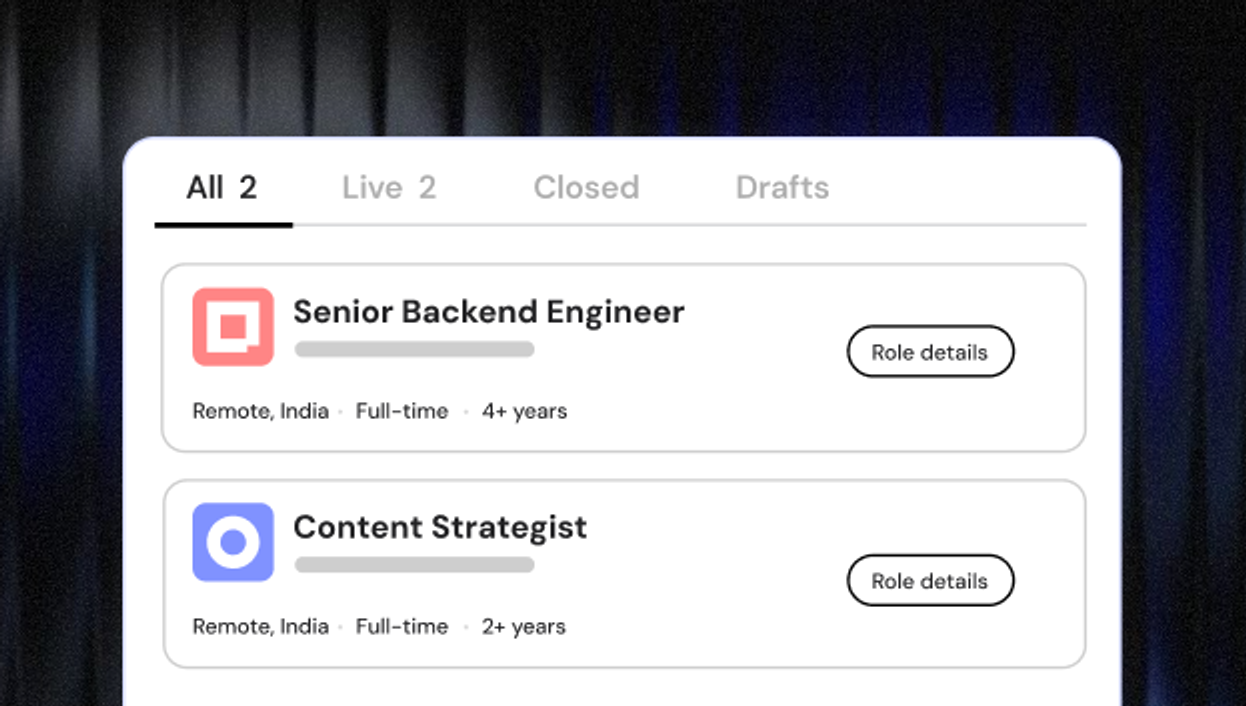
Post a role
- Whether it is your product, your staff's laptops, or both, and the stack behind it
- Mira AI turns it into a scorecard about diagnosis and depth rather than certification badges
- Support salary band checked against live payroll data before the role opens
-
02 Screen
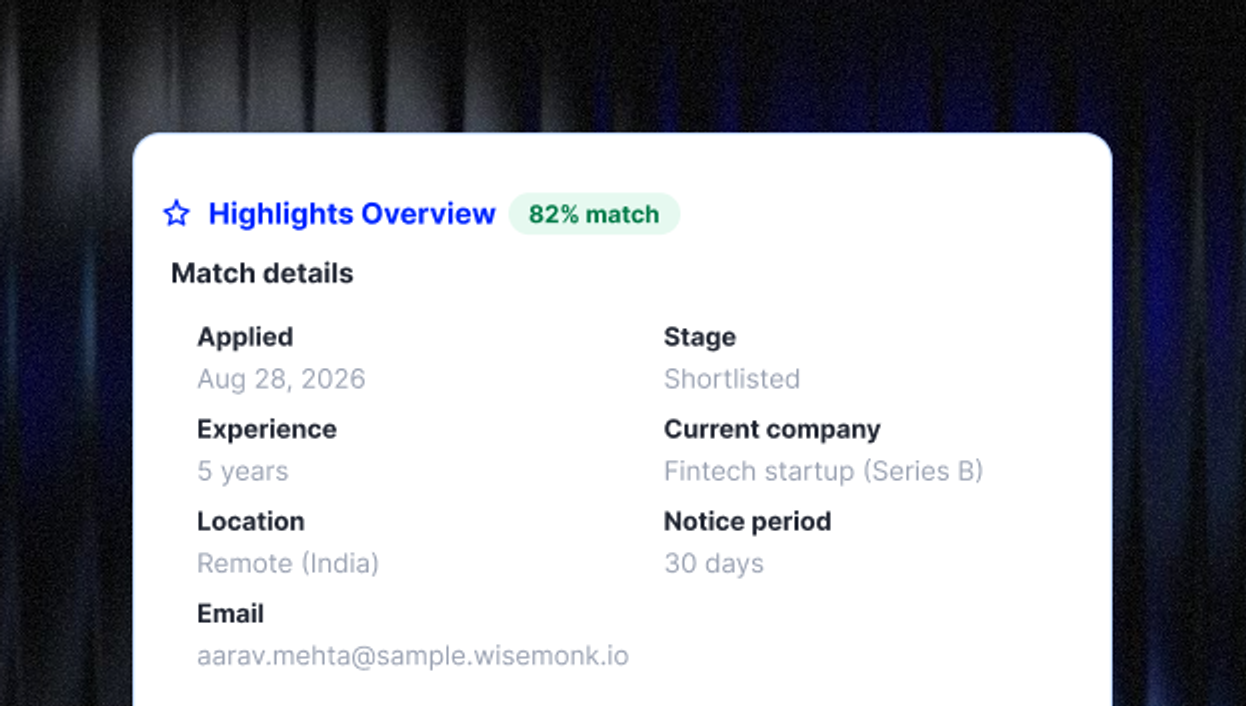
Screen with AI
- Weighted toward engineers who worked your stack at a comparable depth
- Each place in the ranking carries the reasoning in plain sentences
- Referrals and agency submissions land in the same ranked list
-
03 Interview
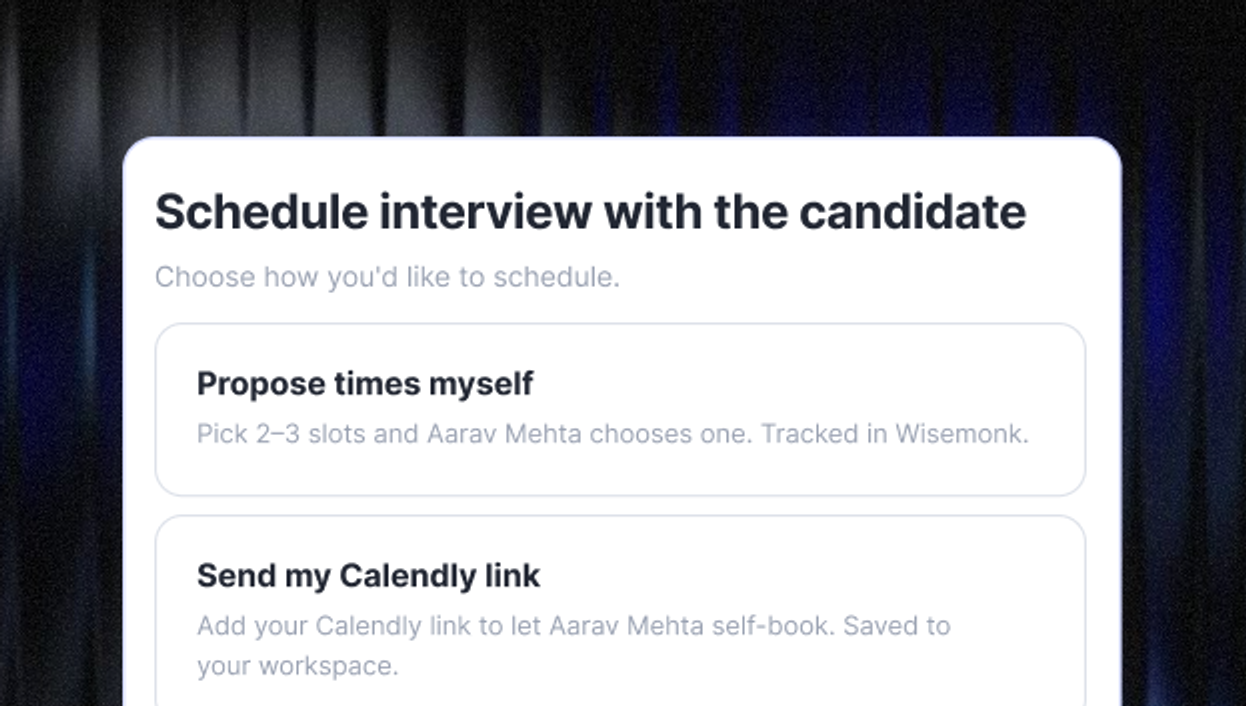
Run interviews
- Stack, tooling and incident history shown on the profile
- Book a troubleshooting walkthrough or a log-reading exercise in a click
- Panel notes, recordings and scores stay attached to the role
-
04 Decide
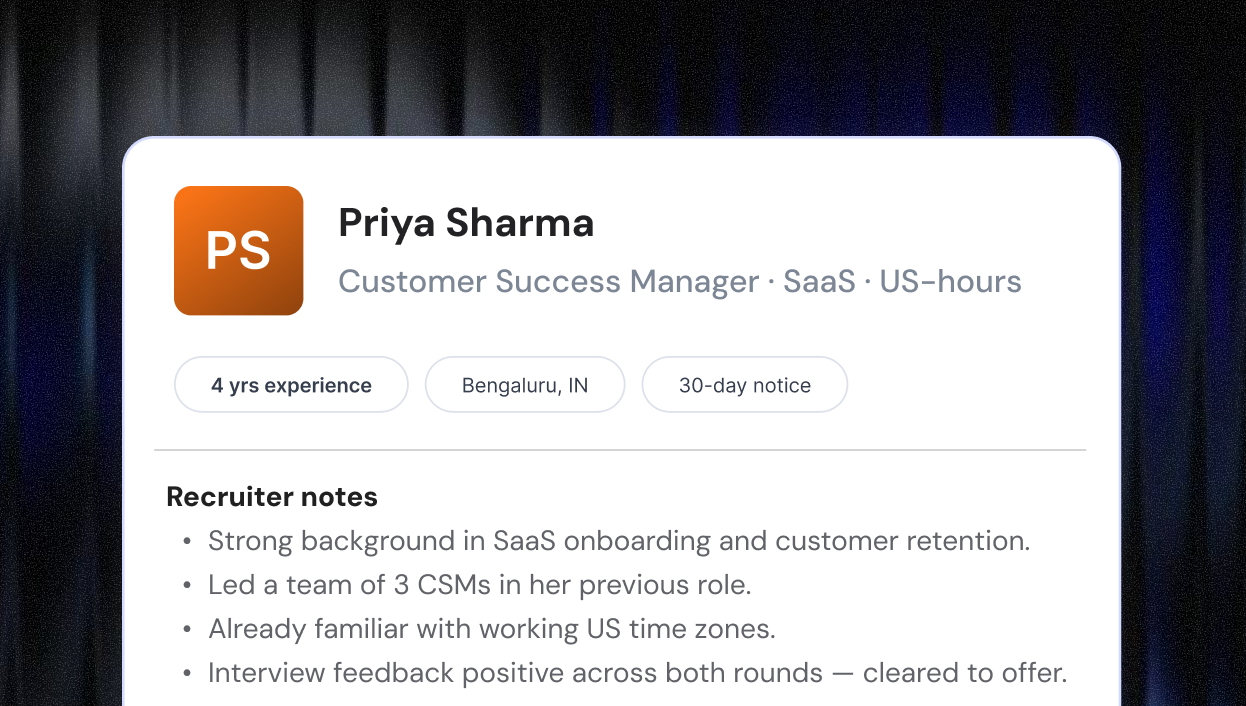
Decide together
- Wisemonk signs the employment contract as legal employer in India
- Payroll, provident fund, gratuity and tax withholding run every month
- System access, on-call tooling and least-privilege permissions set before day one
It reads the work, not the CV.
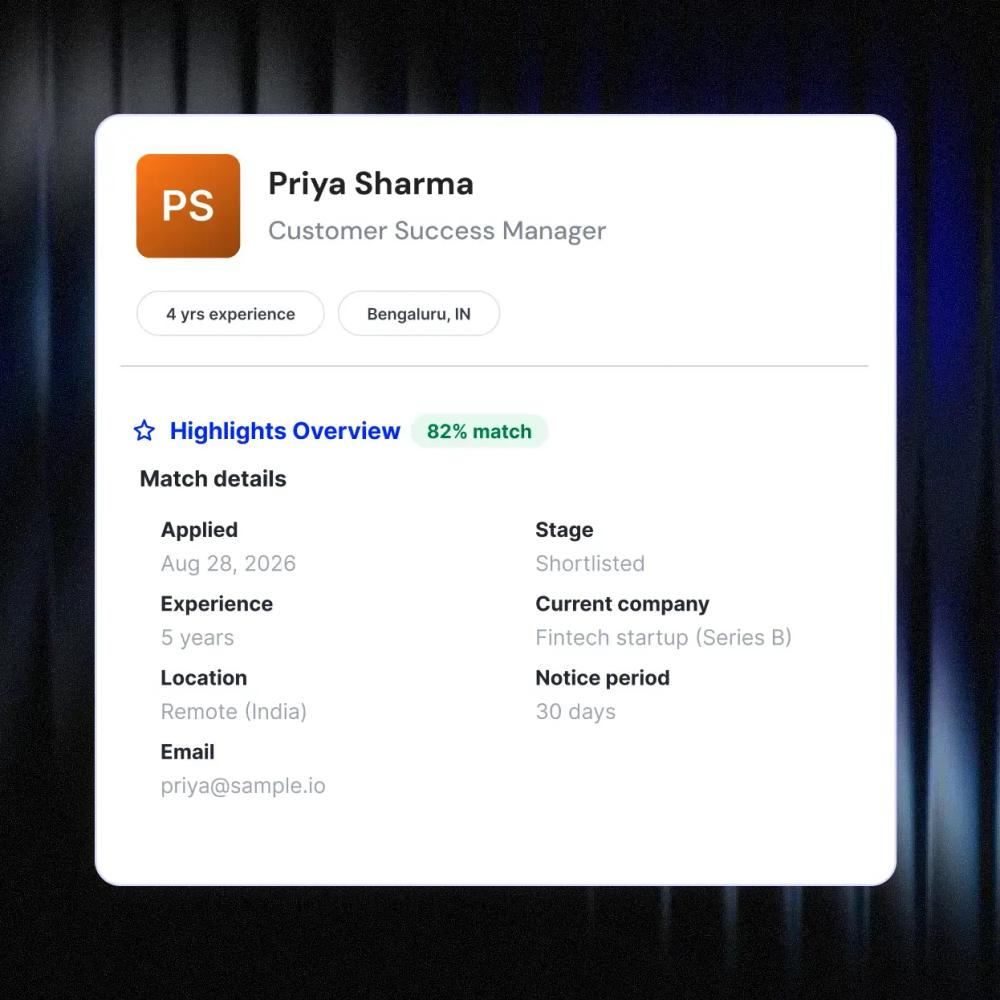
Mira AI reads every Technical Support application through the work that actually shipped: what the person owned, the constraints they worked inside, and the evidence they can show for both. Every applicant is measured against the same scorecard, in the same way, on the day they apply.
Proof beats a polished CV.
You describe the Technical Support role and what success looks like in it, and Mira AI ranks each applicant with the reasoning written out in sentences you can read and disagree with. The people who rise are the ones whose work backs up the claim. A first read, never the final word.
- Weighs work someone actually shipped above the tools listed on a CV
- Every ranking carries the why, including the near-misses
- Reads for judgement and communication alongside technical depth
- Reorders the shortlist as new Technical Support applicants arrive
Start from where the tickets pile up.
Technical support roles grouped by the failure you are living with rather than by title. Anything beyond these four is opened and ranked on the same scorecard.
The same tickets come back every week
A tier-two gap. Front-line agents apply the known fix and the underlying fault returns. You need someone who reads the logs, reproduces the fault and closes the actual cause.
- Support Engineers
- Tier 2 Support
- Application Support Analysts
- Escalation Engineers
Your engineers are answering support instead of building
A classic and expensive leak. A product support engineer takes the technical tickets off the dev team, handling the API questions, integration issues and data digs that reach engineering today.
- Product Support Engineers
- Technical Support Engineers
- Solutions Support
- Integration Support
New staff wait days for a working laptop
Internal IT support. Device setup, account provisioning, MDM and the steady stream of access requests that grind productivity down when nobody owns them.
- IT Support Specialists
- Help Desk Technicians
- Systems Support Admins
- IT Onboarding Specialists
Something goes down and nobody is watching
Application and infrastructure support. Monitoring, incident response and the runbooks that turn a 2am outage from a scramble into a procedure somebody follows.
- Application Support Analysts
- Systems Support Admins
- On-Call Support Engineers
- Incident Responders
Applying a fix is tier one. Finding the cause is not.
Naming your stack and the depth you need filters far harder than naming a certification in the advert.
Tier 1 / Junior
0 to 2 years
Triages, applies documented fixes and routes what it cannot solve. Fast on known issues and reliant on the knowledge base for the rest.
Tier 2 / Support Engineer
3 to 5 years
Reproduces faults, reads logs, queries the database, and closes root causes rather than symptoms. The band that stops tickets reopening.
Senior / Tier 3
6 to 9 years
Owns the hardest cases, works directly with engineering, and writes the runbooks and articles that lift everyone below them. Notice runs 45 to 90 days.
Support Engineering Lead
10 years and up
Owns the escalation path, the on-call rota and the knowledge base, and is the bridge between support and the product team.
Which support tier you actually need.
Technical support runs in tiers, and hiring the wrong one is expensive in both directions: a tier-one agent cannot close a code-level fault, and a support engineer will be bored resetting passwords. Match the tier to the tickets.
| Tier | What they handle | Strongest at | Technical depth |
|---|---|---|---|
| Tier 1 | Triage, known fixes, routing | Following runbooks and macros | No engineering depth needed |
| Tier 2 | Reproduction, logs, root cause | Comfort in logs and a database | Some scripting and SQL |
| Tier 3 / Support Engineer | Deep faults, code-level digging | APIs, code reading, integrations | Genuine engineering fluency |
| IT / Help Desk | Internal staff, devices, accounts | Endpoints, identity, MDM | No product knowledge needed |
| Application Support | Uptime, incidents, monitoring | Observability tools and on-call | Ops and light engineering |
| Support Lead | Escalation path, KB, rota | People and process over tickets | Broad experience across tiers |
What a technical support brief has to pin down.
Pick the ones that matter for your stack and every applicant arrives already scored against them.
Product support or IT support
These are different hires. Product support answers your customers about your software; IT support keeps your own staff working. Say which, because the skills barely overlap.
The stack, named
Your product's language and database, or your fleet's operating systems and identity provider. Naming it turns a vague search into a precise one.
Depth versus breadth
A tier-one generalist and a tier-three specialist are opposite hires. Decide whether you need volume handled or hard faults closed, because few people do both well.
Access and least privilege
Support engineers often need production or admin access. Decide what they can reach, log it, and grant the minimum, because this role touches live systems and real data.
Writing and knowledge base
A great support engineer leaves a trail: a KB article so the next person never files that ticket. Ask for something they documented, not just something they fixed.
On-call and coverage
If you need overnight or weekend cover, say so upfront. Offset shifts from India can staff your off-hours, but on-call expectations belong in the offer, not a surprise later.
Start with the tool. Add reach. Add people.
Every plan includes Mira. What changes is how far your roles travel and how much of the work you hand over.
Base
For a team running its own hiring and tired of doing it in spreadsheets.
- Full pipeline and candidate tracking
- Your own hosted careers page
- Mira in Slack, with monthly credits
- Unlimited open roles
Boost
For teams whose problem is candidate flow, not candidate tracking.
- Everything in Base
- Your roles listed on the Wisemonk talent community
- Mira on the strongest models available
- Uncapped screening and scheduling
- Salary benchmarks from live India payroll data
Bespoke
Some roles need a person on the phone. Our recruiters take over sourcing and interview coordination, working the pipeline Mira has already built — so you're paying for judgment and conversations, not for admin.
Contingent fee of 10%, 12.5% or 15% of first-year salary, set by role seniority. Under a talent agreement, billed only on a joined hire.
Frequently asked questions
What engineering and IT leads ask before building support in India.
How do I hire technical support engineers in India?
Say what breaks and who reports it: your product to your customers, your laptops to your staff, or both. Mira AI drafts an advert and a scorecard from that, your role reaches our candidate community, and each applicant is ranked as they apply. Interview on a real broken thing, then Wisemonk employs whoever you choose.
How much does it cost to hire technical support in India?
India is where much of the world already runs its technical support, and the cost reflects deep supply. Tier-one agents are inexpensive, tier-two and product support engineers cost more because diagnosis is a real skill, and support engineering leads are priced alongside mid-level engineers. Post the role and we will size your band against current India payroll figures first.
What is the difference between customer support and technical support?
Customer support resolves the customer's experience: orders, billing, account questions, general help. Technical support resolves the technical fault behind a problem: the bug, the integration, the broken device. They overlap at tier one and diverge sharply above it. If your tickets need someone to read logs or a stack trace, you want technical support, not general.
Should I hire product support or IT support?
Product support faces your customers and needs to understand your software; IT support faces your own team and needs to keep their machines and accounts working. They are separate hires with separate skills, and the common mistake is expecting one person to do both. Decide which pain is louder right now and hire for that first.
Can technical support in India cover our timezone and on-call?
Yes, and the timezone is often an advantage. Offset shifts from India can staff your overnight and weekend windows, turning round-the-clock coverage from a burden on your local team into a normal rota. Put the shift pattern and any on-call expectation in the offer so it is agreed rather than assumed.
Is it safe to give a support engineer production access?
Give the minimum access the role needs, log it, and separate the ability to read data from the ability to change it. That principle matters more than location. Wisemonk runs background verification before the start date and writes confidentiality and IP terms into every contract, so the obligations sit with the individual, and you keep normal least-privilege controls on top.
Do certifications like CompTIA or ITIL matter?
They help sort a large pile and prove someone has studied the fundamentals, which is worth something at tier one. They tell you very little about whether a person can actually diagnose a novel fault under pressure. Weigh a real troubleshooting exercise far above the certificate, and treat certifications as a filter rather than a decision.
Do I need an entity in India to employ support engineers?
No. Wisemonk stands as the legal employer of record, holds the contract and runs monthly payroll with provident fund, gratuity, ESI and tax withholding handled. Your engineers work to your escalation path and your on-call rota. If you already run an Indian entity, the hires can sit on it instead.
How do I test a technical support candidate?
Hand them a real problem with the answer hidden: a log with an error buried in it, a bug report with missing detail, or a customer message that describes symptoms rather than cause. Watch how they narrow it down and what they ask for. The questions they pose matter more than whether they reach the answer.
What does senior mean in technical support in India?
Roughly six years and up, and the marker is closing causes rather than tickets. A senior support engineer takes the fault nobody else can reproduce, works it with engineering, and writes the article that stops it recurring. At that level the role becomes tier three or a support lead, and notice runs 45 to 90 days.
Find your next support engineer in India.
Name what breaks, the stack behind it and the tier you need. Mira AI writes the scorecard, ranks every applicant, and Wisemonk takes care of the employment.
