



Hire DevOps engineers in India, powered by Mira AI.
Find Kubernetes, Terraform and CI/CD engineers who have carried a pager for their own work. Mira AI scores each application against the stack you need looked after.
Mira AI turns a sentence into a job description and a scorecard, then scores every applicant against it.
Build a career with a global team, on Indian payroll.
Trusted by 300+ Global Companies


The platform work companies hire for most.
Open whichever sits closest to your setup. Tooling beyond this list is judged on the same scorecard.
Kubernetes & Containers
Kubernetes, Docker, Helm, ArgoCD
CI/CD Pipelines
Jenkins, GitHub Actions, GitLab CI
Infrastructure as Code
Terraform, Pulumi, Ansible
Site Reliability
SLOs, on-call, incident response
Observability
Prometheus, Grafana, OpenTelemetry
Cloud DevOps
AWS, Azure DevOps, Google Cloud tooling
Any other platform role
Service mesh, FinOps, DevSecOps, bare metal and more. Describe the setup and Mira AI scores for it.
From manual deploys to releases nobody dreads.
Four steps, from describing the stack to a signed contract. Posting the role and reviewing who applies are free on the Base plan.
-
01 Post
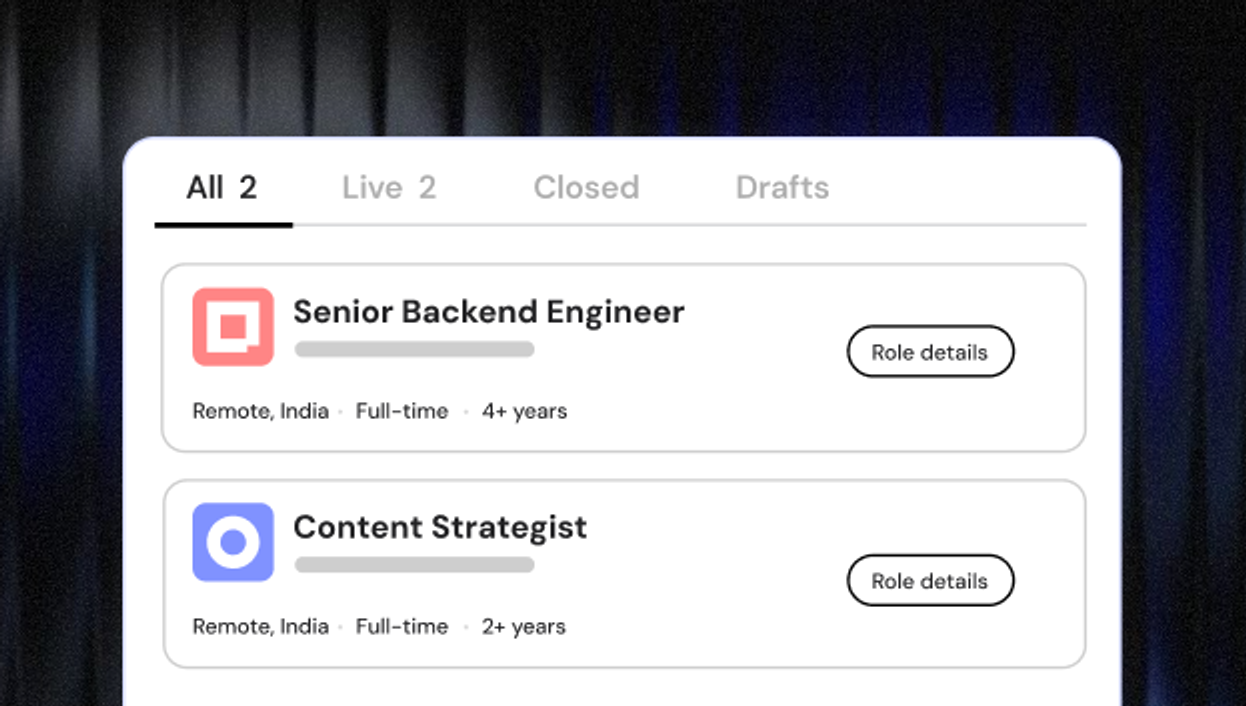
Post a role
- Your stack, your release process, and whether the role carries a pager
- Mira AI turns it into a scorecard around your infrastructure, not a tool checklist
- DevOps salary band checked against payroll data before the role goes live
-
02 Screen
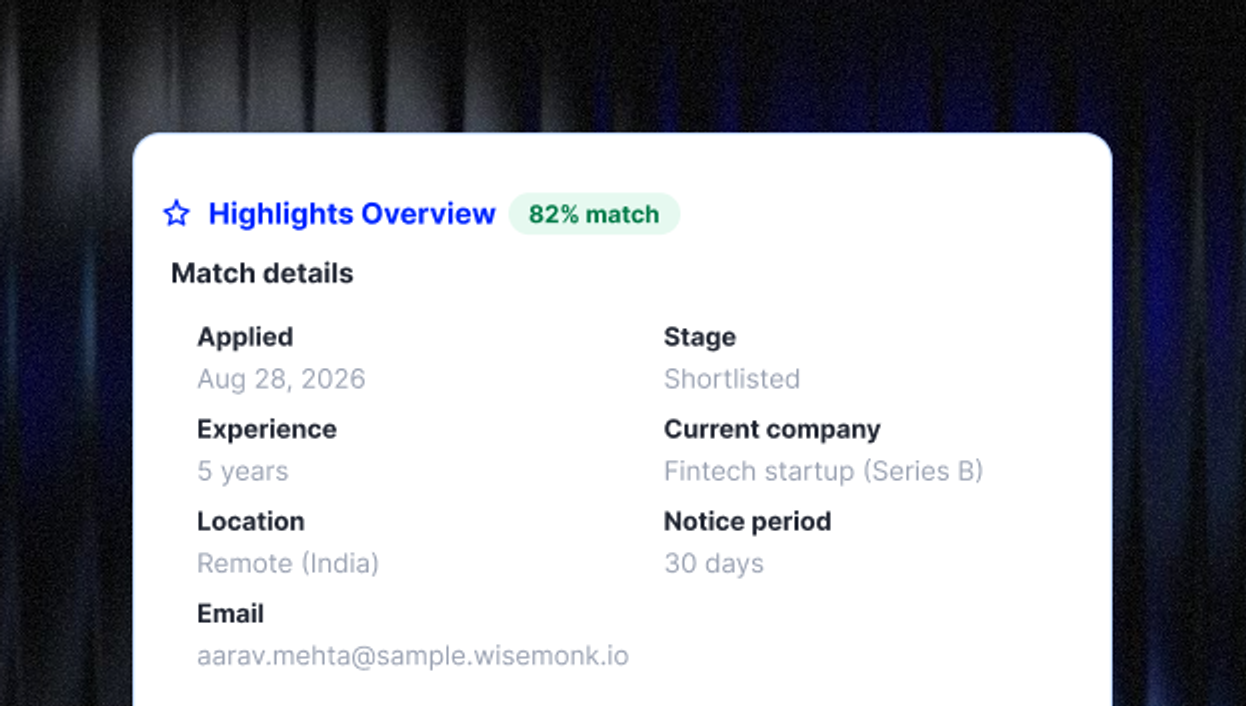
Screen with AI
- Ranked on infrastructure someone has operated rather than courses completed
- Each position in the order carries its reasoning
- Referrals and agency submissions scored on the same scale
-
03 Interview
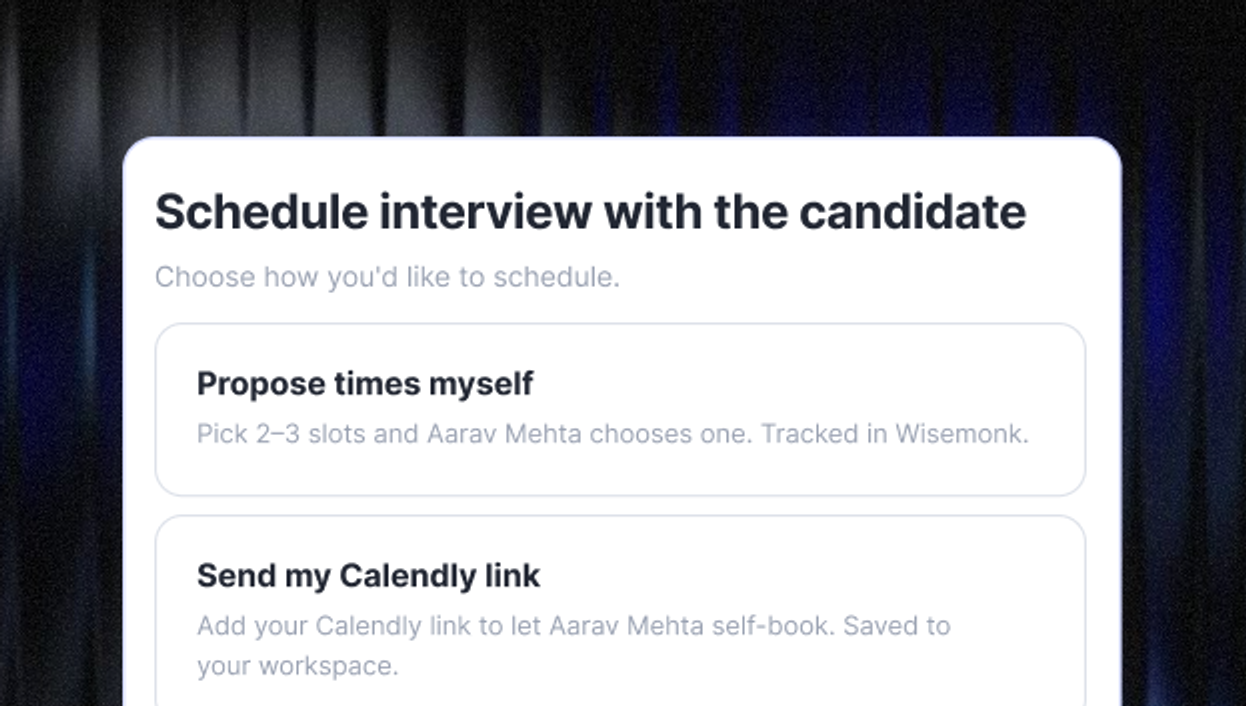
Run interviews
- Repos, Terraform modules and published write-ups linked on the profile
- Book an incident walkthrough or a pipeline exercise in a click
- Notes, recordings and team scores kept against the role
-
04 Decide
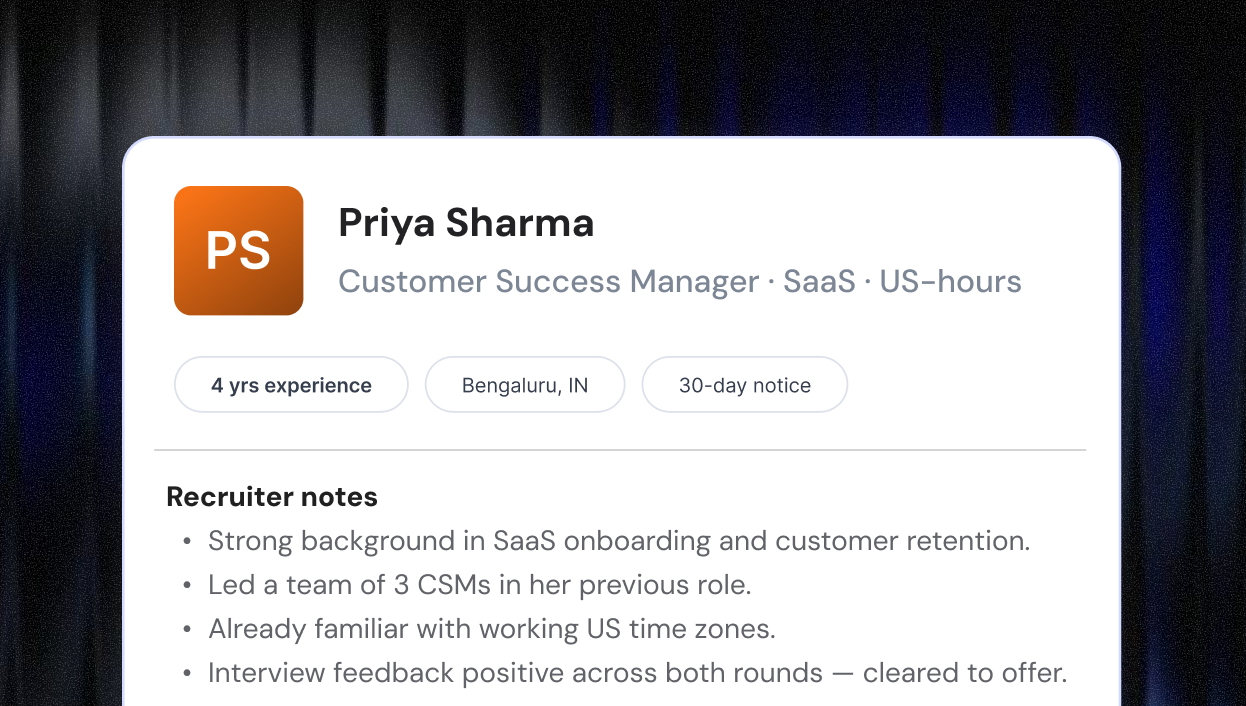
Decide together
- Wisemonk becomes the legal employer and signs the contract
- Payroll, provident fund, gratuity and tax withholding handled every month
- An Indian entity is optional here rather than a requirement
It reads the work, not the CV.
Mira AI reads every DevOps & SRE application through the work that actually shipped: what the person owned, the constraints they worked inside, and the evidence they can show for both. Every applicant is measured against the same scorecard, in the same way, on the day they apply.
Proof beats a polished CV.
You describe the DevOps & SRE role and what success looks like in it, and Mira AI ranks each applicant with the reasoning written out in sentences you can read and disagree with. The people who rise are the ones whose work backs up the claim. A first read, never the final word.
- Weighs work someone actually shipped above the tools listed on a CV
- Every ranking carries the why, including the near-misses
- Reads for judgement and communication alongside technical depth
- Reorders the shortlist as new DevOps & SRE applicants arrive
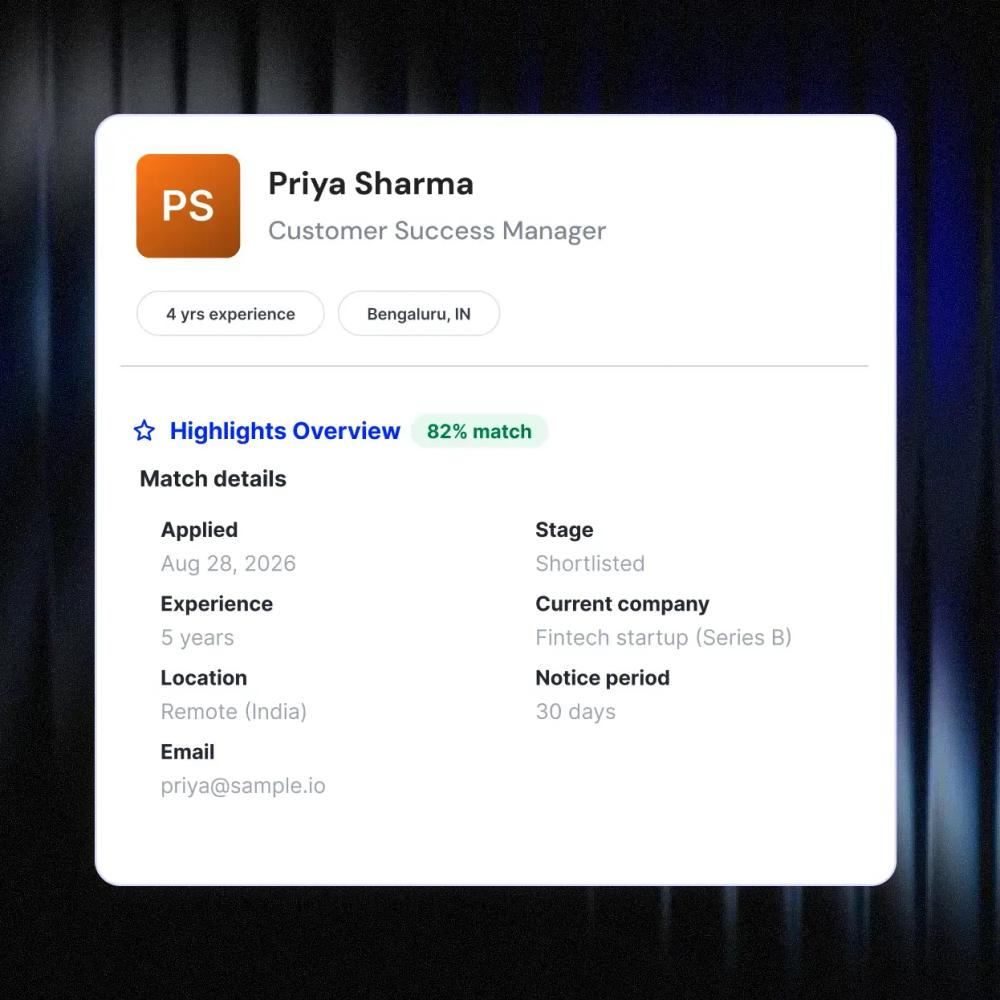
Start from what wakes people up.
Platform roles grouped by the problem in front of you rather than by job title. A setup not described here can still be opened and scored the same way.
You deploy by hand and it is starting to hurt
Pipelines and infrastructure as code come before anything clever. Automating the release is what buys you the room to fix everything else.
- DevOps Engineers
- CI/CD Engineers
- Jenkins Developers
- GitHub Actions Engineers
- Build Engineers
You are moving to containers, or already lost in them
Kubernetes rewards people who have run it in production and punishes people who have only followed a tutorial through to the end.
- Kubernetes Engineers
- Docker Developers
- Helm Engineers
- Container Platform Engineers
Your service goes down more often than you would like
This is reliability work: service level objectives, alerts that mean something, and incident reviews that actually change the system afterwards.
- Site Reliability Engineers
- Observability Engineers
- Incident Response Engineers
- Platform Engineers
Your engineers spend too long on infrastructure
Platform engineering exists to give developers paved paths. It is judged by how little everyone else has to think about deployment.
- Platform Engineers
- Internal Tooling Engineers
- Developer Experience Engineers
- Terraform Developers
The pager teaches faster than anything else.
Naming the systems you want owned filters far harder than naming a cloud provider or a tool in the advert.
Junior
0 to 2 years
Runs pipelines and makes changes inside infrastructure somebody else defined. Needs review on anything that touches production or state.
Mid-level
3 to 5 years
Owns the pipeline and the infrastructure code for a service, and takes a turn in the on-call rotation. The deepest band in India.
Senior
6 to 9 years
Owns the platform architecture, the reliability targets and what the whole thing costs to run, and is who you call when it is genuinely bad. Notice is usually 60 to 90 days.
Lead / Principal
10 years and up
Sets platform direction across teams, decides what to build against what to buy, and owns how good the developer experience is. A small pool.
DevOps, SRE or platform engineer.
These titles are used interchangeably and are not interchangeable. Picking the wrong one usually shows up as a hire who is bored or out of their depth.
| Role | What they own | Hiring pool in India | Best fit |
|---|---|---|---|
| DevOps Engineer | Pipelines, infrastructure as code and the whole path to production | Deepest of the three by a wide margin | Most teams, and almost always the right first hire |
| Site Reliability Engineer | Reliability targets, on-call, incident review and error budgets | Smaller, drawn mainly from large product companies | Services where downtime has a number attached to it |
| Platform Engineer | Internal tooling and the paved paths other engineers build on | Growing quickly, usually former DevOps engineers | Engineering teams large enough that self-service saves real time |
| Cloud Engineer | Cloud architecture, networking, accounts and what they cost | Deep, with a strong certification culture behind it | Migrations, and anything where the cloud bill is the problem |
| Build / Release Engineer | Build systems, artefacts and the mechanics of shipping | Narrow, concentrated in larger engineering organisations | Monorepos and complicated release trains |
| DevSecOps Engineer | Security inside the pipeline: scanning, secrets and compliance | Small, and rising in price quickly | Regulated industries and anyone heading into an audit |
What to settle before the DevOps hire.
Pick the ones that matter for your setup and every applicant is weighed against them from the moment they apply.
On-call expectations
The most important line in the brief and the one most often missing. State whether the role carries a pager, what the rotation looks like, and how it is compensated.
Infrastructure as code
Whether your infrastructure is written down in code or held in somebody's memory. The honest answer changes which candidate will suit you.
Blast radius thinking
How someone limits the damage a bad change can do: staged rollouts, feature flags, and the ability to reverse a decision in minutes rather than hours.
Secrets and access
Who can reach production, how that access is granted, and how quickly it is revoked. This matters more with a distributed team, not less.
Cloud cost
Infrastructure bills grow without anyone deciding they should. An engineer who has had to cut one already knows where the money tends to hide.
Documentation and handover
Platforms outlive the people who build them. A clever setup only one person understands is a liability that happens to draw a salary.
Start with the tool. Add reach. Add people.
Every plan includes Mira. What changes is how far your roles travel and how much of the work you hand over.
Base
For a team running its own hiring and tired of doing it in spreadsheets.
- Full pipeline and candidate tracking
- Your own hosted careers page
- Mira in Slack, with monthly credits
- Unlimited open roles
Boost
For teams whose problem is candidate flow, not candidate tracking.
- Everything in Base
- Your roles listed on the Wisemonk talent community
- Mira on the strongest models available
- Uncapped screening and scheduling
- Salary benchmarks from live India payroll data
Bespoke
Some roles need a person on the phone. Our recruiters take over sourcing and interview coordination, working the pipeline Mira has already built — so you're paying for judgment and conversations, not for admin.
Contingent fee of 10%, 12.5% or 15% of first-year salary, set by role seniority. Under a talent agreement, billed only on a joined hire.
Frequently asked questions
What engineering leads ask before opening a first DevOps role in India.
How do I hire DevOps engineers in India?
Open the role describing your stack and your pain rather than a list of tools: how you deploy today, what breaks, and whether the role carries a pager. Mira AI drafts the job description and a scorecard built on that, the role reaches our candidate community, and each application is scored as it lands. You work down the ranked list, and Wisemonk takes on the employment once you decide.
What is the difference between a DevOps engineer and an SRE?
A DevOps engineer builds the road to production: pipelines, infrastructure as code, environments and tooling. A site reliability engineer is accountable for what happens once traffic is on it, working to error budgets and service level objectives, and treating reliability as a product with targets. Almost every company needs the DevOps engineer first. SRE becomes a separate role when downtime has a number attached to it and somebody has to own that number.
How much does it cost to hire a DevOps engineer in India?
DevOps prices at or slightly above strong back-end engineering, and Kubernetes depth carries a clear premium because genuine production experience is thinner than the CVs suggest. Site reliability engineers and platform leads sit higher again. Roles carrying on-call should be priced with that included rather than discovered later. When you open a role we check your band against our payroll data and say whether it will fill.
Do I need a DevOps engineer, or can my back-end team handle it?
Below roughly five engineers, a strong back-end team usually can, and often should, because the infrastructure is small enough to understand in an afternoon. The moment to hire is when deployment has become somebody's unofficial second job, when nobody wants to touch the pipeline, or when an outage takes hours because only one person knows the setup. Our back-end developers page covers the other side of that split.
Should my DevOps engineer in India be on call?
If they own the platform, yes, and it is fairer to say so in the advert than to introduce it in month two. The practical arrangement is a rotation that respects Indian hours, with clear escalation for anything outside them, and compensation or time back for nights. Teams that hire in India specifically to cover their own nights should be honest about that from the first conversation, because it changes who applies and what they expect to be paid.
Do DevOps engineers in India work US or UK hours?
A shared working window with the UK and Europe is routine here. A full US shift narrows the field, though less than elsewhere because follow-the-sun cover is a familiar arrangement in Indian infrastructure teams. The thing to be precise about is not the working day but the on-call window, since that is what candidates weigh most carefully.
How do you check whether someone has really run production infrastructure?
Ask about the worst outage they were part of and listen for specifics: what the alert said, what they tried first, what the fix was, and what changed afterwards. People who have genuinely operated systems answer in detail and usually include the part where they made it briefly worse. Mira AI weighs infrastructure operated above certifications collected, and explains each ranking so you can see who has run things rather than only built them.
Do I need an entity in India to employ a DevOps engineer?
No. Wisemonk becomes the legal employer, signs the contract and handles payroll along with provident fund, gratuity, ESI and income tax withholding. The engineer works to your direction and your rotation. If you already hold an Indian entity the hire can sit on it instead, and that is decided when the offer is made.
What does senior mean for a DevOps engineer in India?
Roughly six to nine years, owning the platform rather than the tickets: the architecture, the reliability targets, the cost of running it, and the judgement about what to automate next. Service companies hand out senior DevOps titles quickly, so write the systems you want owned into the scorecard rather than reading the label on a CV.
Are AWS or Kubernetes certifications worth anything?
They are a reasonable filter and a poor conclusion. A certification shows someone sat down and learned the vocabulary, which is worth something when you are sifting a hundred applications. It tells you nothing about how they behave when a cluster is failing at midnight. Use certifications to widen the top of the funnel, then screen hard on systems actually operated, because that is the part that cannot be revised for.
Find your next DevOps engineer in India.
Describe your stack, your release process and whether the role carries a pager. Mira AI writes the scorecard, ranks every applicant, and Wisemonk takes care of the employment.
