



Hire data annotators in India, powered by Mira AI.
Build your own annotation team in India rather than renting one from a vendor. Mira AI scores each application against the guidelines your data has to follow.
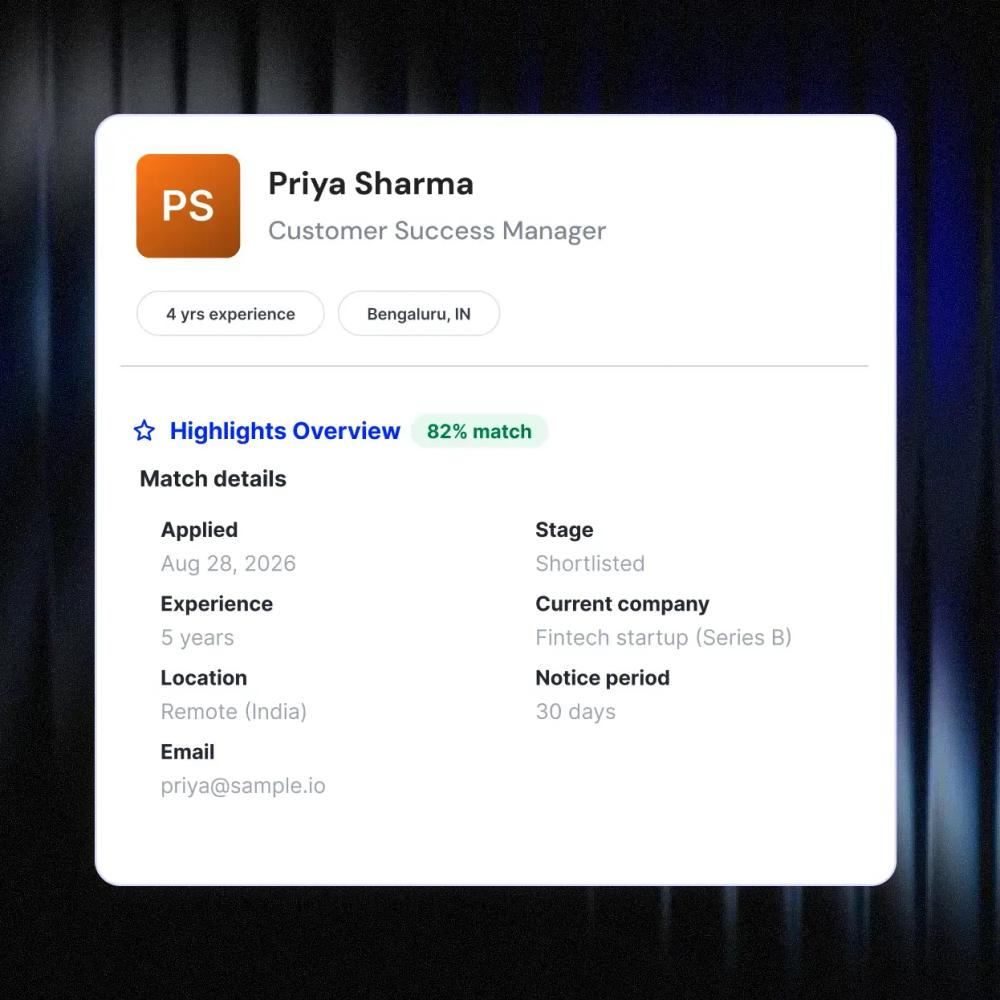
Mira AI turns a sentence into a job description and a scorecard, then scores every applicant against it.
Build a career with a global team, on Indian payroll.
Trusted by 300+ Global Companies


The labelling work companies hire for most.
Open whichever is closest to your dataset. Anything beyond this list is judged against the same scorecard.
Image & Video Annotation
Bounding boxes, segmentation, keypoints
Text & NLP Annotation
Named entities, intent, sentiment, classification
Audio & Speech
Transcription, diarisation, tagging
LLM Evaluation & RLHF
Preference ranking, rubrics, red teaming
Content Moderation
Policy review, escalation, appeals
Data Entry & Validation
Extraction, deduplication, verification
Any other data work
LiDAR, medical imaging, geospatial and more. Describe the dataset and Mira AI scores for it.
From a labelling guideline to a team that follows it.
Four steps, from writing the standard to a signed contract. Nothing is charged for opening the role or reviewing who applies on the Base plan.
-
01 Post
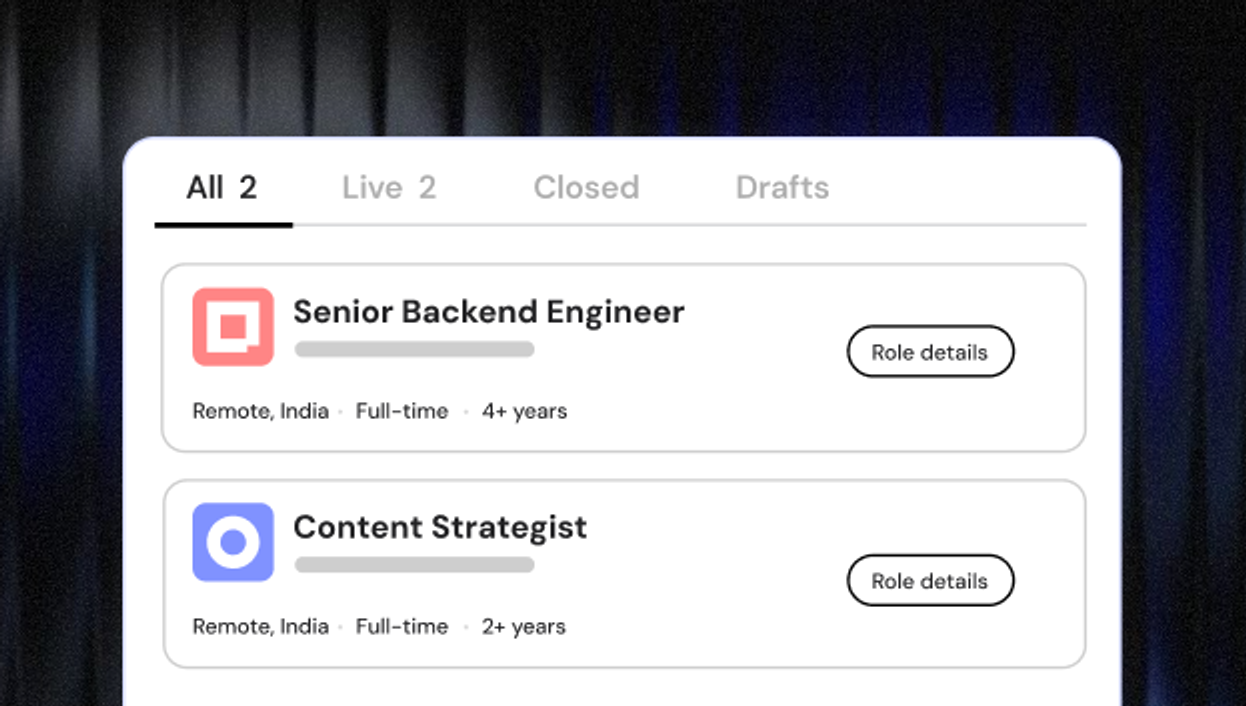
Post a role
- What gets labelled, to what standard, and how disagreements are settled
- Mira AI turns it into a scorecard around your guidelines rather than a generic advert
- Annotation salary band checked against payroll data before the role goes live
-
02 Screen
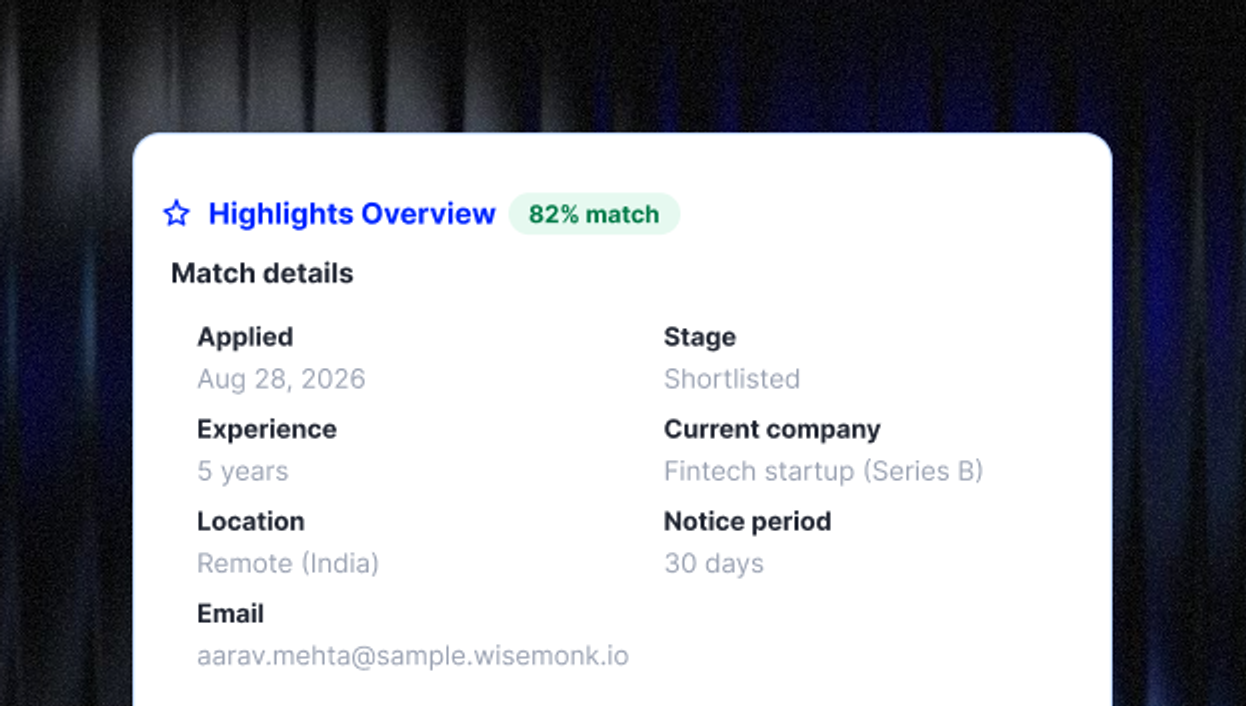
Screen with AI
- Ranked on the domains someone has labelled and the quality bar they worked to
- Each position in the order carries its reasoning
- Referrals and agency submissions scored on the same scale
-
03 Interview
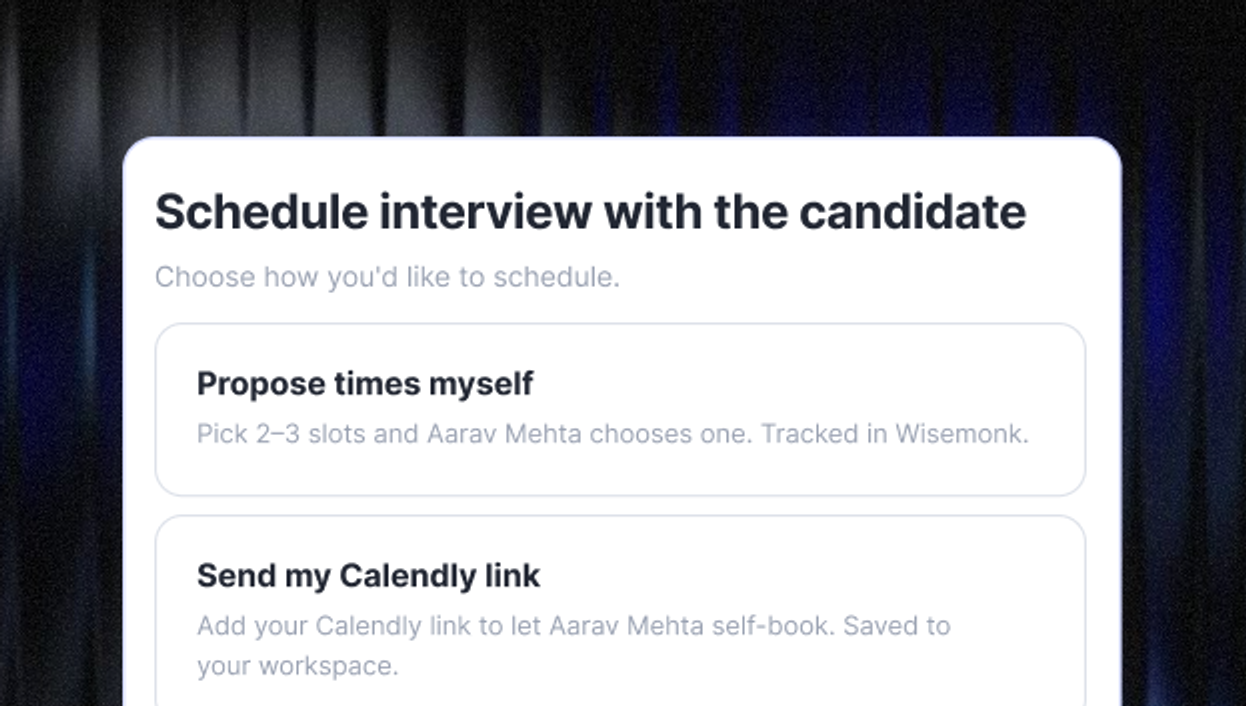
Run interviews
- Past projects, domains and annotation tools linked on the profile
- Send a sample batch and compare the output against your gold set
- Scores, reviewer feedback and notes kept against the role
-
04 Decide
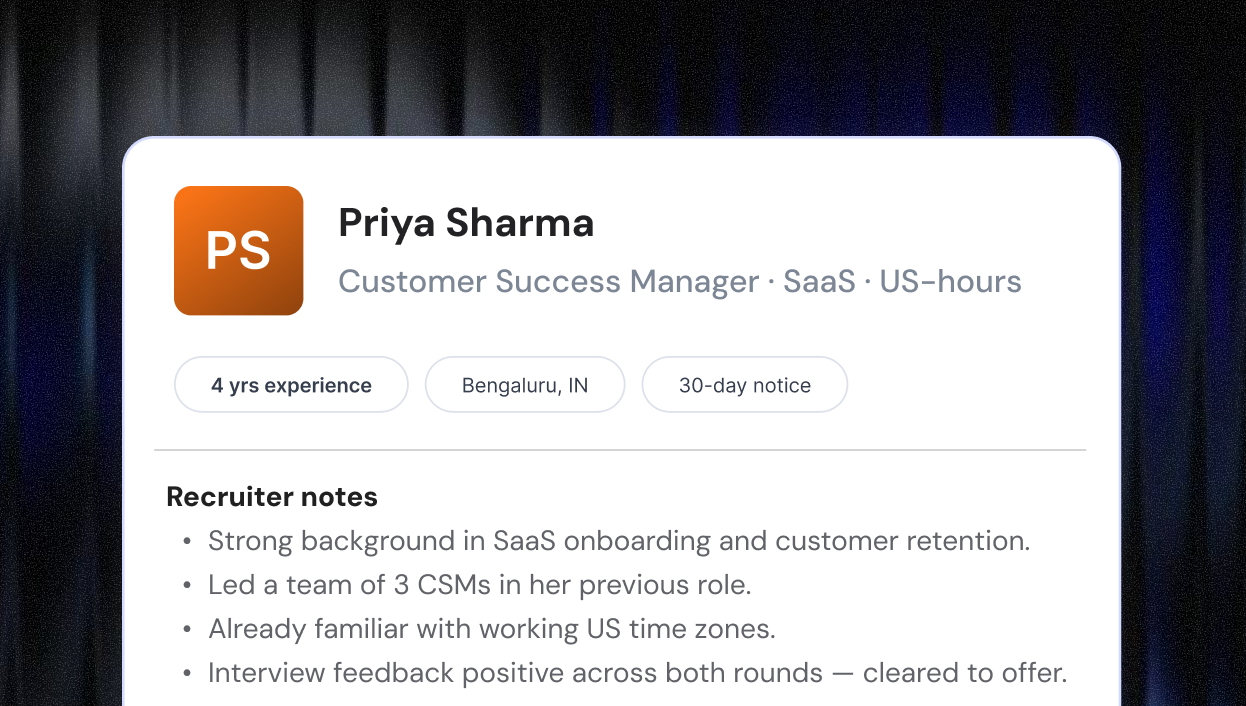
Decide together
- Wisemonk employs the team as the legal employer
- Payroll, provident fund, gratuity and tax withholding handled monthly
- Confidentiality and IP terms written into every contract
It reads the work, not the CV.
Mira AI reads every AI Data & Annotation application through the work that actually shipped: what the person owned, the constraints they worked inside, and the evidence they can show for both. Every applicant is measured against the same scorecard, in the same way, on the day they apply.
Proof beats a polished CV.
You describe the AI Data & Annotation role and what success looks like in it, and Mira AI ranks each applicant with the reasoning written out in sentences you can read and disagree with. The people who rise are the ones whose work backs up the claim. A first read, never the final word.
- Weighs work someone actually shipped above the tools listed on a CV
- Every ranking carries the why, including the near-misses
- Reads for judgement and communication alongside technical depth
- Reorders the shortlist as new AI Data & Annotation applicants arrive
Start from what needs labelling.
Annotation roles grouped by the dataset in front of you rather than by job title. A dataset type not shown here can still be opened and measured the same way.
You are training a vision model
Image and video work is the largest annotation category and the hardest to keep consistent once more than a few people are labelling the same dataset.
- Image Annotators
- Video Annotators
- Segmentation Specialists
- LiDAR Annotators
- Computer Vision Annotators
You are building or evaluating a language model
Text work has moved on from simple tagging to preference ranking and rubric scoring. Judgement and written reasoning now matter more than raw speed.
- Text Annotators
- RLHF Specialists
- LLM Evaluators
- Prompt Reviewers
- Linguistic Annotators
You are moderating user-generated content
Moderation is annotation with policy attached. The wellbeing side needs planning before the headcount, not after the first difficult week.
- Content Moderators
- Policy Reviewers
- Trust and Safety Analysts
- Escalation Specialists
You are cleaning or extracting records
Less glamorous, enormously common, and the deepest pool of the four. Verification steps matter far more than the software anyone is using.
- Data Entry Specialists
- Data Validators
- Document Processors
- Back Office Analysts
Throughput is trainable. Judgement is hired.
Naming the quality bar you need held filters far harder than naming a labelling tool in the advert.
Junior
0 to 2 years
Labels to clear guidelines on straightforward cases. Needs review on the awkward ones and a route to escalate when the guideline runs out.
Mid-level
3 to 5 years
Works accurately across ambiguous cases, notices gaps in the guidelines, and checks the work of newer annotators. The deepest band in India.
Senior / QA
5 to 8 years
Owns quality: audits samples, adjudicates disagreements, and keeps the gold set honest as the guidelines change underneath it.
Team lead
8 years and up
Owns the guidelines, the throughput and the training of new annotators, and is the person your machine learning team actually talks to.
Your own team, a vendor, or a crowd.
Data annotation outsourcing is the usual first instinct, and for some work it is right. Here is where each option actually holds up.
| Option | What it costs | What you control | Best fit |
|---|---|---|---|
| Your own team in India | Salary plus employer costs, predictable every month | Guidelines, quality bar, tooling and who is allowed near the data | Ongoing work, sensitive data, or anything needing real domain knowledge |
| Annotation vendor | Per task or per hour, with a margin sitting on top | The brief, and not a great deal beyond it | Short bursts, standard tasks, or proving a concept quickly |
| Crowdsourcing platform | Cheapest per unit by some distance, quality varies widely | Little more than the written instructions | High volume, low stakes, and work that is easy to verify |
| Your ML engineers labelling | The most expensive option there is, by a wide margin | Everything, at the cost of the modelling they were hired for | The first few hundred examples, and nothing past that |
| Your leads, their hands | Mixed, and often the practical middle answer | The guidelines and the quality bar, but not the people | Teams scaling quickly who want control without the headcount |
What an annotation brief must include.
Choose the ones that matter for your dataset and every applicant is measured against them as soon as they apply.
The guidelines themselves
Most annotation problems are guideline problems. If two careful people would reasonably disagree, the instructions are not finished yet.
Handling the edge cases
What to do when nothing in the guideline fits. Annotators who flag and escalate are worth considerably more than those who guess and move on.
Measuring quality
Gold sets, agreement between annotators, and regular audits. Without them you have volume rather than training data.
Domain knowledge
Medical, legal and financial labelling needs people who understand what they are looking at, not simply people who can drive the tool.
Tooling
Label Studio, CVAT, Labelbox and the rest are learnable in days. Treat tool experience as a preference rather than a filter.
Data sensitivity
Who may see the data, under what terms, and on whose devices. Settle this before anyone is hired rather than after the first batch.
Start with the tool. Add reach. Add people.
Every plan includes Mira. What changes is how far your roles travel and how much of the work you hand over.
Base
For a team running its own hiring and tired of doing it in spreadsheets.
- Full pipeline and candidate tracking
- Your own hosted careers page
- Mira in Slack, with monthly credits
- Unlimited open roles
Boost
For teams whose problem is candidate flow, not candidate tracking.
- Everything in Base
- Your roles listed on the Wisemonk talent community
- Mira on the strongest models available
- Uncapped screening and scheduling
- Salary benchmarks from live India payroll data
Bespoke
Some roles need a person on the phone. Our recruiters take over sourcing and interview coordination, working the pipeline Mira has already built — so you're paying for judgment and conversations, not for admin.
Contingent fee of 10%, 12.5% or 15% of first-year salary, set by role seniority. Under a talent agreement, billed only on a joined hire.
Frequently asked questions
What machine learning and operations leads ask before building an annotation team in India.
How do I hire data annotators in India?
Open the role with the guidelines rather than the volume: what gets labelled, to what standard, and how a disagreement gets settled. Mira AI drafts the job description and a scorecard built on those guidelines, the role reaches our candidate community, and each application is scored as it lands. Run a paid pilot batch against your gold set before you commit, then Wisemonk employs whoever you keep.
Should I build my own annotation team or outsource it?
Outsourcing suits short bursts of standard work where the instructions fit on a page. Your own team wins when the labelling runs continuously, when the data is sensitive, or when the work needs domain knowledge that takes weeks to build. The pattern worth avoiding is paying a vendor margin for years on work that never stops, while the guidelines and the hard-won judgement stay on someone else's side of the contract.
How much does it cost to hire data annotators in India?
Annotation is the most affordable band in this category, which is precisely why so much of this work sits in India. Generalist annotators cost the least, specialists in medical, legal or LiDAR work cost considerably more, and QA reviewers and team leads sit above both. Because the salaries are modest, employer costs such as provident fund and gratuity make up a larger share of the total, and we set those out in full before you make an offer.
How do I keep annotation quality consistent across a team?
Three things do most of the work: a guideline document that resolves real disagreements rather than describing the easy cases, a gold set the team is measured against regularly, and one person whose job is adjudication rather than throughput. Agreement between annotators is the number to watch. Teams that measure only volume discover the quality problem months later, usually when a model trained on the data behaves oddly.
Can I hire annotators for specialist domains like medical or legal?
Yes, and it is one of the better reasons to build your own team. India has large pools of medically and legally trained graduates, and a radiologist labelling scans or a law graduate marking up contracts produces something a general annotation workforce cannot. Expect a smaller field, a longer search and a higher band, and write the qualification you need into the scorecard so it is screened rather than hoped for.
How do I protect sensitive data when annotation happens in India?
Decide three things before hiring: who may see the data, what they may see it on, and under what contractual terms. Wisemonk writes confidentiality and intellectual property clauses into every employment contract, and because the annotators are employees rather than a vendor's contractors, the obligations sit directly with the people doing the work. Access controls, device policy and whether data may leave your systems at all remain architecture decisions on your side.
Do annotators in India work US or UK hours?
Most annotation runs on Indian hours, which is usually an advantage: batches submitted at the end of your day are waiting when you return. Where overlap matters is the guideline conversation, since the questions that surface in week one are the ones that decide quality for the following year. A few hours of shared time for that is worth more than a full shift of overlap afterwards.
Do I need an entity in India to employ an annotation team?
No. Wisemonk employs the whole team as the legal employer, handling contracts, payroll, provident fund, gratuity, ESI and income tax withholding. You set the guidelines and the priorities. This is what makes an in-house team practical at five or ten people rather than only at fifty, and if you already have an Indian entity the team can sit on that instead.
What does an annotation team lead actually do?
They own the guidelines, resolve the disagreements the guidelines do not cover, train new annotators, and report on quality rather than only on volume. They are also the person your machine learning team talks to, which saves your engineers from fielding labelling questions all week. On any team past about five annotators, this role pays for itself quickly.
Can the same team do RLHF and model evaluation?
Sometimes, though it is a genuine step up. Preference ranking and rubric scoring need written reasoning and comfort with ambiguity, where traditional labelling rewards consistency against a fixed rule. Strong annotators often make the jump well, particularly those who already handle edge cases thoughtfully. Test it with a pilot rather than assuming it, and expect to pay more for the people who can do both.
Build your annotation team in India.
Bring the guidelines and the dataset. Mira AI writes the scorecard, orders every applicant against it, and Wisemonk employs the team you keep.
