



Hire back-end developers in India, powered by Mira AI.
Find Python, Java, Node.js and Go engineers in India, from APIs to data pipelines. Mira AI checks each application against your scorecard before it reaches you.
Mira AI turns a sentence into a job description and a scorecard, then scores every applicant against it.
Build a career with a global team, on Indian payroll.
Trusted by 300+ Global Companies


The back-end languages companies hire for most.
Open the one your service already runs. A language outside this list is scored on the same scorecard.
Python & Django
Python, Django, FastAPI, Flask
Java & Spring
Java, Spring Boot, Hibernate, Kafka
Node.js & TypeScript
Node, NestJS, Express, TypeScript
PHP & Laravel
PHP, Laravel, Symfony, MySQL
Go & Rust
Go, gRPC, microservices, Rust
.NET & Ruby
C#, .NET Core, Ruby on Rails
Any other back-end role
Elixir, Scala, Kotlin, Clojure and more. Name the language and Mira AI builds the scorecard around it.
From a one-line brief to a back-end engineer on payroll.
Four steps, from naming the language to a signed contract. Nothing is charged for posting or screening on the Base plan.
-
01 Post
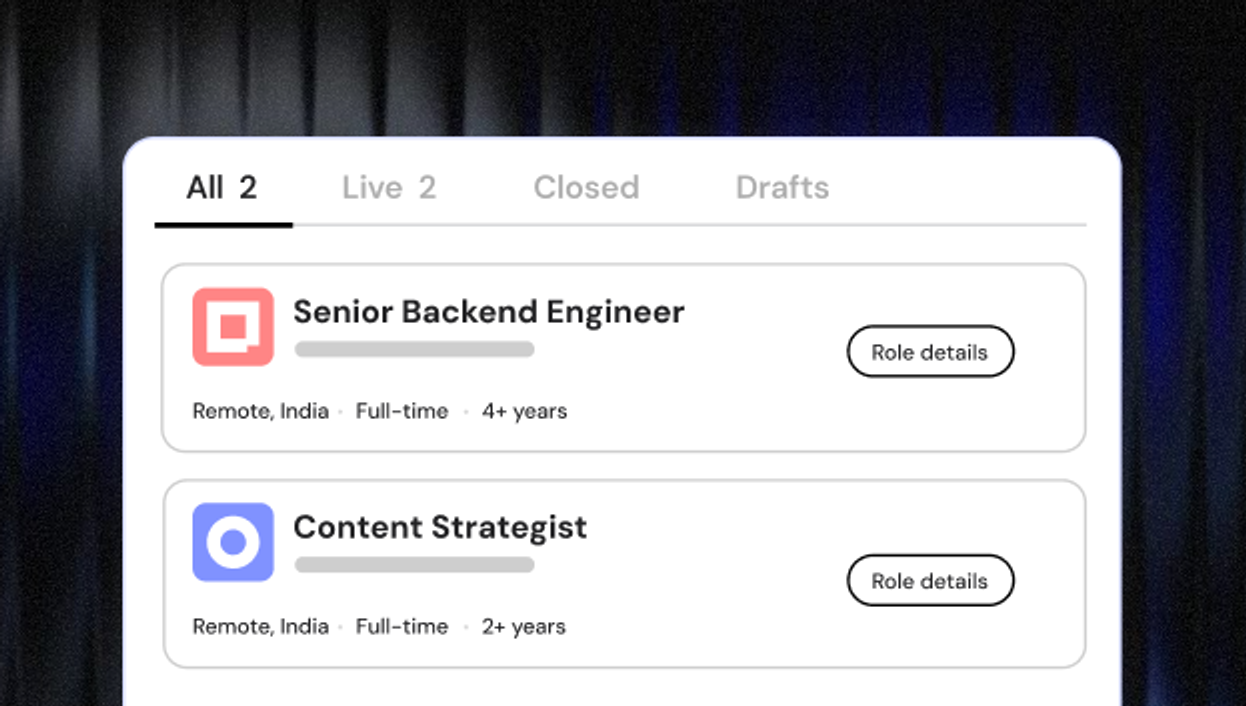
Post a role
- Python, Java, Node, Go or PHP, plus seniority and timezone overlap
- Mira AI turns it into a scorecard built around your architecture
- Language-specific salary band checked against payroll data before it goes live
-
02 Screen
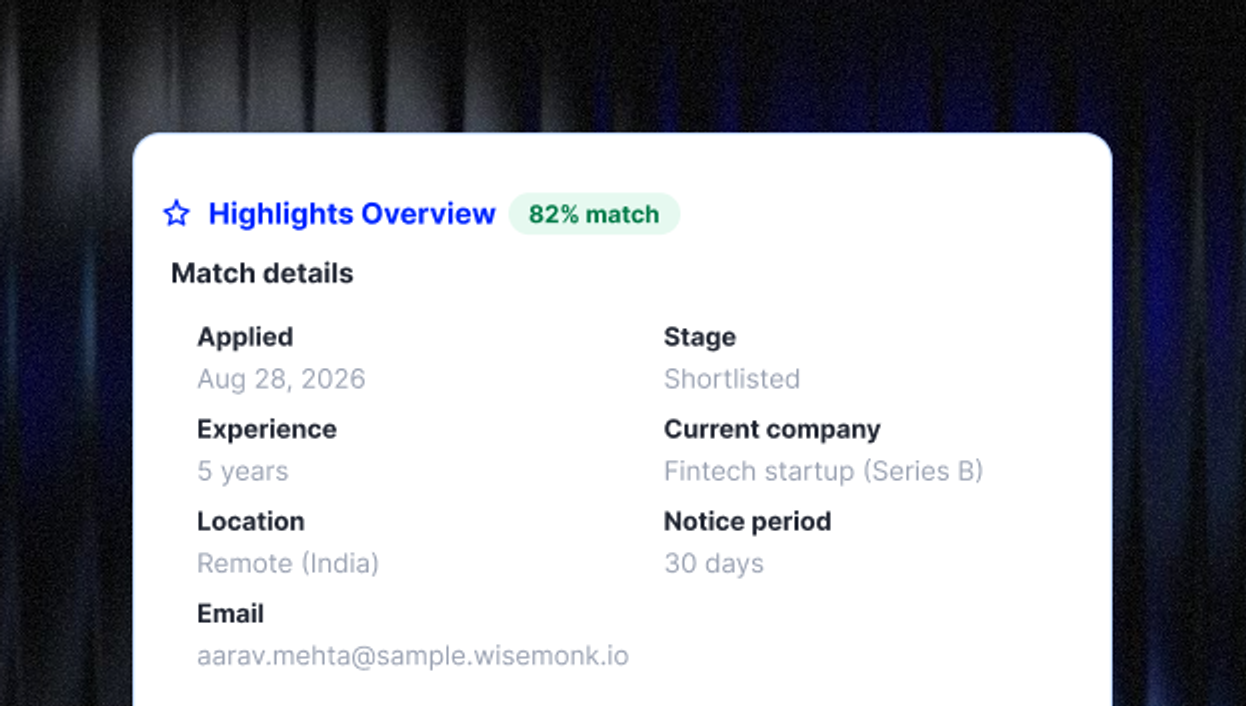
Screen with AI
- Ranked on the language and the systems they have run, not on keywords
- Each position in the order carries its reasoning
- Referrals and agency submissions scored on the same scale
-
03 Interview
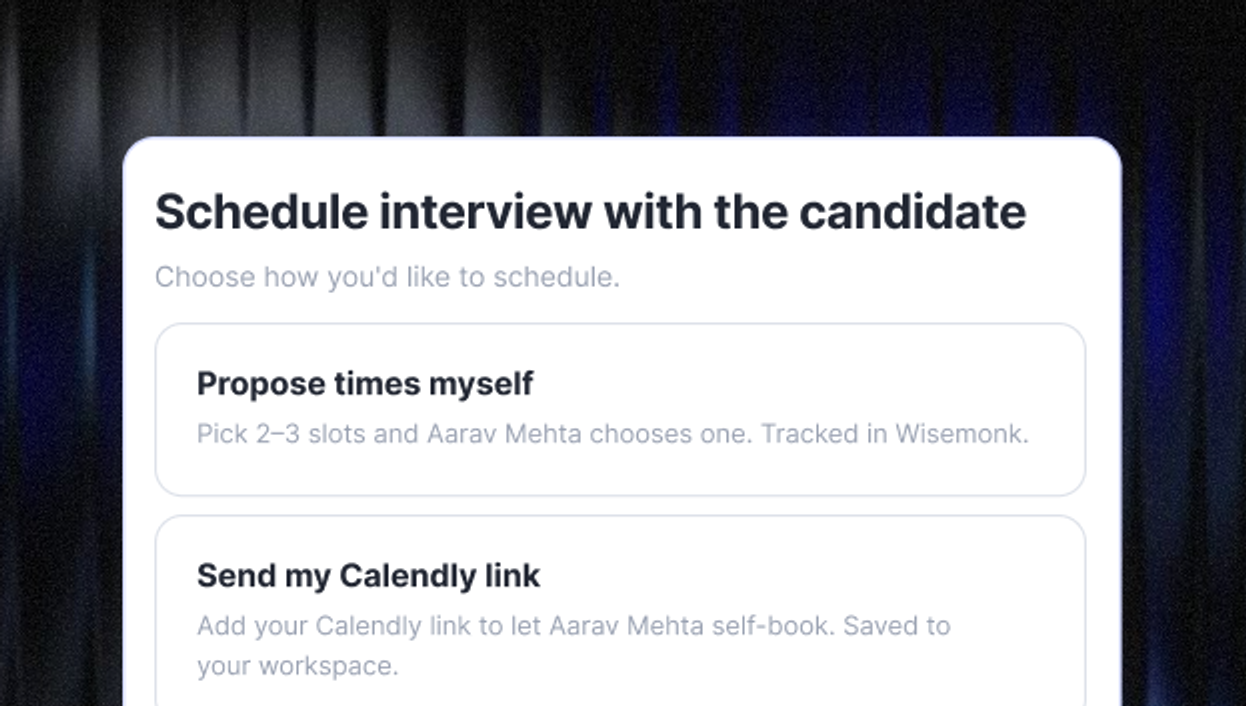
Run interviews
- GitHub, side projects and production systems linked on the profile
- Book a system design round or a take-home in a click
- Notes, recordings and team scores kept against the role
-
04 Decide
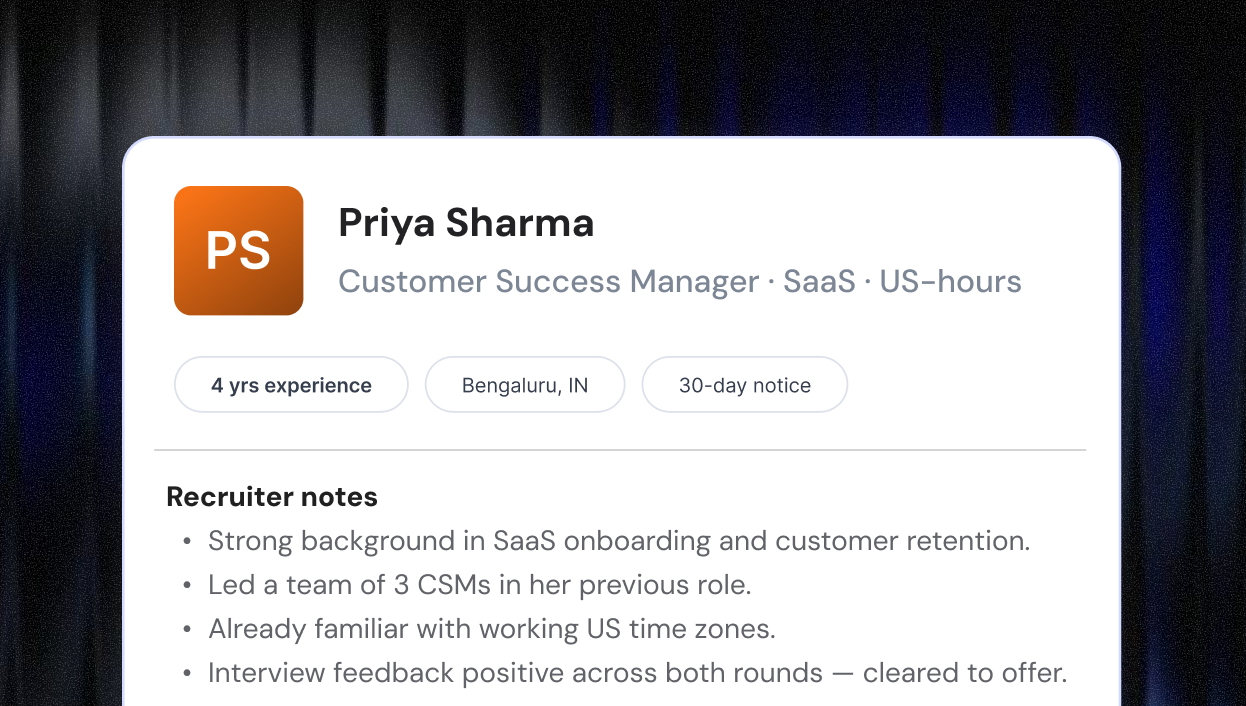
Decide together
- Wisemonk holds the employment contract as legal employer
- Payroll, provident fund, gratuity and tax withholding run monthly
- No Indian entity required, or use the one you already have
It reads the work, not the CV.
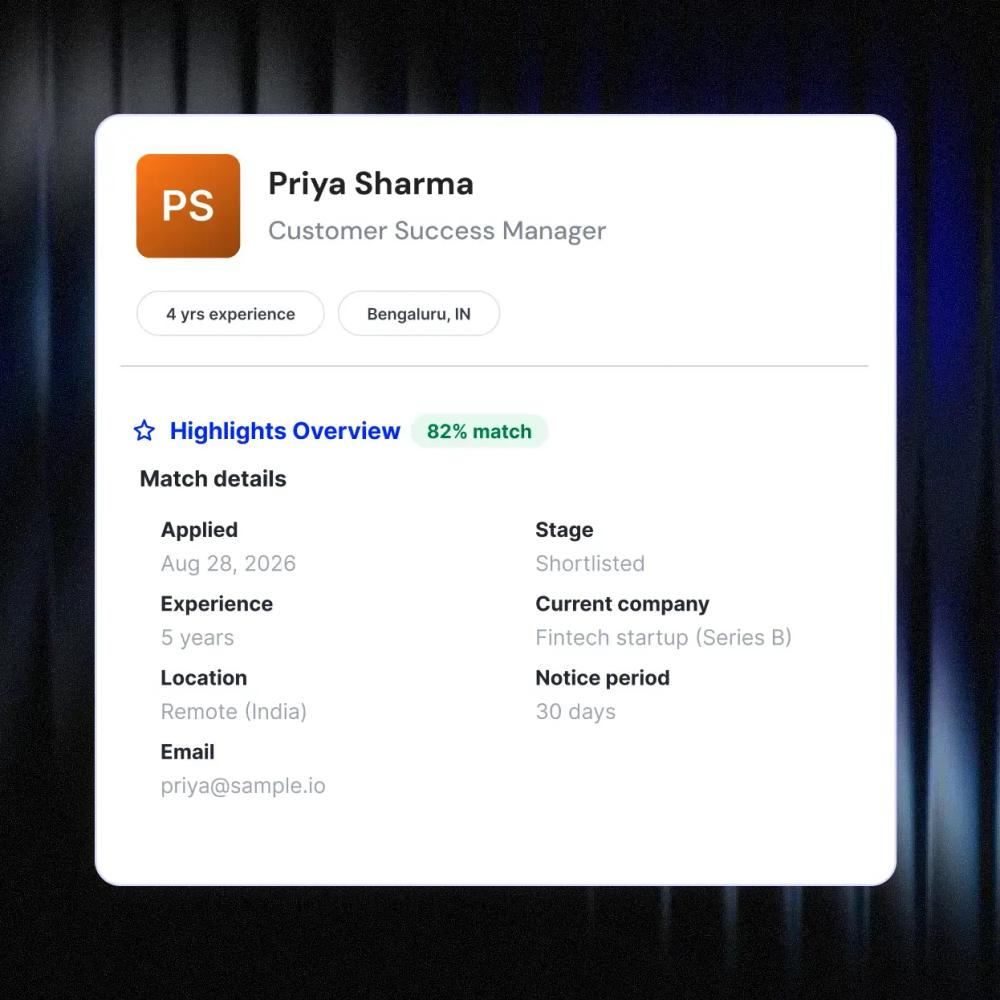
Mira AI reads every Back-End application through the work that actually shipped: what the person owned, the constraints they worked inside, and the evidence they can show for both. Every applicant is measured against the same scorecard, in the same way, on the day they apply.
Proof beats a polished CV.
You describe the Back-End role and what success looks like in it, and Mira AI ranks each applicant with the reasoning written out in sentences you can read and disagree with. The people who rise are the ones whose work backs up the claim. A first read, never the final word.
- Weighs work someone actually shipped above the tools listed on a CV
- Every ranking carries the why, including the near-misses
- Reads for judgement and communication alongside technical depth
- Reorders the shortlist as new Back-End applicants arrive
Start from the system you are building.
Back-end roles grouped by the job in front of you rather than by job title. A language not listed here can still be opened and scored the same way.
You are building the API behind a product
Most back-end hiring starts here. Match the language your service already runs rather than the one with the best benchmarks this year.
- Python Developers
- Django Developers
- Node.js Developers
- FastAPI Developers
- Express Developers
- API Developers
You are running a high-traffic or distributed system
Concurrency, queues and failure handling matter more than the language itself. Look for someone who has been paged at three in the morning for their own service.
- Golang Developers
- Java Developers
- Spring Boot Developers
- Kafka Engineers
- Microservices Engineers
You are maintaining an established enterprise codebase
Deep, unfashionable language experience wins here. Java, .NET and PHP have the largest back-end pools in India by a wide margin.
- Java Developers
- .NET Developers
- PHP Developers
- Laravel Developers
- Ruby on Rails Developers
You are moving data around rather than serving requests
This sits closer to data engineering than to API work. Hire for pipelines, batch jobs and database depth instead of framework familiarity.
- Python Developers
- SQL Developers
- ETL Developers
- PostgreSQL Developers
- Data Engineers
Seniority shows up under load.
Writing the system scope into the scorecard filters far harder than writing a job title into the advert.
Junior
0 to 2 years
Writes endpoints and queries against an API contract someone else defined. Needs review on data modelling, error handling and security.
Mid-level
3 to 5 years
Owns a service end to end, from schema through to deployment. This is the largest band of back-end talent in India and the one that fills fastest.
Senior
6 to 9 years
Owns the architecture of a service, picks the datastore, designs for the failure modes and reviews other people. Notice is usually 60 to 90 days.
Staff / Principal
10 years and up
Sets back-end direction across services, from API contracts to capacity planning. A smaller pool and a slower search.
Which back-end language to hire for.
The language decides how deep the pool is, what it costs and how quickly a new engineer becomes useful. Here is how the main options compare in the Indian market.
| Language | Hiring pool in India | Time to onboard | Best fit |
|---|---|---|---|
| Python / Django | The deepest back-end pool in India | Fast, with the largest library ecosystem to draw on | APIs, data work and AI-adjacent products |
| Java / Spring | Very deep, concentrated in enterprise and services firms | Slower, with more ceremony to learn | Large systems, finance, anything long-lived |
| Node.js / TypeScript | Deep, and often shared with front-end engineers | Quickest for a team already writing TypeScript | Product APIs and real-time features |
| PHP / Laravel | Large and inexpensive, weighted towards agencies | Quick for CRUD-shaped work | Web applications and CMS-backed products |
| Go | Mid-sized, growing and weighted to senior people | Quick to read, slower to master | High-throughput services and infrastructure |
| .NET / C# | Steady, concentrated in enterprise and capability centres | Fast for anyone already in the Microsoft stack | Windows-heavy and enterprise back-ends |
| Ruby on Rails | Small and no longer growing | Fast to become productive in | Existing Rails products rather than new ones |
What to write into a back-end brief.
Name the ones that matter for your system and every applicant is weighed against them the moment they apply.
API design
Versioning, pagination, idempotency and error contracts. An API that is awkward in its first week stays awkward for years.
Data modelling
Schema design, indexing, and knowing when a relational database is the wrong answer. Most back-end performance problems turn out to be database problems.
Concurrency and queues
Background jobs, retries and idempotent consumers. This is the difference between a system that degrades under load and one that falls over.
Security
Authentication, authorisation, input validation and secrets handling. The back-end is where a small mistake becomes a breach.
Observability
Structured logs, metrics and traces. An engineer who instruments their own service is an engineer who has had to operate one.
Testing and deployment
Integration tests, migrations that run safely and rollbacks that actually work. Shipping is a back-end skill, not a handover to DevOps.
Start with the tool. Add reach. Add people.
Every plan includes Mira. What changes is how far your roles travel and how much of the work you hand over.
Base
For a team running its own hiring and tired of doing it in spreadsheets.
- Full pipeline and candidate tracking
- Your own hosted careers page
- Mira in Slack, with monthly credits
- Unlimited open roles
Boost
For teams whose problem is candidate flow, not candidate tracking.
- Everything in Base
- Your roles listed on the Wisemonk talent community
- Mira on the strongest models available
- Uncapped screening and scheduling
- Salary benchmarks from live India payroll data
Bespoke
Some roles need a person on the phone. Our recruiters take over sourcing and interview coordination, working the pipeline Mira has already built — so you're paying for judgment and conversations, not for admin.
Contingent fee of 10%, 12.5% or 15% of first-year salary, set by role seniority. Under a talent agreement, billed only on a joined hire.
Frequently asked questions
What engineering leads ask before they open a first back-end role in India.
How do I hire back-end developers in India?
Open the role with the language, the seniority and the timezone overlap you need. Mira AI drafts the job description and a scorecard built around your architecture, the role reaches our candidate community, and each application is scored against it as it arrives. You interview the ranked shortlist, and when you make an offer, Wisemonk employs the engineer on your behalf, so no Indian entity is needed.
Which back-end language should I hire for in India?
Hire for the language your service already runs, unless you are starting from nothing. Python and Java have the deepest pools in India, Node.js is close behind and often overlaps with front-end talent, PHP is the cheapest to staff, and Go skews senior and costs more. Rewriting a service to match the talent you can find is almost always more expensive than hiring for the stack you have.
How much does it cost to hire a Python developer in India?
Seniority and city drive it more than the language does. A mid-level Django engineer costs less than a senior one who owns the schema and the deployment story, and Bengaluru sits above Pune, Hyderabad and the smaller hubs. Go and Kotlin carry a premium because the pools are thinner; PHP sits at the other end. When you open a role we compare your band against our payroll data for back-end engineers and say whether it will fill before it goes live.
What is the difference between a back-end and a full-stack developer?
A back-end developer owns the service: the API, the data model, the queues and the way it behaves under load. A full-stack developer covers that plus the interface, usually at less depth on each side. For a first engineering hire, full-stack is often the better bet. Once traffic or data complexity grows, the depth of a dedicated back-end engineer starts to pay for itself.
Do back-end developers in India work US or UK hours?
Overlap with the UK and Europe is the norm and simple to staff. Full US-hours coverage draws from a smaller group, so state the overlap when you open the role and only candidates willing to work it will apply. Back-end roles tend to need less live overlap than front-end or product roles, which widens the pool in practice.
How do you check a back-end developer's real experience?
Mira AI scores each application against the scorecard you wrote, which for back-end usually means the language, the years in it, the scale of the systems they have operated and whether they owned deployment. Every score comes with its reasoning. You still run your own system design and code rounds, and the workspace holds the take-home, the review notes and the team scorecards on one thread.
Do I need an entity in India to employ a back-end developer?
No. Wisemonk signs the employment contract as the legal employer and takes on payroll, provident fund, gratuity, ESI and income tax withholding. The engineer reports to you and takes their work from you. Teams that already have an Indian entity can employ on that instead, and the choice is made at offer stage rather than when the role opens.
What does senior mean for a back-end engineer in India?
Roughly six to nine years, owning a service rather than a ticket queue: choosing the datastore, designing for the failure modes, and reviewing the people around them. Titles move quickly in the Indian market, particularly inside services firms, so write the system scope into the scorecard instead of trusting the title on a CV.
Can I hire a back-end developer who also handles DevOps?
Often, yes. Most senior back-end engineers in India have run their own CI, containers and cloud infrastructure, especially those from smaller product teams. Ask for it explicitly in the scorecard so it is scored rather than assumed. If the infrastructure work is a full job in itself, hire a DevOps engineer for it instead.
How do I hire back-end developers who have worked at scale?
Put the scale into the brief in numbers rather than adjectives: requests per second, data volume, or the size of the team that maintained the service. Mira AI scores against what you write, so a concrete number filters hard while the word "scalable" filters nothing. Engineers from India's larger product companies and capability centres are where most of this experience sits.
Find your next back-end engineer in India.
Name the language and the system you are building. Mira AI writes the scorecard, ranks every applicant, and Wisemonk takes care of the employment.
