- Rippling ist eine umfassende HR-, IT- und Finanzplattform, bei der EOR ein Modul unter vielen ist. Ideal für US-lastige Unternehmen, die alles in einem einzigen System haben wollen.
- Remote ist eine EOR-First-Plattform, die speziell für internationale Personalvermittlungen entwickelt wurde und zu 100% eigene Unternehmen in über 90 Ländern hat. Ideal für Unternehmen, bei denen globale Beschäftigung das Hauptbedürfnis ist.
- Rippling löst die betriebliche Fragmentierung in den Bereichen Personal, IT und Finanzen. Remote löst internationale Personalbeschaffungs- und Compliance-Anforderungen. Sie sind für grundlegend unterschiedliche Probleme konzipiert.
- Wenn mehr als 70% Ihres Teams aus dem Inland kommen und Sie eine Vereinheitlichung der Plattform benötigen, entscheiden Sie sich für Rippling. Wenn Sie Mitarbeiter in mehreren Ländern einstellen und eine umfassende globale Compliance mit transparenter Preisgestaltung benötigen, entscheiden Sie sich für Remote.
Benötigen Sie Hilfe bei Ihrer globalen Expansion? Kontaktieren Sie uns noch heute!
Entdecke wie Wisemonk wirkungsvolle und zuverlässige Inhalte erstellt.
Die Wahl zwischen Rippling und Remote hängt von einer großen Frage ab: Benötigen Sie eine umfassende HR-, IT- und Finanzplattform oder eine spezialisierte globale Beschäftigungslösung?
Beide Plattformen helfen Unternehmen dabei, international einzustellen, aber sie verfolgen grundlegend unterschiedliche Ansätze, um das globale Personalproblem zu lösen. In diesem direkten Vergleich unterteilen wir Funktionen, Preise, EOR-Länderabdeckung, Compliance-Funktionen und welche Plattform zu Ihrem spezifischen Geschäftsprofil passt.
Bei Wisemonk haben wir mit Dutzenden von Unternehmen zusammengearbeitet, die beide Plattformen evaluiert haben (und manchmal auch zwischen ihnen wechseln), sodass wir genau wissen, wo jede Plattform glänzt und wo sie zu kurz kommt.
Schnelle Vergleichstabelle
Was ist Rippling?
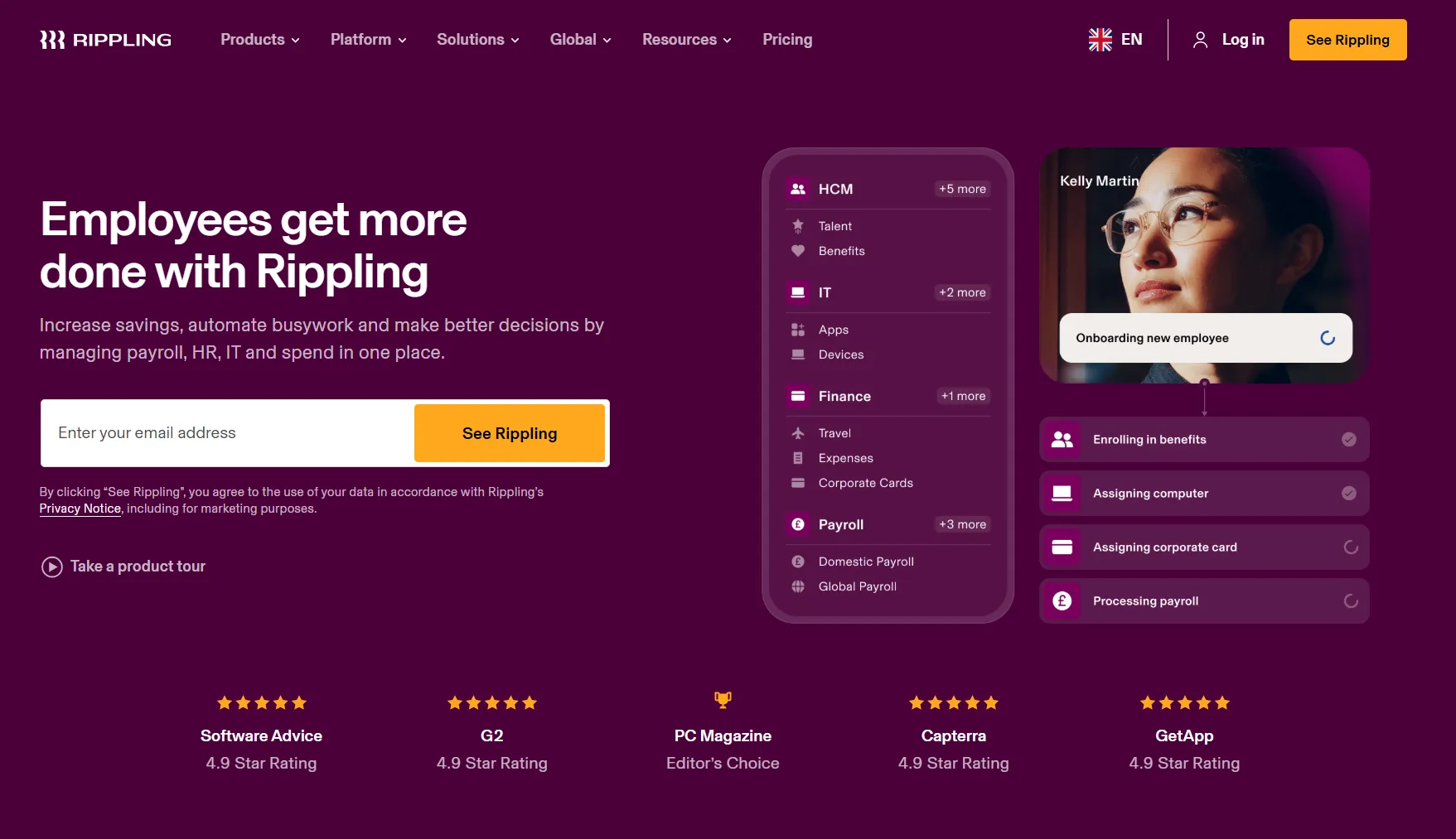
Rippling ist eine umfassende Workforce-Management-Plattform, die Personal-, IT- und Finanzabläufe in einem einzigen System vereint. Rippling wurde 2016 von Parker Conrad (der zuvor Zenefits mitbegründete) gegründet und bietet eine modulare Suite, die Gehaltsabrechnung, Leistungsverwaltung, Gerätemanagement, App-Bereitstellung, Spesenverfolgung und Dienstleistungen von Employer of Record (EOR).
Es richtet sich in erster Linie an mittelständische Unternehmen (über 50 bis 1.000 Mitarbeiter), die mehrere Systeme auf einer einheitlichen Plattform konsolidieren möchten, anstatt für jede Funktion mit separaten Tools zu jonglieren.
Hauptmerkmale von Rippling
- Einheitliche Personal-, IT- und Finanzarchitektur: Rippling basiert auf einem einzigen Mitarbeiterdatenmodell und verbindet Personalwesen, IT-Sicherheit und Ausgabenmanagement, sodass das Onboarding eines neuen Mitarbeiters automatisch die Gehaltsabrechnung, die Gerätebereitstellung und den Zugriff auf Apps in einem Rutsch auslöst.
- Workflow-Automatisierung und benutzerdefinierter Workflow-Builder: Mit dem Workflow Studio von Rippling können Sie nahezu jeden Prozess automatisieren, von der standortbezogenen PTO-Durchsetzung bis hin zu rollengesteuerten Compliance-Schulungen und mehrstufigen Kostengenehmigungen.
- EOR in über 50 Ländern: Rippling kümmert sich um konforme Verträge, lokale Gehaltsabrechnungen, Steuererklärungen und obligatorische Leistungen für internationale Vollzeitbeschäftigte. Die Unterstützung von Auftragnehmern erstreckt sich auf über 185 Länder.
- Über 600 native Integrationen: Rippling stellt eine Verbindung zu Tools wie Slack, Google Workspace, QuickBooks, Greenhouse und Carta her und bietet die Möglichkeit, plattformübergreifende Automatisierungen auszulösen, z. B. die Deprovisionierung des Zugriffs eines ausscheidenden Mitarbeiters in Sekundenschnelle.
- Verwaltung und Bereitstellung von IT-Geräten: Im Gegensatz zu den meisten HR- oder EOR-Plattformen kümmert sich Rippling um die Bestellung und Einrichtung von Laptops, die Durchsetzung von Sicherheitsrichtlinien und die Fernlöschung für globale Remote-Teams.
- Modulare Preisstruktur: Sie zahlen nur für die Module, die Sie benötigen. Beginnen Sie mit den Kernbereichen Personalwesen und Gehaltsabrechnung und fügen Sie dann IT-Management-, EOR-, Ausgabenmanagement- oder Lerntools hinzu, wenn Ihr Unternehmen wächst.
Für wen ist Rippling am besten geeignet?
- Ideales Unternehmensprofil: Mittelgroße Technologieunternehmen und schnell wachsende Startups (50 bis 500 Mitarbeiter) mit einer hauptsächlich in den USA ansässigen Belegschaft und einer geringeren internationalen Präsenz.
- Wenn Rippling die richtige Wahl ist: Entscheiden Sie sich für Rippling, wenn Ihr Hauptziel die Konsolidierung von Personal, IT und Finanzen in einem einzigen System ist und globale Personalbeschaffung eine untergeordnete Anforderung ist. Es eignet sich besonders für Teams, die bereits mit mehreren Tools für Gehaltsabrechnung, Gerätemanagement und Anwendungsbereitstellung jonglieren müssen.
- Wo Rippling schwächer ist: Wenn Ihre Priorität darin besteht, international in über 10 Ländern einzustellen, ist EOR von Rippling nur ein Modul auf einer größeren Plattform. EOR-First-Anbieter wie Remote oder Wisemonks EOR bieten eine umfassendere Einhaltung der Vorschriften auf Landesebene und gezielte globale Beschäftigungsunterstützung.
Preisgestaltung in Rippelbauweise
- Die Plattform beginnt um 8$ pro Mitarbeiter und Monat für HR-Kernfunktionen im Rahmen des Unity-Basisplans.
- EOR-Preise werden nicht veröffentlicht auf Ripplings Website. Basierend auf Marktdaten liegt der Preis je nach Land und Umfang in der Regel zwischen 599 und 1.000 US-Dollar pro Mitarbeiter und Monat.
- Die Kosten eskalieren mit zusätzlichen Modulen. Wenn Sie globale Gehaltsabrechnungs-, IT-Management-, Sozialleistungen-, LMS- und Ausgabentools hinzufügen, fallen jeweils separate Gebühren pro Benutzer an, wodurch sich Ihre Gesamtkosten schnell vervielfachen können.
- Preistransparenz ist ein gemeinsames Anliegen. Nutzer von G2 und Trustpilot melden häufig unerwartete Gebühren und Schwierigkeiten bei der Prognose der Gesamtausgaben ohne ein individuelles Angebot des Vertriebsteams von Rippling.
Einschränkungen von Rippling
- EOR ist ein neueres Angebot: Rippling hat seinen Employer of Record Services etwa 2023 auf den Markt gebracht, sodass dem Produkt die Reife von Plattformen fehlt, die vom ersten Tag an speziell für internationale Beschäftigung entwickelt wurden.
- Eingeschränkte EOR-Länderabdeckung: Rippling unterstützt EOR in über 50 Ländern, während engagierte Anbieter wie Remote über 90 Länder über hundertprozentige Unternehmen abdecken — eine beachtliche Lücke für Unternehmen, die in Schwellenländer expandieren.
- Steile Lernkurve: Die Breite der Plattform bedeutet einen erheblichen Zeitaufwand bei der Ersteinrichtung und Konfiguration, insbesondere für HR-Teams, die an einfachere Tools gewöhnt sind.
- Der Support ist je nach Stufe unterschiedlich: Premium-Support mit engagierten Account Managern kostet extra. Benutzer mit Standardplänen berichten manchmal von mehrtägigen Reaktionszeiten bei komplexen Gehaltsabrechnungs- oder Compliance-Problemen.
- Die landesspezifische Konformitätstiefe ist begrenzt: Rippling deckt Indien im Rahmen seiner globalen EOR ab, ist jedoch nicht auf staatliche Vorschriften wie Steuervariationen oder Nuancen des Shops and Establishments Act spezialisiert. Für große indische Teams bietet sich ein spezialisiertes indisches EOR wie Weiser Mönch bietet deutlich tieferes lokales Fachwissen.
Wenn Sie Rippling in Betracht ziehen, müssen Sie sich Folgendes ansehen: Die 10 besten Konkurrenten und Alternativen von Rippling.
Was ist Remote?
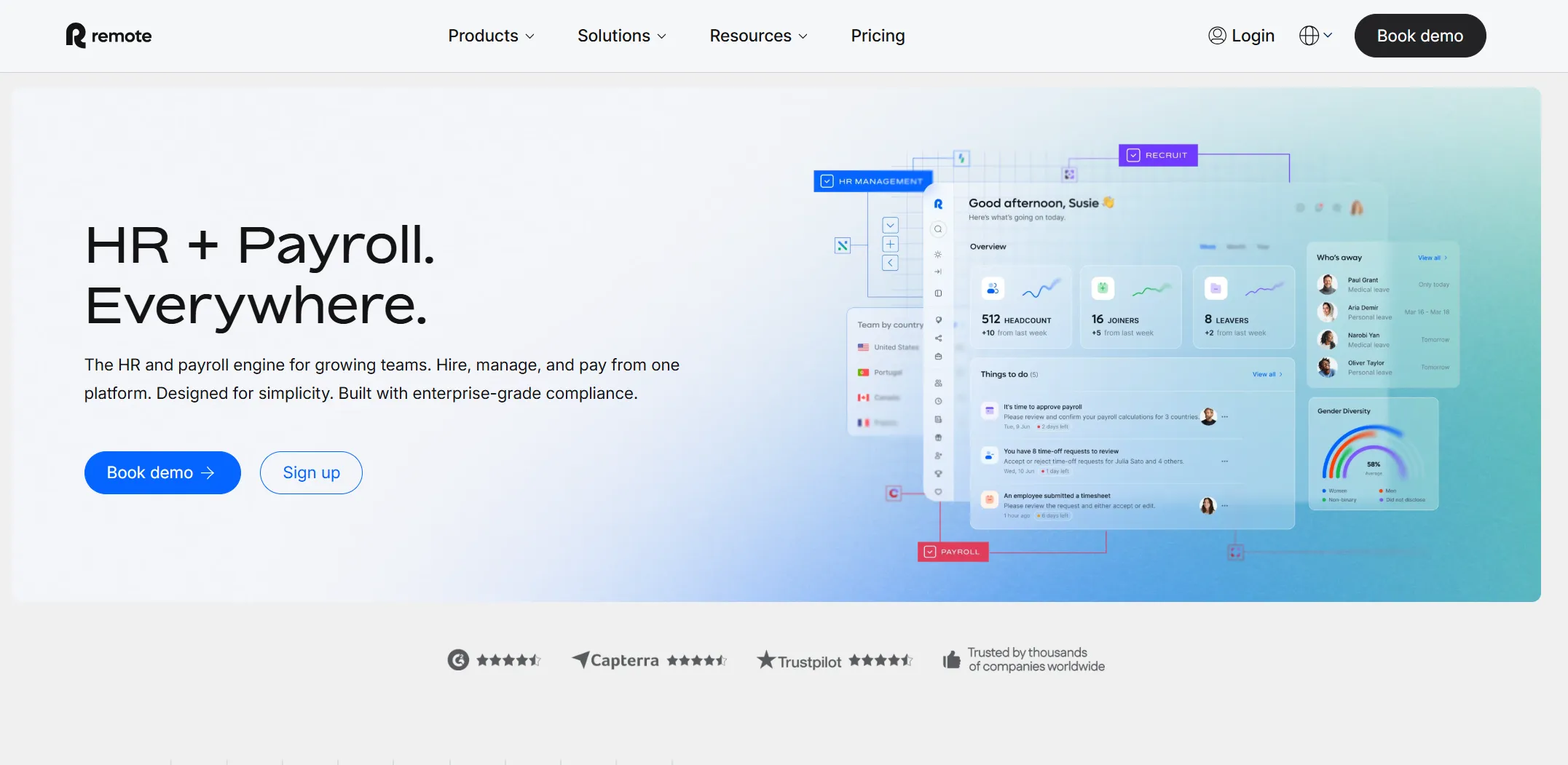
Remote ist eine globale Beschäftigungsplattform, die sich auf Employer of Record (EOR) -Dienstleistungen spezialisiert hat und Unternehmen dabei hilft, internationale Mitarbeiter einzustellen, zu bezahlen und zu verwalten, ohne lokale Niederlassungen einzurichten. Remote wurde 2019 von Job van der Voort und Marcelo Lebre (beide ehemalige GitLab-Führungskräfte) gegründet und operiert über zu 100% unternehmenseigene juristische Personen in über 90 Ländern und ist für seine EOR-Dienste niemals auf Drittanbieter angewiesen.
Die Plattform richtet sich in erster Linie an Unternehmen, die sich auf internationale Expansion und globale Personalbeschaffung konzentrieren, und bietet Unterstützung von Auftragnehmern in über 180 Ländern.
Hauptmerkmale von Remote
- Modell eigener juristischer Personen: Remote besitzt und betreibt seine juristischen Personen direkt in jedem Land, in dem es EOR-Dienste anbietet. Dadurch hat das Unternehmen die volle Kontrolle über die Beschäftigungsprozesse, die Einhaltung der Vorschriften und den Umgang mit Daten, wodurch die Aufschlag- und Qualitätsrisiken vermieden werden, die mit Partnernetzwerken von Drittanbietern einhergehen.
- EOR in über 90 Ländern, Unterstützung von Auftragnehmern in über 180: Remote deckt eine breite geografische Präsenz für internationale Vollzeitbeschäftigungen über seine eigenen Unternehmen ab. Für die Verwaltung von Auftragnehmern erstreckt sich die Abdeckung auf über 180 Länder mit regelkonformem Onboarding, Verträgen und Zahlungen.
- IP Guard für den Schutz geistigen Eigentums: Die IP Guard-Funktion von Remote stellt sicher, dass das gesamte geistige Eigentum, das von internationalen Mitarbeitern geschaffen wurde, vollständig dem einstellenden Unternehmen zugewiesen wird, und zwar mit ordnungsgemäßer Dokumentation und rechtlichen Schutzmaßnahmen, die auf die IP-Gesetze der einzelnen Länder zugeschnitten sind. Dies wird durch SOC 2 Typ II-, GDPR- und ISO 27001-Zertifizierungen unterstützt.
- Verwaltung des Auftragnehmers: Remote kümmert sich für 29$ pro Auftragnehmer und Monat um das Onboarding gesetzeskonformer Auftragnehmer, lokalisierte Verträge, Rechnungsbearbeitung und Zahlungen in mehreren Währungen. Außerdem gibt es eine faire Preisgarantie, die sicherstellt, dass Sie nur für aktive Auftragnehmer bezahlen.
- Unterstützung bei Visa und Einwanderung: Remote unterstützt Sie bei Arbeitserlaubnissen, Visa und Umzügen von Mitarbeitern in mehrere Länder und reduziert so den Verwaltungsaufwand, der durch den internationalen Transfer von Talenten entsteht.
- Unterstützung von Aktienanreizen: Durch die Übernahme von Easop bietet Remote nun Tools zur Aktienverwaltung an, die Unternehmen dabei unterstützen, Aktienoptionen für internationale Mitarbeiter unter Einhaltung der lokalen Steuer- und Wertpapiervorschriften zu gewähren, zu verwalten und darüber zu berichten.
Für wen ist Remote am besten geeignet?
- Ideales Unternehmensprofil: Unternehmen, die in mehreren Ländern Mitarbeiter einstellen, die der Einhaltung von Vorschriften, dem Schutz geistigen Eigentums und einer einzigen Plattform für die Verwaltung ihrer globalen Belegschaft Priorität einräumen. Dazu gehören Startups der Serien A bis C, die internationale Teams skalieren, sowie etablierte Unternehmen, die in neue Märkte expandieren.
- Wenn Remote die richtige Wahl ist: Entscheiden Sie sich für Remote, wenn internationale Personalvermittlung Ihr Hauptbedürfnis ist und Sie einen EOR-Anbieter suchen, der seine rechtliche Infrastruktur in allen Märkten besitzt. Es eignet sich am besten für Unternehmen, die eine transparente Preisgestaltung, eine strenge Einhaltung der Vorschriften und einen engagierten globalen Beschäftigungspartner benötigen, anstatt ein breiteres HR-/IT-Team zu haben.
- Wo Remote schwächer ist: Wenn Sie ein vollständiges HRIS mit umfassender Personalautomatisierung, IT-Gerätemanagement oder integrierten Finanztools benötigen, ist Remote dafür nicht geeignet. Unternehmen mit großen Teams in den USA, die auch eine inländische Gehaltsabrechnung, Leistungsverwaltung und IT-Bereitstellung benötigen, müssen Remote wahrscheinlich mit einem separaten HRIS koppeln oder sich für eine einheitliche Plattform wie Rippling entscheiden.
Preisgestaltung per Fernzugriff
- EOR-Flatrate: 599 USD pro Mitarbeiter und Monat (jährlich abgerechnet) oder 699 USD pro Mitarbeiter und Monat mit monatlicher Abrechnung. Dieser Tarif ist in allen Ländern, in denen Remote tätig ist, einheitlich.
- Auftragnehmerverwaltung: 29 USD pro Auftragnehmer und Monat, mit der Fairpreisgarantie von Remote, die sicherstellt, dass Sie nur für Auftragnehmer bezahlen, die aktiv arbeiten.
- Transparentes Preismodell ohne versteckte Gebühren. Remote wirbt ohne Onboarding-Gebühren, ohne Offboarding-Gebühren, ohne Einzahlungen und ohne Mindestverpflichtungen. Das Unternehmen benötigt auch keine langfristigen Verträge oder Exklusivitätsvereinbarungen.
- Was ist in der EOR-Pauschale enthalten: Konforme Arbeitsverträge, lokale Gehaltsabrechnung, Steuererklärungen, obligatorische Leistungen, Onboarding- und Offboarding-Management, Überwachung der Einhaltung der Vorschriften mit dem Watchtower-Tool von Remote und Unterstützung bei Eigenkapitalanreizen.
Einschränkungen von Remote
- Eingeschränkte native Integrationen: Remote bietet über 50 native Integrationen mit Tools wie BambooHR, Greenhouse, QuickBooks und Slack sowie über 5.000 Verbindungen über Zapier. Dies liegt jedoch weit hinter den über 600 nativen Integrationen von Rippling zurück, was für Unternehmen mit komplexen Tech-Stacks ein Nachteil sein kann.
- Die HRIS-Funktionalität ist zweitrangig: Remote bietet eine kostenlose HRIS-Stufe, die jedoch nur die grundlegende Mitarbeiterverwaltung abdeckt. Es fehlt an der Tiefe spezieller HRIS-Plattformen in Bereichen wie erweiterte Berichterstattung, benutzerdefinierte Workflows und Leistungsmanagement.
- Inkonsistenzen beim Kundensupport in großem Umfang: Während viele Nutzer die Reaktionsfähigkeit von Remote loben, weisen einige G2- und Trustpilot-Bewertungen auf langsamere Lösungszeiten bei komplexen Compliance- oder Gehaltsabrechnungsproblemen hin, insbesondere da die Teamgröße in mehreren Ländern zunimmt.
- Die landesspezifische Tiefe kann variieren: Obwohl wir Unternehmen in über 90 Ländern besitzen, ist die Tiefe der lokalen Leistungsangebote, der Personalberatung und der regulatorischen Expertise nicht in allen Märkten einheitlich. Einige Regionen erhalten eine stärkere Unterstützung als andere.
- Premium-Preise im Vergleich zu regionalen Spezialisten: Mit 599 bis 699 US-Dollar pro Mitarbeiter und Monat liegt Remote am oberen Ende des EOR-Marktes. Regionale Spezialisten wie Wisemonk (ab 99 USD/Monat für Indien) oder RemoFirst (199 USD/Monat) bieten deutlich niedrigere Tarife für Unternehmen, die sich eher auf bestimmte Regionen als auf eine globale Abdeckung konzentrieren.
Wenn Sie Remote in Betracht ziehen, sollten Sie sich Folgendes ansehen: Die 10 besten Konkurrenten und Alternativen aus der Ferne.
Wie schneiden Rippling und Remote bei den EOR-Funktionen ab? [TOC=Rippling im Vergleich zu Remote]
Wenn Sie Rippling und Remote ausschließlich nach EOR-Funktionen ausrichten, werden die Unterschiede sehr deutlich.
Dies sind zwei grundlegend unterschiedliche Ansätze für die globale Beschäftigung. Wenn Sie wissen, wo die einzelnen Plattformen stehen, können Sie kostspielige Fehler vermeiden.
- Reifegrad des EOR-Service: Remote ist seit ihrer Gründung im Jahr 2019 eine EOR-First-Plattform und konzentriert sich seit mehr als 5 Jahren intensiv auf internationale Beschäftigung. Rippling fügte um 2023 EOR-Dienste als ein Modul in seine breitere HR-/IT-/Finanzplattform ein. Das bedeutet, dass die EOR-Infrastruktur, die Compliance-Prozesse und das Fachwissen auf Landesebene von Remote deutlich mehr Zeit hatten, um sich weiterzuentwickeln.
- Länderabdeckung für EOR: Remote bietet EOR-Dienstleistungen in über 90 Ländern über eigene Unternehmen an und unterstützt Auftragnehmer in über 180 Ländern. Rippling deckt EOR in über 50 Ländern ab und unterstützt Auftragnehmer in über 185 Ländern. Für Unternehmen, die in weniger verbreitete Märkte expandieren, verschafft die breitere EOR-Präsenz von Remote einen klaren Vorteil.
- Modell des Unternehmenseigentums: Dies ist eines der größten Unterscheidungsmerkmale. Remote besitzt und betreibt 100% seiner juristischen Personen, was bedeutet, dass sich keine externen Vermittler um die Verträge, Gehaltsabrechnungen oder die Einhaltung der Vorschriften Ihrer Mitarbeiter kümmern. Rippling arbeitet mit einer Mischung aus eigenen Unternehmen und Drittanbietern zusammen, was je nach Land zu Schwankungen in der Servicequalität, den Reaktionszeiten und der Kostentransparenz führen kann.
- Tiefe der Compliance-Infrastruktur: Das Compliance-Watchtower-Tool von Remote überwacht proaktiv die arbeitsrechtlichen Änderungen in allen Ländern, in denen das Unternehmen tätig ist, und aktualisiert automatisch Arbeitsverträge und Gehaltsabrechnungsregeln. Rippling bietet über seine Plattform Unterstützung bei der Einhaltung von Vorschriften, aber aufgrund des neueren Eintritts in den EOR-Bereich ist die Tiefe der länderspezifischen behördlichen Überwachung nicht so umfangreich.
- Geschwindigkeit und Ablauf des Onboardens: Remote kann internationale Mitarbeiter in der Regel innerhalb weniger Tage einbinden, wobei die landesspezifischen Schritte in einer klaren Reihenfolge angezeigt werden. Das Onboarding von Rippling wird durch die einheitliche Plattform ebenfalls optimiert, aber aufgrund der umfassenderen Einrichtungs- und Konfigurationsanforderungen kann der Gesamtimplementierungszeitraum länger sein, insbesondere für Erstanwender.
Was sind die Vor- und Nachteile von Rippling vs Remote? [TOC = Vor- und Nachteile]
Jede Plattform hat Kompromisse, und die Entscheidung zwischen Rippling und Remote ist nicht anders. Was für ein US-lastiges Unternehmen, das seinen Tech-Stack konsolidiert, perfekt funktioniert, könnte für ein Team, das weltweit an erster Stelle steht, in 15 Ländern völlig falsch sein.
Hier finden Sie eine ehrliche Aufschlüsselung darüber, was die einzelnen Plattformen bieten und wo sie nicht ausreichen:
Wann sollten Sie Rippling der Fernbedienung vorziehen? [TOC=Wählen Sie Rippling If]
Rippling ist die bessere Wahl, wenn globale Personalbeschaffung nicht Ihr primäres Bedürfnis ist, sondern eher ein Teil eines größeren operativen Puzzles.
Hier sind die Szenarien, in denen es sinnvoller ist:
- Ihre Belegschaft ist hauptsächlich in den USA ansässig und hat einige internationale Mitarbeiter: Wenn mehr als 70% Ihres Teams aus dem Inland stammen und Sie eine solide US-amerikanische Lohn-, Sozialleistungs- und Compliance-Einrichtung benötigen und die Möglichkeit haben, eine Handvoll internationaler Mitarbeiter über EOR einzustellen, kümmert sich Rippling um beides, ohne zwei separate Plattformen zu benötigen.
- Sie möchten Personal, IT und Finanzen in einem einzigen System: Wenn Sie derzeit mit separaten Tools für Gehaltsabrechnung, Gerätemanagement, App-Bereitstellung und Spesenverfolgung jonglieren, beseitigt Rippling diese Fragmentierung. Keine andere Plattform in diesem Vergleich bietet neben HR und EOR auch IT-Gerätemanagement und Ausgabenmanagement.
- Automatisierung hat oberste Priorität: Das Workflow Studio von Rippling ist deutlich fortschrittlicher als das, was Remote bietet. Wenn Ihr Team Stunden mit sich wiederholenden Verwaltungsaufgaben wie Onboarding-Sequenzen, Triggern von Compliance-Schulungen oder mehrstufigen Genehmigungen verbringt, kann Rippling das meiste davon automatisieren.
- Sie haben bereits ein US-HRIS, das Sie ersetzen möchten: Wenn Sie BambooHR, Gusto oder ein ähnliches Tool nicht mehr benötigen und sich zu einer Plattform zusammenschließen möchten, die auch globale Personalbeschaffung unterstützt, ist Rippling ein natürlicher Upgrade-Pfad, anstatt Ihrem bestehenden Stack einen separaten EOR-Anbieter hinzuzufügen.
- EOR ist ein sekundäres Bedürfnis, nicht die Kernanforderung: Entscheiden Sie sich für Rippling, wenn Sie eine einheitliche Plattform suchen, die zufällig auch EOR bietet, und nicht eine dedizierte globale Beschäftigungslösung. Es funktioniert am besten, wenn internationale Mitarbeiter einen kleineren Teil Ihrer gesamten Mitarbeiterzahl ausmachen.
Wann sollten Sie Remote Over Rippling wählen? [TOC=Wählen Sie Remote If]
Fernzugriff ist die bessere Wahl, wenn internationale Personalvermittlung der Hauptgrund dafür ist, dass Sie Plattformen überhaupt evaluieren.
Hier sind die Szenarien, in denen es gewinnt:
- Sie stellen Mitarbeiter in mehreren Ländern ein und benötigen eine breite EOR-Abdeckung: Wenn Ihre Einstellungspläne 5, 10 oder mehr Länder umfassen, bietet Ihnen Remote mit der Abdeckung von über 90 Ländern über eigene Unternehmen einen einzigen Anbieter ohne den Flickenteppich von Drittanbietern, auf den Rippling in einigen Märkten angewiesen ist.
- EOR ist Ihr primäres Bedürfnis, kein sekundäres Add-On: Wenn Sie nicht auf der Suche nach IT-Gerätemanagement, Ausgabenverfolgung oder einem vollständigen HRIS für Ihr Inland sind und nur einen zuverlässigen Partner benötigen, der internationale Mitarbeiter vorschriftsgemäß einstellt und bezahlt, ist Remote genau dafür konzipiert.
- Compliance und IP-Schutz sind nicht verhandelbar: Das 100-prozentige Owner-Entitätsmodell von Remote bedeutet, dass keine Vermittler die Daten, Verträge oder Gehaltsabrechnungen Ihrer Mitarbeiter bearbeiten. In Kombination mit IP Guard und der SOC 2 Type II-Zertifizierung ist es die bessere Wahl für Unternehmen, bei denen die Einhaltung gesetzlicher Vorschriften und der Schutz geistigen Eigentums die Entscheidung ausschlaggebend sind.
- Sie möchten eine vorhersehbare, transparente Preisgestaltung: Die Pauschalgebühr von 599 USD pro Mitarbeiter (jährlich) von Remote ohne Einführungsgebühren, ohne Einzahlungen und ohne versteckte Kosten erleichtert die Budgetierung. Wenn Preisüberraschungen und individuelle Angebotsverhandlungen für Sie zum Scheitern verurteilt sind, beseitigt Remote diese Probleme.
- Sie benötigen eine umfassende globale Abdeckung, ohne eine vollständige HR-Infrastruktur aufzubauen: Remote eignet sich gut für Unternehmen, die bereits über ein inländisches HRIS verfügen (wie BambooHR oder Workday) und zusätzlich eine dedizierte globale Beschäftigungsebene benötigen. Anstatt Ihren gesamten Stack zu ersetzen, fügen Sie Remote speziell für internationale Einstellungen, das Auftragnehmermanagement und die globale Gehaltsabrechnung hinzu.
Wie wählen Sie die richtige EOR-Plattform für Ihr Unternehmen aus? [TOC = Wie soll man wählen]
Bei der Auswahl der richtigen EOR-Plattform geht es nicht darum, welche auf dem Papier am besten aussieht. Es geht darum, welche zu Ihrer spezifischen Einstellungsregion, Ihrem Budget und Ihren betrieblichen Prioritäten passt.
Hier ist ein praktisches, schrittweises Framework, das Sie durcharbeiten müssen:
Schritt 1: Definieren Sie Ihre Einstellungsregion und die wichtigsten Länder
Geben Sie genau an, wo Sie in den nächsten 12 bis 18 Monaten einstellen möchten. Wenn es sich um 2 bis 3 Länder handelt, funktionieren die meisten Anbieter. Wenn es mehr als 10 sind, benötigen Sie eine Plattform mit einer breiten Abdeckung für eigene Unternehmen wie Remote.
Wenn das Unternehmen stark auf einen Markt wie Indien konzentriert ist, wird ein regionaler Spezialist wie Wisemonk wahrscheinlich alle globalen Plattformen in Bezug auf Tiefe und Kosten übertreffen.
Schritt 2: Beurteilen Sie, ob EOR Ihr primärer Bedarf ist oder ein Modul von vielen
Wenn Sie nur international Mitarbeiter einstellen und die Vorschriften einhalten müssen, ist eine EOR-First-Plattform wie Remote die bessere Wahl.
Wenn Sie auch die Tools für Gehaltsabrechnung, IT-Gerätemanagement und Finanzen in den USA konsolidieren müssen, ist der einheitliche Plattformansatz von Rippling sinnvoller.
Schritt 3: Bewerten Sie die Preismodelle anhand Ihrer Budget- und Personalprognosen
Ermitteln Sie die Gesamtkosten unter Berücksichtigung Ihrer aktuellen Mitarbeiterzahl und des prognostizierten Wachstums über einen Zeitraum von 12 Monaten. Vergleichen Sie die modulare, angebotsbasierte Preisgestaltung von Rippling mit der Flatrate von Remote.
Berücksichtigen Sie Zusatzgebühren, Implementierungskosten und alle Premium-Supportgebühren, die möglicherweise nicht im Voraus ersichtlich sind.
Schritt 4: Vergleichen Sie die Compliance-Tiefe für Ihre Zielländer
Nicht alle EOR-Anbieter verfügen in jedem Markt über das gleiche Maß an Fachwissen.
Erkundigen Sie sich insbesondere nach der Überwachung des lokalen Arbeitsrechts, der Verwaltung der obligatorischen Leistungen und der Geschwindigkeit, mit der Verträge aktualisiert werden, wenn sich die Vorschriften in Ihren Zielländern ändern.
Schritt 5: Testen Sie die Reaktionsfähigkeit des Kundensupports während der Bewertung
Stellen Sie vor der Unterzeichnung echte Fragen über die Support-Kanäle der einzelnen Plattformen und messen Sie die Reaktionszeit und -qualität.
Dies ist der beste Indikator für Ihre Erfahrung nach dem Verkauf, insbesondere bei zeitkritischen Gehaltsabrechnungs- und Compliance-Problemen.
Schritt 6: Berücksichtigen Sie die Integrationsanforderungen mit Ihrem bestehenden Tech-Stack
Wenn Sie sich auf Tools wie Greenhouse, Slack, QuickBooks oder Workday verlassen, prüfen Sie, welche Plattform native Integrationen im Vergleich zu Zapier-Workarounds bietet.
Die über 600 Integrationen von Rippling verschaffen ihm hier einen erheblichen Vorteil, während das Ökosystem von Remote eingeschränkter ist.
Schritt 7: Beurteilen Sie, ob regionale Spezialisten für wichtige Märkte ein besseres Preis-Leistungs-Verhältnis bieten
Wenn sich ein großer Teil Ihrer internationalen Neueinstellungen auf ein Land konzentriert, bieten Plattformen wie Wisemonk (Indien), Multiplier (APAC) oder ähnliche Spezialisten oft tiefere Compliance-Fachkenntnisse, schnellere Einarbeitung und deutlich niedrigere Kosten pro Mitarbeiter als globale Plattformen, die pauschal über 599 USD verlangen.
Erste Schritte mit Wisemonk EOR [TOC=Warum sollten Sie Wisemonk EOR wählen]
Wenn Ihre internationalen Einstellungspläne Indien beinhalten, müssen Sie nicht 599 USD oder mehr pro Mitarbeiter und Monat für eine globale Plattform zahlen, die Indien nur als ein weiteres Land auf einer Liste behandelt.
Weiser Mönch wurde speziell für Unternehmen entwickelt Einstellung und Bezahlung von Mitarbeitern in Indien. Das bedeutet fundiertes Fachwissen in Bezug auf die Einhaltung gesetzlicher Vorschriften auf Landesebene (PF, ESI, Professional Tax, Shops and Establishments Act), die Strukturierung der lokalen Wettbewerbsvorteile und das Onboarding, das 24 bis 48 Stunden dauert, nicht Wochen.
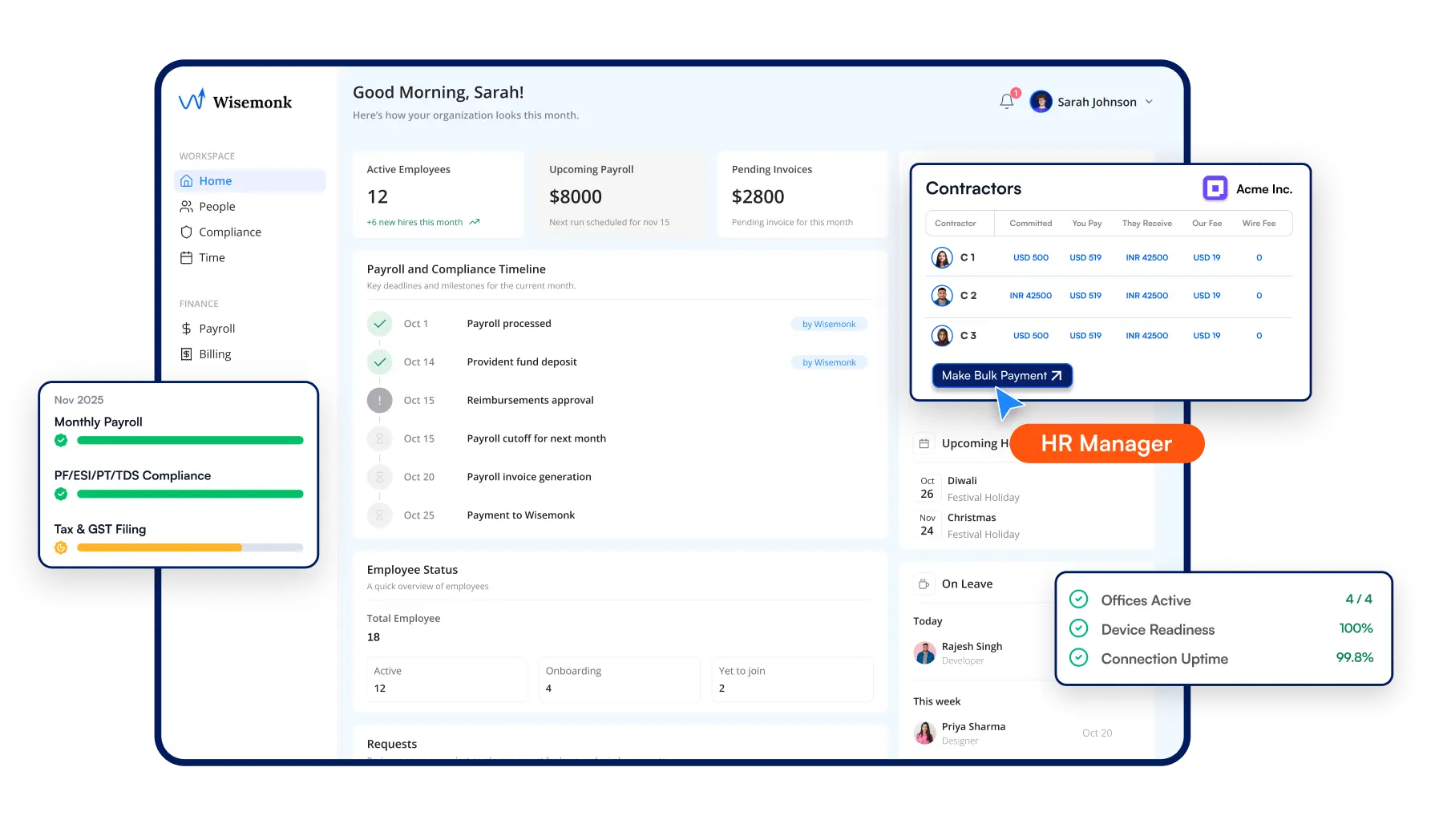
Folgendes erhalten Sie mit Wisemonk EOR:
- Indien EOR ab 99$ pro Mitarbeiter und Monat ohne versteckte Gebühren oder langfristige Sperren.
- Vollständige Compliance-Abdeckung in allen indischen Bundesstaaten, einschließlich TDS, Trinkgeld, Sozialfonds und Unterstützung bei Arbeitsvisa.
- Dedizierte Kontoverwaltung mit einem Support-Team, das das indische Arbeitsrecht in- und auswendig versteht und nicht in einer generischen Warteschlange steht.
- Nahtlose Integration mit Ihrem vorhandenen HRIS, egal ob es sich um Rippling, BambooHR oder eine andere Plattform handelt, die Sie bereits verwenden.
Unternehmen, die Rippling oder Remote für die globale Personalbeschaffung verwenden, nutzen Wisemonk regelmäßig als ihr Indien-spezifisches EOR um bessere Preise, schnelleres Onboarding und tieferes lokales Fachwissen dort zu erhalten, wo es am wichtigsten ist.
Buche eine kostenlose Beratung um zu sehen, wie Wisemonk Ihre Personalbeschaffung in Indien in weniger als 48 Stunden vereinfachen kann!
Häufig gestellte Fragen
Kann ich Rippling und Remote zusammen für verschiedene Regionen verwenden?
Ja, viele Unternehmen verwenden Rippling als Kern-HRIS für US-Operationen und kombinieren es mit Remote (oder einem regionalen Spezialisten wie Wisemonk) für internationale EOR in bestimmten Ländern. Mit diesem hybriden Ansatz können Sie das Beste aus beiden Plattformen herausholen, ohne dass ein Tool alles erledigen muss.
Unterstützen Rippling und Remote die Gehaltsabrechnung in mehreren Währungen für direkte Mitarbeiter?
Beide Plattformen unterstützen Zahlungen in mehreren Währungen für internationale Mitarbeiter. Remote wendet jedoch seinen eigenen Wechselkurs an (der geringfügig von den Marktkursen abweichen kann), während die globalen Gehaltsabrechnungs- und Währungsumrechnungsbedingungen von Rippling in Form von individuellen Angeboten bereitgestellt werden und von Land zu Land variieren.
Wie gehen Rippling und Remote mit dem Offboarding von Mitarbeitern in verschiedenen Ländern um?
Beide Plattformen verwalten regelkonforme Kündigungen, einschließlich Kündigungsfristen, Abfindungsberechnungen und Abschlussvergütung gemäß den lokalen Arbeitsgesetzen. Das Owner-Entitätsmodell von Remote gibt dem Unternehmen die direkte Kontrolle über den Offboarding-Prozess, während die Erfahrung von Rippling in Ländern, in denen das Unternehmen auf Drittanbieter angewiesen ist, variieren kann.
Ist für die Nutzung einer der Plattformen eine Mindestanzahl an Mitarbeitern erforderlich?
Bei Remote gibt es keine Mindestanforderung an Mitarbeiter, sodass Sie mit einer einzigen internationalen Einstellung beginnen können. Rippling setzt auch keine strengen Mindestanforderungen durch, aber aufgrund seiner modularen Preisgestaltung und der Komplexität der Plattform ist es für Unternehmen mit mindestens 5 bis 10 Mitarbeitern kostengünstiger.
Wie vergleichen sich Datenschutz und Sicherheit zwischen Rippling und Remote?
Remote verfügt über die Zertifizierungen SOC 2 Typ II, GDPR und ISO 27001 mit verschlüsselter Datenspeicherung und strengen Zugriffskontrollen. Rippling bietet über sein IT-Managementmodul rollenbasierte Berechtigungen, Zwei-Faktor-Authentifizierung, SSO und Sicherheit auf Geräteebene. Die spezifischen EOR-Datensicherheitszertifizierungen sind jedoch weniger gut dokumentiert.
Können beide Plattformen dabei helfen, Auftragnehmer in Vollzeitbeschäftigte umzuwandeln?
Sowohl Rippling als auch Remote unterstützen die Umstellung von Auftragnehmer zu Mitarbeiter. Remote wickelt dies über seine eigenen Unternehmen mit einem unkomplizierten Prozess ab, während Rippling es innerhalb seiner einheitlichen Plattform verwaltet. In beiden Fällen sollten Sie damit rechnen, dass die Umstellung neue Verträge, die Inanspruchnahme von Sozialleistungen und landesspezifische Anpassungen der gesetzlichen Bestimmungen mit sich bringen wird.
Was passiert, wenn ich von Rippling zu Remote wechseln möchte oder umgekehrt?
Ein Wechsel des EOR-Anbieters erfordert die Übertragung von Arbeitsverträgen, Gehaltsabrechnungen und Leistungen auf den neuen Anbieter, was in der Regel die Kündigung von Mitarbeitern im Rahmen der alten EOR und die Neueinstellung unter der neuen beinhaltet. Beide Plattformen bieten Unterstützung bei der Migration, der Vorgang kann jedoch je nach landesspezifischen Kündigungsfristen und behördlichen Anforderungen 4 bis 8 Wochen dauern.


.png)










.webp)
.webp)

.webp)
.webp)
.webp)


.webp)
.webp)

.webp)
.webp)

.webp)

.webp)


.webp)



.webp)
.webp)

.webp)

.webp)




.webp)
.webp)

%20Explained.webp)
.webp)


%20(1).webp)
.webp)

%20in%20India%20(2024).webp)

.webp)
.webp)
.webp)

%20(1).webp)


%201.webp)


%20in%20India.webp)
%20(1).webp)


.webp)

.webp)
.webp)
.webp)