.webp)
- Workforce Optimization (WFO) ist eine Strategie zur Maximierung der Mitarbeiterproduktivität, zur Verbesserung des Kundenservices und zur Kostensenkung durch effiziente Personalausstattung, Leistungsmanagement und Qualifikationsabstimmung.
- Zu den wichtigsten Komponenten gehören Personalplanung, Talentgewinnung, Qualifikationsmanagement, Leistungsmanagement, Schulung und Entwicklung, Planung und Einsatz, Mitarbeiterengagement und Prozessverbesserung.
- Personaloptimierung verbessert die Effizienz, erhöht die Kundenzufriedenheit, senkt die Arbeitskosten und steigert das Engagement der Mitarbeiter durch intelligentere Personalbesetzung und ausgewogene Arbeitsbelastung.
- Strategien zur Personaloptimierung konzentrieren sich auf die bedarfsorientierte Planung, den Einsatz von Technologien für Prognosen und Automatisierung, die Einbindung der Mitarbeiter durch Feedback und die Ausrichtung der Teams auf die Kundenbedürfnisse.
Sind Sie bereit, Ihre Belegschaft zu optimieren und die Personalplanung zu rationalisieren? Setzen Sie sich noch heute mit unseren Experten in Verbindung!
Entdecke wie Wisemonk wirkungsvolle und zuverlässige Inhalte erstellt.
Unternehmen stehen heute unter zunehmendem Druck, ihre Effizienz zu verbessern, Kosten zu senken und eine hohe Kundenzufriedenheit aufrechtzuerhalten. Eine der größten Herausforderungen besteht darin, sicherzustellen, dass die Belegschaft effektiv eingesetzt wird, ohne die Mitarbeiter zu überlasten oder Ressourcen zu verschwenden.
Wir wissen, dass das Management der Personaloptimierung überwältigend sein kann, insbesondere wenn es darum geht, Kosten, Einhaltung von Vorschriften und Wohlbefinden der Mitarbeiter in einem neuen Markt in Einklang zu bringen.
In diesem Blog werden wir untersuchen, was Personaloptimierung ist, wie sie funktioniert und welche Strategien Sie anwenden können, um die Leistung Ihrer Belegschaft zu verbessern.
Was ist Personaloptimierung? [TOC = Personaloptimierung]
Workforce Optimization (WFO) ist eine Strategie, die die Produktivität der Mitarbeiter maximiert, die Leistung fördert und die Einhaltung der Vorschriften über den gesamten Mitarbeiterlebenszyklus hinweg gewährleistet. Sie bringt die wichtigsten Funktionen von Personal, Betrieb und IT aufeinander ab, um die Belegschaft effizient zu verwalten und erfolgreiche Geschäftsergebnisse zu erzielen. WFO ist für Unternehmen, die Effizienz, Engagement und Ergebnisse steigern wollen, von entscheidender Bedeutung.
- Personalmanagement (WFM): Der Prozess der Optimierung der Zeitpläne und der Leistung der Mitarbeiter, um den Geschäftsanforderungen gerecht zu werden.
- Qualitätssicherung (QA): Die Praxis, sicherzustellen, dass Dienstleistungen den definierten Qualitätsstandards und Leistungserwartungen entsprechen.
Die Kernziele der Personaloptimierung sind:
- Maximierung der Mitarbeiterproduktivität: Stellen Sie sicher, dass die Mitarbeiter auf die richtigen Aufgaben ausgerichtet sind, und steigern Sie so ihre Effizienz und Leistung.
- Verbesserung des Kundenerlebnisses: Verbesserung der Qualität der Kundeninteraktionen, indem sichergestellt wird, dass die Belegschaft gut geschult und angemessen besetzt ist.
- Verbesserung der betrieblichen Effizienz: Rationalisierung von Prozessen zur Reduzierung von Verschwendung und zur Beseitigung organisatorischer Ineffizienzen.
- Steigerung der Mitarbeiterzufriedenheit: Schaffung eines ausgewogenen Arbeitsumfelds, Reduzierung von Burnout und Verbesserung des Engagements.
- Erreichen der Geschäftsziele: Abstimmung der Bemühungen der Belegschaft auf umfassendere Geschäftsziele, um Wachstum und Erfolg zu fördern.
Die Personaloptimierung ermöglicht es Unternehmen, sowohl ihre betriebliche Effizienz als auch das Engagement ihrer Mitarbeiter zu verbessern.
Die menschliche Seite der Optimierung
- Abstimmung von Effizienzzielen mit Mitarbeitererfahrung und Engagement
- Förderung der Mitarbeiterleistung statt Überwachung der Produktivität
- Unterstützung und Entwicklung von Talenten mit Weiterbildungs- und Wachstumsmöglichkeiten
- Bereitstellung proaktiver Anleitungen und Empfehlungen für Mitarbeiter
Die operative Seite der Optimierung
- Verwaltung von Kapazitäten, Zeitplänen und Workloads zur Erfüllung der Nachfrage
- Reduzierung der Bearbeitungszeiten und des Schrumpfens zur Verbesserung der Effizienz
- Verbesserung der Lösungsquoten und der Ergebnisse für Kunden/Interessengruppen
- Automatisierung sich wiederholender Workflows und geringwertiger Verwaltungsaufgaben
Die strategische Seite der Optimierung
- Ausrichtung der Personalinitiativen auf übergreifende Geschäftsziele und KPIs
- Erstellung eines Humankapitalplans zur Ermittlung des Personalbedarfs
- Nutzung von Personaldaten und Analysen für Einblicke in die Belegschaft
- Proaktive Prognose zukünftiger Talenttrends und Qualifikationslücken
Das ist wo strategische Personalplanung wird entscheidend und hilft Unternehmen dabei, ihre langfristige Talentstrategie mit dem Geschäftswachstum, der digitalen Transformation und den sich ändernden Qualifikationsanforderungen in Einklang zu bringen.
Was sind die Reifegrade der Personaloptimierung? [toc=[Stufen der Personaloptimierung]
Der Reifegrad der Personaloptimierung bezieht sich auf den Grad an Raffinesse eines Unternehmens bei der effektiven Verwaltung seiner Belegschaft.
Wenn Unternehmen die verschiedenen Reifegrade verstehen, können sie Bereiche identifizieren, in denen Verbesserungen erforderlich sind, und Maßnahmen ergreifen, um ihre Fähigkeiten im Bereich des Mitarbeiterengagements zu verbessern.
Basierend auf unserer praktischen Arbeit bei der Unterstützung von Unternehmen in den Bereichen Personalwesen, Gehaltsabrechnung und Compliance sieht das Reifegradmodell zur Personaloptimierung in der Regel wie folgt aus:
Was sind die 8 Hauptkomponenten der Personaloptimierung? [TOC=Schlüsselkomponenten]
Um eine effektive Personaloptimierung zu erreichen, ist es wichtig, sich auf mehrere Schlüsselkomponenten zu konzentrieren, um sicherzustellen, dass Ressourcen effizient genutzt und die Leistung der Mitarbeiter maximiert wird.
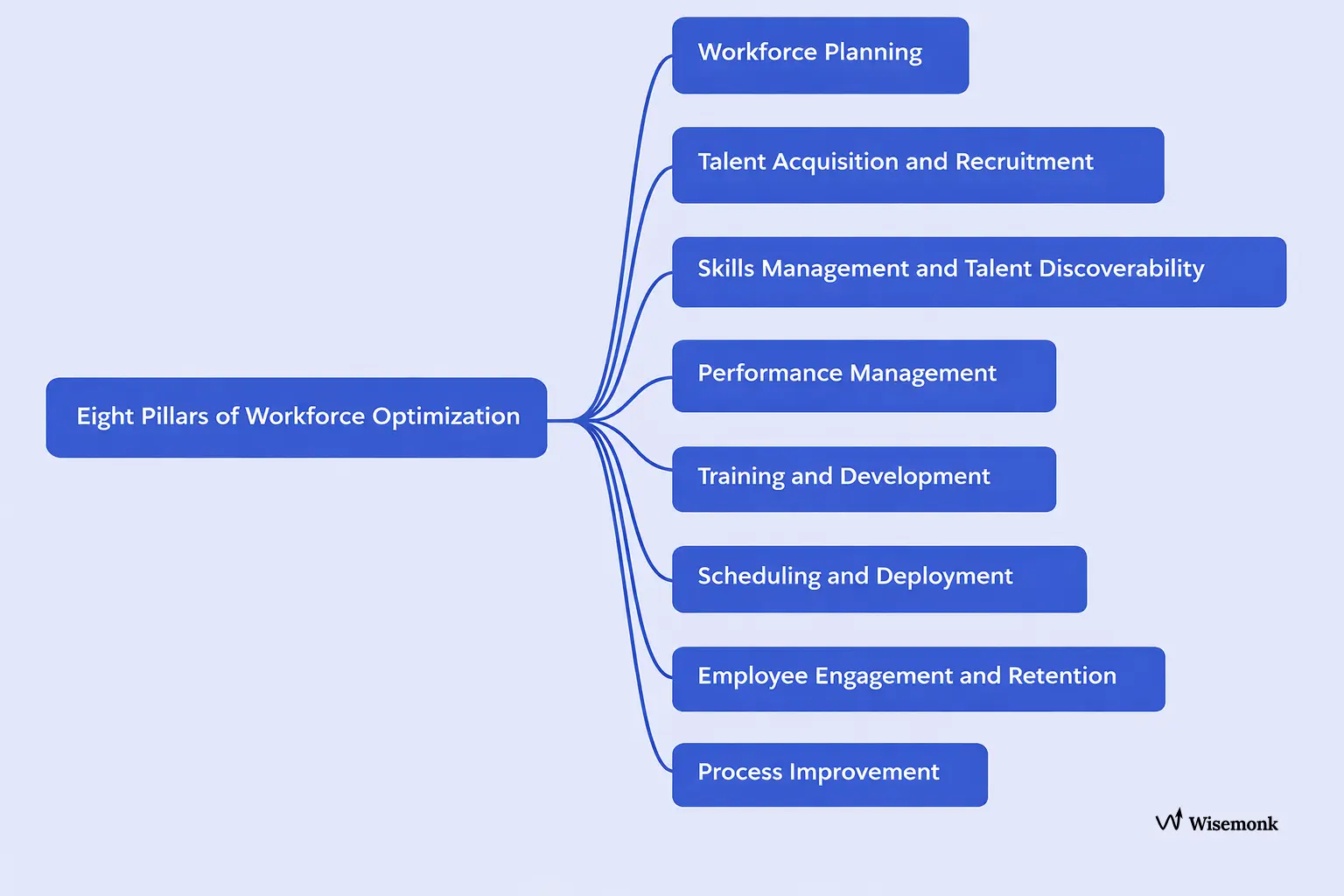
1. Planung der Belegschaft
Eine effektive Personalplanung erfordert das Verständnis der Rollen, Fähigkeiten und Mitarbeiterzahlen, die zur Erreichung der Geschäftsziele erforderlich sind. Dazu gehören Prognosen auf der Grundlage von Geschäftszielen und Markttrends sowie die Analyse von Daten aus Personalmanagementsystemen.
- Nachfrage prognostizieren: Antizipation des zukünftigen Personalbedarfs durch Analyse von Trends und Mustern.
- Identifizierung der erforderlichen Rollen und Fähigkeiten: Verstehen, welche Positionen entscheidend sind und welche Fähigkeiten erforderlich sind, um diesen Bedürfnissen gerecht zu werden.
- Anpassung der Belegschaftskapazität: Sicherstellen, dass der Personalbestand den Geschäftszielen und Nachfrageschwankungen entspricht.
2. Akquise und Rekrutierung von Talenten
WFO-Strategien verlangen von Unternehmen, dass sie kontinuierlich Talentlücken identifizieren und schließen. Das beinhaltet Anwerbung und interne Mobilität, um sicherzustellen, dass die richtigen Personen zur richtigen Zeit in den richtigen Rollen sind.
- Gezielte Rekrutierung: Identifizierung der Kandidaten, die am besten zu den spezifischen Geschäftsanforderungen passen.
- Interne Mobilität: Förderung und Neuzuweisung vorhandener Talente im Unternehmen zur Leistungsoptimierung.
- Weiterqualifizierung: Wir bieten aktuellen Mitarbeitern die Möglichkeit, neue Fähigkeiten zu erlernen und komplexere Rollen zu übernehmen.
3. Kompetenzmanagement und Auffindbarkeit von Talenten
Die Verwaltung und Abstimmung der Fähigkeiten der Mitarbeiter auf die Geschäftsanforderungen ist der Schlüssel zur Personaloptimierung. WFO-Tools helfen Unternehmen dabei, verborgene Talente zu entdecken und sie dort einzusetzen, wo sie die größte Wirkung erzielen können.
- Inventar der Fähigkeiten: Pflege einer aktuellen Liste der Fähigkeiten und Entwicklungsbereiche der Mitarbeiter.
- Ausrichtung der Rollen: Sicherstellen, dass sich die Mitarbeiter in Positionen befinden, in denen sie ihre Fähigkeiten voll ausschöpfen können.
- Entdeckung von Talenten: Einsatz von Technologie, um nicht ausgelastete Talente zu identifizieren und sie in Bedarfsbereichen einzusetzen.
4. Leistungsmanagement
Leistungsmanagement ist ein Eckpfeiler der Personaloptimierung. Durch die Verfolgung der wichtigsten Leistungsindikatoren (KPIs) können Unternehmen Leistungsträger identifizieren, Verbesserungsmöglichkeiten identifizieren und umsetzbares Feedback für die Mitarbeiterentwicklung geben.
- Klare Ziele setzen: Definition messbarer Leistungserwartungen für Mitarbeiter.
- Regelmäßiges Feedback: Kontinuierliches Feedback geben, um den Mitarbeitern zu helfen, sich zu verbessern und engagiert zu bleiben.
- Identifizierung von Leistungsträgern: Anerkennung und Belohnung von Mitarbeitern, die die Erwartungen übertreffen.
5. Schulung und Entwicklung
Schulung und Entwicklung sind wesentliche Bestandteile der Personaloptimierung. Mitarbeitern Möglichkeiten zur Weiterentwicklung und Entwicklung zu bieten, stellt sicher, dass sie engagiert, produktiv und bereit sind, sich neuen Herausforderungen zu stellen.
- Weiterqualifizierung: Bereitstellung von Schulungen, die die Mitarbeiter mit neuen Fähigkeiten und Kenntnissen ausstatten.
- Karriereentwicklung: Unterstützung der Mitarbeiter bei der Erstellung einer Roadmap für ihr Karrierewachstum innerhalb des Unternehmens.
- Einbindung durch Lernen: Förderung der Mitarbeiterbeteiligung durch Angebot von Lern- und Aufstiegsmöglichkeiten.
6. Planung und Bereitstellung
Eine effektive Planung stellt sicher, dass Unternehmen zur richtigen Zeit die richtige Anzahl von Mitarbeitern haben, um die Kundennachfrage zu erfüllen. Diese Komponente ist unerlässlich, um Nachfrageschwankungen zu bewältigen und Überbesetzung oder Unterbesetzung zu vermeiden.
- Optimierte Schichtmuster: Anpassung der Arbeitszeiten an die Geschäftsanforderungen und Spitzenzeiten.
- Anpassungen in Echtzeit: Personalwechsel auf der Grundlage der Nachfrage in Echtzeit vornehmen.
- Workloads ausgleichen: Stellen Sie sicher, dass die Arbeitsbelastung gleichmäßig verteilt wird, um einen Burnout der Mitarbeiter zu vermeiden.
7. Engagement und Bindung der Mitarbeiter
Das Engagement der Mitarbeiter ist für die Personaloptimierung von entscheidender Bedeutung. Durch den Aufbau eines positiven Arbeitsumfelds können Unternehmen die Mitarbeiterzufriedenheit steigern und die Fluktuation reduzieren.
- Möglichkeiten zur beruflichen Weiterentwicklung: Bereitstellung von Aufstiegsmöglichkeiten zur Steigerung der Arbeitszufriedenheit und Loyalität.
- Regelmäßiges Feedback und Kommunikation: Durch die Aufrechterhaltung offener Kommunikationswege fühlen sich die Mitarbeiter gehört und geschätzt.
8. Verbesserung des Prozesses
Die Optimierung von Geschäftsprozessen und Methoden zur kontinuierlichen Verbesserung wie Lean (konzentriert sich auf die Vermeidung von Verschwendung und die Verbesserung des Ablaufs durch Rationalisierung von Prozessen und Reduzierung von Aktivitäten, die keinen Mehrwert schaffen) und Six Sigma (zielt darauf ab, Fehler und Variabilität in Prozessen zu reduzieren, um nahezu perfekte Ergebnisse zu erzielen) können Ineffizienzen und Betriebskosten drastisch reduzieren.
Durch den Wegfall manueller Aufgaben können sich Unternehmen auf das konzentrieren, was wirklich den Wert steigert.
- Rationalisierung von Prozessen: Identifizierung von Engpässen und Ineffizienzen in Arbeitsabläufen und deren Beseitigung.
- Kontinuierliche Verbesserung: Anwendung von Methoden zur ständigen Verfeinerung und Verbesserung von Prozessen.
Diese Komponenten bilden das Rückgrat jeder erfolgreichen Personaloptimierungsstrategie und ermöglichen es Unternehmen, die Produktivität zu steigern, Kosten zu senken und die Gesamtleistung zu verbessern.
Wenn Sie einen genaueren Überblick darüber wünschen, wie Prognosen, Mitarbeiterzahlmodellierung und Kapazitätsabbildung in der Praxis funktionieren, lesen Sie unseren ausführlichen Leitfaden unter“Personalplanungsprozess„.
Jetzt können wir die Vorteile dieser Strategien untersuchen und herausfinden, wie sie zu besseren Geschäftsergebnissen beitragen.
Was sind die Vorteile der Personaloptimierung? [TOC=Die wichtigsten Vorteile]
Die Personaloptimierung ermöglicht es Unternehmen, eine effizientere und produktivere Belegschaft zu erreichen.
Hier sind die wichtigsten Vorteile der Einführung von WFO-Strategien:
- Höhere betriebliche Effizienz: Durch die Abstimmung des Personalbestands an den Geschäftsanforderungen und die Sicherstellung eines reibungslosen Ablaufs von Prozessen hilft WFO Unternehmen dabei, Ineffizienzen zu beseitigen und die Ressourcenauslastung zu maximieren.
- Verbesserter Kundenservice und Loyalität: Eine optimierte Belegschaft führt zu einer besseren Mitarbeiterleistung, wodurch die Kundeninteraktionen direkt verbessert werden, was zu einer höheren Zufriedenheit und Loyalität führt.
- Kosteneinsparungen: Durch die Minimierung von Über- oder Unterbesetzung und die Automatisierung wichtiger Prozesse reduziert WFO Arbeitskosten und hilft Unternehmen dabei, effizienter zu arbeiten, ohne Abstriche bei der Qualität machen zu müssen.
- Höhere Mitarbeiterzufriedenheit: Wenn Mitarbeiter klare Rollen, die richtigen Tools und eine ausgewogene Arbeitsbelastung haben, ist es wahrscheinlicher, dass sie engagiert bleiben, was zu einer geringeren Fluktuation und einer besseren Leistung beiträgt.
Unternehmen können eine agilere und widerstandsfähigere Belegschaft aufbauen, indem sie diese Vorteile in den täglichen Betrieb integrieren.
HR-Perspektive aus der Praxis:
Ein erfahrener Personalleiter beleuchtet, wie sich diese Herausforderungen in der Praxis zeigen, wenn die Personalplanung von der Strategie zur Umsetzung übergeht.
“Eine der größten Herausforderungen bei der Personalplanung besteht darin, ihre Bedeutung nicht zu verstehen, sondern sie im Laufe der Zeit konsequent anzuwenden. Viele Unternehmen planen ihre Belegschaft immer noch reaktiv und konzentrieren sich eher auf den unmittelbaren Einstellungsbedarf als auf langfristige Kapazitätsanforderungen.
Da sich das Geschäftsumfeld schneller ändert, veralten Personalpläne, die nur auf aktuellen Rollen und der Mitarbeiterzahl basieren, schnell. Digitale Transformation und Einführung von KI beschleunigen diesen Wandel, da sich die beruflichen Verantwortlichkeiten schneller entwickeln, als es die meisten Planungszyklen berücksichtigen.
Wenn die Personalplanung nicht vorhersieht, wie sich Fähigkeiten, Rollen und Produktivitätsanforderungen ändern werden, erreichen Unternehmen die Einstellungsziele, aber sind innerhalb von 12—18 Monaten immer noch mit kritischen Qualifikationslücken konfrontiert. Eine effektive Personalplanung erfordert Prognosen über die Fähigkeiten der Belegschaft, nicht nur über die Anzahl der Mitarbeiter, um langfristige Stabilität und Leistung zu gewährleisten.“
- Simmi Dixit, Personalleiter, Schnieder Dubai
Lassen Sie uns anhand von Beispielen Strategien zur Personaloptimierung erörtern, mit denen Unternehmen diese Vorteile effektiv nutzen können.
Was sind die besten Strategien und Praktiken zur Personaloptimierung? [TOC=Beste Strategien]
Die Anwendung der richtigen Strategien und Best Practices ist unerlässlich, um die Vorteile der Personaloptimierung zu maximieren. Diese Strategien stellen sicher, dass Unternehmen ihre betrieblichen Ziele erreichen und die Mitarbeiterzufriedenheit und den Kundenservice verbessern.
Im Folgenden finden Sie einige bewährte Strategien zur Optimierung Ihrer Belegschaft.
1. Effektive Planung
Der Schlüssel zur Optimierung der Arbeitskosten und zur Steigerung der Produktivität ist es, sicherzustellen, dass die Belegschaft effizient geplant wird, um die Geschäftsnachfrage zu decken und gleichzeitig Überbesetzung und Unterauslastung zu vermeiden.
- Anpassung der Zeitpläne an die Nachfrage: Prognose der Geschäftsanforderungen und entsprechende Anpassung der Schichten.
- Optimierung der Mitarbeiterverfügbarkeit: Sicherstellen, dass die Mitarbeiter zu Spitzenzeiten eingesetzt werden, ohne dass es zu unnötigen Ausfallzeiten kommt.
- Flexibilität bei der Terminplanung: Ermöglicht Anpassungen in Echtzeit an schwankende Bedürfnisse.
Beispiel: Ein Einzelhandelsunternehmen verwendet KI, um die Haupteinkaufszeiten vorherzusagen, und passt die Schichten entsprechend an, um in geschäftigen Zeiten eine optimale Abdeckung zu gewährleisten.
2. Nutzung von Technologie
Durch den Einsatz von Technologie können Prognosen, Terminplanung und Leistungsmanagement erheblich verbessert werden, wodurch die Belastung der Manager verringert und die Gesamteffizienz verbessert wird.
- Personalverwaltungssoftware: Automatisierung der Planung und Mitarbeiterverfolgung, um manuelle Fehler zu reduzieren und die Entscheidungsfindung zu verbessern.
- KI-gestützte Prognosen: Verwendung historischer Daten, um die zukünftige Nachfrage vorherzusagen und den Personalbestand entsprechend anzupassen.
- Tools zur Automatisierung: Rationalisierung sich wiederholender Aufgaben wie Leistungsbeurteilungen oder Schichteinsätze.
Beispiel: Ein Kontaktzentrum verwendet Workforce-Management-Software, um Daten zu analysieren und sicherzustellen, dass die richtige Anzahl von Agenten für Spitzenzeiten eingeplant wird.
3. Engagement und Feedback der Mitarbeiter
Regelmäßige Kommunikation und Leistungsfeedback sind unerlässlich, um Mitarbeiter zu motivieren und sicherzustellen, dass sie mit den Geschäftszielen übereinstimmen. Engagierte Mitarbeiter haben eine höhere Wahrscheinlichkeit, ihre besten Leistungen zu erbringen und sich weiterhin für das Unternehmen zu engagieren.
- Klare Kommunikationskanäle: Fördern Sie den offenen Dialog zwischen Mitarbeitern und Management.
- Regelmäßige Leistungsbeurteilungen: Bereitstellung von konstruktivem Feedback, um den Mitarbeitern zu helfen, sich zu verbessern.
- Anerkennungs- und Belohnungsprogramme: Anerkennung von Erfolgen, um die Mitarbeiter zu motivieren.
Beispiel: Ein Softwareunternehmen verwendet Tools zur Leistungsverfolgung, um personalisiertes Feedback zu geben, was zu einer höheren Mitarbeiterzufriedenheit führt.
4. Kundenorientierter Ansatz
Den Kunden in den Mittelpunkt der Personaloptimierung zu stellen, stellt sicher, dass die Mitarbeiter stets darauf ausgerichtet sind, einen außergewöhnlichen Service zu bieten, der für den langfristigen Geschäftserfolg von entscheidender Bedeutung ist.
- Kundenorientierte Schulung: Ausstattung der Mitarbeiter mit den Fähigkeiten, die erforderlich sind, um die Kundenerwartungen zu erfüllen.
- Feedback-Schleifen: Kontinuierliches Sammeln von Kundenfeedback zur Verbesserung der Servicebereitstellung.
- Maßgeschneiderte Mitarbeiterrollen: Sicherstellen, dass die Mitarbeiter Rollen innehaben, die es ihnen ermöglichen, die Kundenzufriedenheit direkt zu beeinflussen.
Beispiel: Ein Unternehmen aus dem Gastgewerbe nutzt Kundenfeedback als Grundlage für Mitarbeiterschulungen, um sicherzustellen, dass die Mitarbeiter die Kundenerwartungen erfüllen und das Serviceerlebnis verbessert wird.
Diese Strategien sorgen für eine produktive, zufriedene Belegschaft, die sich dafür einsetzt, herausragende Kundenerlebnisse zu bieten.
Wie können die Personaloptimierungslösungen von Wisemonk Ihre Personalplanung verbessern? [TOC=Wie Wisemonk hilft]
Weiser Mönch, ein anerkannter Angestellter oder eingetragener Mitarbeiter (EOR), ermöglicht es globalen Unternehmen, effizient Talente aus der Ferne einstellen, verwalten und bezahlen ohne die Last rechtlicher und operativer Komplikationen.
Unsere umfassenden Dienstleistungen zur Verbesserung Ihrer Personalstrategie und Personalplanung umfassen:
- Talentgewinnung und Rekrutierung: Wir helfen globalen Unternehmen, die richtigen Talente zu finden, und berücksichtigen sowohl den unmittelbaren als auch zukünftigen Einstellungsbedarf, um die Personalplanung zu optimieren.
- Gehaltsabrechnung und Einhaltung gesetzlicher Vorschriften: Wir optimieren die Gehaltsabrechnung und sorgen für die Einhaltung gesetzlicher Vorschriften. Wir vereinfachen die administrative Seite der Personalplanung und gleichen gleichzeitig die Vergütung an die Branchenstandards an.
- Onboarding und Integration von Mitarbeitern: Wir optimieren die Onboarding-Prozesse und stellen sicher, dass neue Mitarbeiter auf Erfolgskurs sind und auf die langfristige Personalstrategie des Unternehmens abgestimmt sind.
- Engagierte Rekrutierung: Wir beschleunigen die Rekrutierung globaler Technologieunternehmen, indem wir KI-Screening, Premium-Daten und Videoinformationen nutzen und so eine schnellere und effektivere Rekrutierung sicherstellen.
Wir haben erfolgreich über 2.000 Mitarbeiter in Teams integriert und das Vertrauen von über 300 Unternehmen weltweit gewonnen.
Unsere Stärke liegt zwar in Indien, aber wir expandieren schnell in den USA, Großbritannien und anderen strategischen Märkten. Wisemonk bietet Ihnen einen zuverlässigen Partner für die Einstellung von Mitarbeitern in Indien und die Unterstützung Ihres globalen Wachstums.
Buchen Sie noch heute eine kostenlose Beratung und lassen Sie uns Ihnen helfen, Ihre Personalplanung für einen langfristigen Erfolg zu optimieren.
Häufig gestellte Fragen
Was ist der Unterschied zwischen Personalplanung und Ressourcenplanung im Kontext der Personaloptimierung?
Personalplanung ist ein strategischer Prozess, der den Personalbedarf auf der Grundlage von Geschäftszielen, Nachfrageprognosen und Arbeitskosten prognostiziert. Die Ressourcenplanung ist betriebsbereit und verwendet Planungssoftware und Echtzeitdaten, um den richtigen Agenten oder Mitarbeiter bestimmten Schichten, Spitzenzeiten und Servicelevels zuzuweisen, um die betriebliche Effizienz zu gewährleisten.
Wie kann die Personaloptimierung die Zeit bis zur Besetzung und die Qualität der Einstellung bei der Talentgewinnung verbessern?
Bei der Personaloptimierung werden Personalanalysen, prädiktive Analysen und Leistungsdaten verwendet, um Qualifikationslücken und Personalbedarf frühzeitig zu erkennen. Indem Personalteams die Personalplanung an den Leistungszielen und Compliance-Anforderungen ausrichten, reduzieren sie die Fluktuationsraten, verbessern die Mitarbeiterleistung und steigern die Produktivität bei gleichzeitiger Verkürzung der Personalbesetzungszeiten.
Was sind einige wichtige Kennzahlen zur Erfolgsmessung der Personaloptimierung?
Zu den wichtigsten Kennzahlen gehören Termintreue, Rückgang, Kosten pro Kontakt, Serviceniveau, Betriebsleistung und Leistungskennzahlen im Zusammenhang mit der Kundenzufriedenheit. Unternehmen verfolgen auch die Anwesenheit ihrer Mitarbeiter, Leistungsberichte und Interaktionsanalysen, um einen umfassenden Überblick über die Servicequalität und die Kostenkontrolle zu erhalten.
Wie hilft die Personaloptimierung den Kontaktzentren bei der Intraday-Planung und der Unterstützung von Agenten?
In Contact-Center-Umgebungen kombinieren WFO-Tools zur Personaloptimierung Interaktionsanalysen, Sprachanalysen, Anrufaufzeichnungen und Echtzeitdaten, um den Personalbestand an Veränderungen im Tagesablauf anzupassen. Dies verbessert die Leistung der Agenten, gleicht die Arbeitsbelastung aus, überwacht den Fortschritt anhand der Servicelevels und sorgt für ein besseres Kundenerlebnis.
Welche Rolle spielt die Personaloptimierung bei der Reduzierung von Überstunden und Burnout im Gesundheitswesen?
Gesundheitsdienstleister verwenden Lösungen zur Personaloptimierung, die in elektronische Patientenakten integriert sind, um den Personalbedarf und Spitzenzeiten genau vorherzusagen. Durch die Automatisierung sich wiederholender Aufgaben, die Verwaltung von Schichtwechseln und die Überwachung der Anwesenheit der Mitarbeiter reduzieren Unternehmen Überstunden, verhindern ineffiziente Arbeitsabläufe und unterstützen die Mitarbeiter dabei, effizient zu arbeiten, ohne dass es zu einem Burnout kommt.
Wie können Tools zur Personaloptimierung Einzelhandels- und Gastgewerbeunternehmen dabei helfen, die Nachfrage nach Arbeitskräften vorherzusagen?
Eine Software zur Personaloptimierung analysiert Bedarfsprognosen, historische Leistungsniveaus und saisonale Trends, um die Personalausstattung nach Rolle, Schicht und Standort abzustimmen. Durch die Identifizierung von Trends und die Anpassung der Regeln für die Terminplanungssoftware können Unternehmen die Betriebskosten senken, die Servicebereitstellung verbessern und auch bei schwankenden Kundenanforderungen eine motivierte Belegschaft aufrechterhalten.
Was sind die Vorteile der Integration der Personaloptimierung in Systeme wie EHR- oder CRM-Plattformen?
Die Integration der WFO-Software in CRM- oder EHR-Plattformen verbindet interne Systeme für einheitliche Leistungsdaten und prädiktive Analysen. Dies ermöglicht die Nachverfolgung von Compliance-Anforderungen, eine bessere Leistungsberichterstattung, eine höhere Genauigkeit bei Personalentscheidungen und einen Wettbewerbsvorteil durch datengestützte Erkenntnisse, die direkt mit dem Geschäftserfolg verknüpft sind.

.png)







.webp)
.webp)

.webp)
.webp)
.webp)
.webp)
.webp)
.webp)
.webp)

.webp)

.webp)


.webp)
.webp)

.webp)
.webp)


.webp)
.webp)
%20Explained.webp)
.webp)

%20(1).webp)
.webp)

%20in%20India%20(2024).webp)

.webp)
.webp)
.webp)

%20(1).webp)

%201.webp)


%20in%20India.webp)
%20(1).webp)


.webp)

.webp)
.webp)
.webp)