Sie möchten Magento-Entwickler in Indien einstellen, sind sich aber nicht sicher, wo Sie anfangen sollen? Dieser Leitfaden ist für E-Commerce Gründer, CTOs und technische Leiter, die qualifizierte Magento-Entwickler benötigen, die leistungsstarke E-Commerce-Shops erstellen und nicht nur Themes installieren können.
Wir haben globalen Unternehmen beim Aufbau von E-Commerce-Engineering-Teams in Indien geholfen. Wir haben erfahrene Magento-Entwickler engagiert, die Magento 2 und Adobe Commerce Cloud kennen und skalierbare Architektinnen und Architekten entwickeln können. Wir zeigen Ihnen, welche Fähigkeiten im Jahr 2026 wirklich wichtig sind, wie Sie Schritt für Schritt neue Mitarbeiter einstellen und wie Sie Kosten senken können, ohne sich mit mittelmäßigen Talenten zufrieden zu geben.
Lassen Sie uns Ihren nächsten Magento-Mitarbeiter schneller, intelligenter und vollständig gesetzeskonform gestalten.
Warum Magento-Entwickler in Indien einstellen?
Die Suche nach zertifizierten Magento-Entwicklern in den USA oder Großbritannien ist teuer und der Talentpool schrumpft. Ältere Magento-2-Entwickler in den USA verdienen 100.000 bis über 140.000 US-Dollar pro Jahr, und da Adobe die Händler zur Commerce Cloud drängt, steigt die Nachfrage nach erfahrenen Entwicklern weiter, während das Angebot knapp bleibt.
Aufgrund dessen, was wir bei der Unterstützung von über 300 globalen Unternehmen beim Aufbau von E-Commerce-Teams in Indien gesehen haben, bietet das Land sowohl Kostenvorteile als auch fundiertes Magento-Fachwissen.
Hier ist der Grund:
1. Indien ist ein globales Magento-Entwicklungszentrum
In Indien ist ein großer Teil der weltweit zertifizierten Adobe-Experten ansässig. Die größten Magento-Entwicklungsdienstleistungsagenturen haben entweder ihren Hauptsitz oder unterhalten primäre Lieferzentren in Bengaluru, Ahmedabad und Noida.
Indische Magento-Entwickler bauen und warten Enterprise-Storefronts für globale Marken wie Casio, Hamleys und Tupperware und kümmern sich um komplexe Migrationen, Konfigurationen mit mehreren Geschäften und stark frequentierte Verkaufsveranstaltungen für E-Commerce-Websites.
Viele „lokale“ Agenturen in London, New York oder Berlin geben die schweren Arbeiten wie Sicherheitspatches, Versionsupgrades (Magento 2.4.x) und komplexe Datenbankarbeit sogar an engagierte Partnerteams in Indien weiter.
2. 65 bis 75% Kosteneinsparungen ohne Qualitätseinbußen
Sie können engagierte Magento-Entwickler in Indien für zwischen 12.000 und 20.000 $/Jahr einstellen. Erfahrene Entwickler mit Erfahrung in der Adobe Commerce Cloud kosten dagegen etwa 22.000 bis 38.000 US-Dollar pro Jahr.
Vergleichen Sie das mit über 100.000 USD in den USA für dieselben Fähigkeiten. Der Kostenunterschied ist der Grund, warum sich die Mehrheit der indischen Magento-Agenturen auf den Export von Dienstleistungen in westliche Märkte konzentriert, wo die Kosten für Magento-Entwickler 3- bis 5-mal höher sind.
3. Führend in der modernen Magento-Architektur
Indische Entwicklungsteams stehen an der Spitze der Innovation der modernen Magento-Plattform:
- Hyvä Themes: Ein leistungsstarkes Frontend-Framework, das in Europa äußerst beliebt ist und bei dem erfahrene Magento-Entwickler die Implementierung und Entwicklung benutzerdefinierter Themen leiten.
- PWA Studio: Aufbau von Headless-Commerce-Erlebnissen, die D2C-Marken app-ähnliche mobile Websites für ihre Onlineshops bieten.
- Marketplace-Erweiterungen: Unternehmen wie Webkul (mit Sitz in Noida) sind weltweit führend in der Entwicklung kundenspezifischer Erweiterungen und Module, die US-amerikanische und europäische Marken kaufen, um ihren Magento-Shops Funktionen zu verleihen.
Viele professionelle Magento-Entwickler haben praktische Erfahrung mit Adobe Commerce, Headless-Setups und komplexen API-Integrationen von Drittanbietern (Klaviyo, NetSuite, Yotpo).
4. Nachgewiesene Erfolgsbilanz bei D2C- und Einzelhandelsmarken
Indische Magento-Agenturen wie Krish TechnoLabs, Kensium und Rave Digital haben eine nachgewiesene Erfolgsbilanz beim Aufbau und der Pflege von Schaufenstern für ikonische US-amerikanische und europäische Marken in verschiedenen Magento-Projekten. Indische Magento-Spezialisten kümmern sich um Leistungsoptimierung, Traffic-Spitzen am Black Friday, Checkouts in mehreren Währungen und ERP-Integrationen für Marken, die weltweit über ihre E-Commerce-Plattformen versenden.
5. Zeitzonenflexibilität für kontinuierliche Entwicklung
IST (UTC+ 5:30) ermöglicht die Überschneidung mit den Vormittagen in den USA und den Nachmittagen in Großbritannien für die Zusammenarbeit in Echtzeit an Magento-Projekten.
Für Bereitstellungen über Nacht, kritische Bugfixes oder Support in der Hauptsaison sorgen engagierte Magento-Entwicklerteams in Indien rund um die Uhr für Sie, ohne dass Ihr internes Entwicklungsteam überlastet wird.
6. Investition in das Adobe Commerce-Ökosystem
Da Adobe ein großes Forschungs- und Entwicklungszentrum in Noida unterhält, hält sich die indische Magento-Entwickler-Community über die Funktionen der Commerce Cloud, Headless-Commerce-Muster und KI-gestützte Merchandising-Tools wie Live-Suche und Produktempfehlungen auf dem Laufenden.
In Indien verfügbare Mietmodelle für Magento-Entwickler
Nach welchen Fähigkeiten sollten Sie bei Magento-Entwicklern in Indien suchen?
Magento (Adobe Commerce) ist eine echte E-Commerce-Plattform. Es ist maßstabsgetreu gebaut. Sie brauchen jemanden, der E-Commerce-Workflows versteht, nicht nur jemanden, der Code schreiben kann.
Folgendes sollten Sie bei der Einstellung von Magento-Experten priorisieren:
Kernarchitektur und Anpassung von Magento
Starkes Verständnis der Magento 2-Architektur. Es geht um Module, Themen, Dependency-Injection, Serviceverträge und das Plugin-System. Sie sollten wissen, warum die Magento-Plattform die Dinge so macht, wie sie es tut, und nicht nur von StackOverflow kopieren und einfügen.
Erleben Sie die Erstellung benutzerdefinierter Magento-Erweiterungen und -Module, die bei Upgrades nicht kaputt gehen. Wenn sie nur mit vorgefertigten Themes und Plugins gearbeitet haben, werden sie Probleme haben, wenn Sie eine benutzerdefinierte Checkout-Logik oder komplexe Katalogregeln für Ihre Magento-Website benötigen.
Vertrautheit mit dem XML-Layoutsystem von Magento, den UI-Komponenten und der Verknüpfung des Frontends mit dem Backend. Viele Magento-Programmierer können mit der Backend-Logik umgehen, fallen jedoch auseinander, wenn sie gebeten werden, den Checkout oder die Produktseiten anzupassen.
PHP- und Datenbankgrundlagen
Magento ist PHP-lastig, daher sind starke objektorientierte PHP-Kenntnisse nicht verhandelbar. Suchen Sie nach erfahrenen Magento-Programmierern, die mit Composer, Namespaces und modernen PHP-Mustern (PSR-Standards) vertraut sind.
Fundiertes Wissen über MySQL-Datenbanken ist in Magento wichtiger als in den meisten PHP-Frameworks. Das Datenbankschema ist umfangreich und schlecht optimierte Abfragen beeinträchtigen die Funktionalität Ihres Shops. Sie sollten wissen, wie man effiziente Abfragen schreibt, wie man Indexierung versteht und Fehler bei langsamen Datenbankoperationen behebt.
Leistungsoptimierung (hier scheitern die meisten Entwickler)
Magento ist bekanntermaßen sofort langsam. Ihr angestellter Entwickler sollte wissen, wie man es schnell macht: Varnish-Caching, Redis für Sessions und Cache, Elasticsearch für die Katalogsuche und Flat-Katalogkonfiguration.
Erfahrung mit Profiling-Tools wie New Relic, Blackfire oder dem integrierten Profiler von Magento, um Engpässe in Ihrem E-Commerce-Shop zu identifizieren.
Verständnis von CDN-Integration, Bildoptimierung und Lazy-Loading-Strategien für die Website-Entwicklung.
Integrationen von Drittanbietern und API-Erfahrung
Die meisten Magento-Shops existieren nicht isoliert. Suchen Sie nach Magento-Webentwicklern, die Zahlungsgateways (Stripe, PayPal, Razorpay), Versanddienstleister (ShipStation, Easyship), ERPs (NetSuite, SAP) und Marketing-Tools (Klaviyo, Google Tag Manager) integriert haben.
Die Erfahrung mit REST- und GraphQL-APIs ist von entscheidender Bedeutung, insbesondere wenn Sie ein Headless-Setup planen oder Inventar und Bestellungen systemübergreifend synchronisieren müssen, wenn Sie Magento mit anderen Plattformen integrieren.
Bonus: Erfahrung mit dem Event-Observer-Muster von Magento und wie man sich in Kernworkflows einklinkt, ohne Kerndateien für die benutzerdefinierte Entwicklung zu hacken.
Grundlagen von Adobe Commerce Cloud und DevOps
Wenn Sie Adobe Commerce Cloud verwenden (oder planen, dorthin zu wechseln), muss Ihr Magento-zertifizierter Entwickler die Cloud-Bereitstellungspipelines und die Umgebungskonfiguration verstehen und wissen, wie sich Commerce Cloud von selbst gehostetem Magento unterscheidet.
Vertrautheit mit Git-Workflows, Composer-Abhängigkeitsmanagement und CI/CD für Magento (Bereitstellung von Code, ohne Live-Stores zu beschädigen).
Einrichtung von Docker und lokaler Entwicklungsumgebung (viele indische Entwickler verwenden immer noch XAMPP — suchen Sie nach Entwicklern, die Docker oder Warden für Magento-spezifische Umgebungen verwenden).
Modernes Magento: Hyvä, PWA und Headless Commerce
Das Standard-Luma-Theme von Magento ist veraltet und langsam. Entwickler, die Erfahrung mit Hyvä Themes (einem modernen, leistungsorientierten Frontend) haben, sind für benutzerdefinierte Magento-Themes von großem Wert, insbesondere für europäische und US-amerikanische Märkte, in denen die Seitengeschwindigkeit sich direkt auf die Magento-Konvertierung auswirkt.
Wenn Sie Headless werden, suchen Sie nach Adobe-Commerce-Entwicklern mit PWA Studio-Erfahrung oder die mit Vue Storefront, Next.js oder anderen Headless-Frontends gearbeitet haben, die über GraphQL mit Magento verbunden sind.
Headless ist nicht immer die Antwort, aber Magento-Theme-Entwickler, die wissen, wann sie es verwenden müssen (und wann nicht), zeigen strategisches Denken, das über das reine Programmieren hinausgeht.
Upgrade- und Migrationserfahrung
Magento 1 ist offiziell tot, aber viele Geschäfte verwenden es immer noch oder sind kürzlich migriert worden. Entwickler, die sich mit Migrationen von Magento 1 nach Magento 2 befasst haben, verstehen die Datenmigration, die Herausforderungen bei der Plattformneugestaltung und wissen, wie Ausfallzeiten bei größeren Upgrades vermieden werden können.
Erfahrung mit Magento 2.4.x-Upgrades und dem Umgang mit wichtigen Änderungen in Nebenversionen. Adobe veröffentlicht regelmäßig Updates, und Ihr Entwickler muss wissen, wie Updates getestet, bereitgestellt und bereitgestellt werden können, ohne den Speicher zu beschädigen.
Schön, diese Signaltiefe zu haben
Magento-Zertifizierungen (Adobe Certified Professional, Developer oder Solutions Specialist). Zertifizierungen sind nicht alles, aber sie zeigen, dass die zertifizierten Magento-Programmierer Zeit investiert haben, um die Plattform richtig zu erlernen.
Erfahrung mit B2B-Commerce-Funktionen (Firmenkonten, Anforderungslisten, benutzerdefinierte Preisgestaltung, Angebotsverwaltung). B2B Magento ist ein anderes Biest als D2C in der E-Commerce-Branche.
Kenntnis des Multistore- und Multiwebsite-Setups von Magento für Marken, die mehrere Storefronts unter einer Installation betreiben, einschließlich Marketplaces mit mehreren Anbietern.
Vertrautheit mit bewährten Sicherheitsmethoden — PCI-Compliance, Zwei-Faktor-Authentifizierung, Patch-Management und sichere Admin-Panels für den Magento-Support.
Eine Sache, die aus unserer Erfahrung heraus bemerkenswert ist: Die besten Magento-Entwickler, die angeheuert werden können, sind nicht diejenigen, die behaupten, alles zu wissen. Sie sind diejenigen, die eine kaputte Kasse um 2 Uhr morgens debuggt haben, ein Geschäft optimiert haben, das aufgrund des Black Friday-Verkehrs abstürzt, und erklären können, warum manchmal die einfachste Lösung darin besteht, eine schlecht codierte Erweiterung auszuschalten. Geben Sie kampferprobten Entwicklern Vorrang vor Checkbox-Kandidaten, wenn Sie engagierte Magento-Entwickler einstellen.
Was kostet es, Magento-Entwickler in Indien einzustellen?
Einer der Hauptgründe, warum Unternehmen Magento-Entwickler in Indien einstellen, ist der Kostenvorteil.
Hier ist eine realistische Aufschlüsselung, in der die gesamten Mietkosten in Indien mit denen in den USA verglichen werden:
Was in Indien enthalten ist, kostet:
- Grundgehalt
- Arbeitgeberbeiträge (EPF ~ 12%, ESI falls zutreffend)
- Bereitstellung von Trinkgeldersatz
- Gewerbesteuer (Landesebene)
- EOR-Gebühr (mit Wisemonk: 99 USD/Mitarbeiter/Monat = ~1.200 USD/Jahr)
Was NICHT enthalten ist (aber Sie sollten einplanen):
- Leistungsboni (auf dem wettbewerbsintensiven Technologiemarkt Indiens üblich)
- Krankenversicherungs-Upgrades, die über den gesetzlichen ESI hinausgehen
- Beschaffung von Ausrüstung bei Fernvermietung
Wichtige Erkenntnisse aus unseren Gehaltsabrechnungsdaten von über 2.000 Mitarbeitern: Die Gesamtkosten eines erfahrenen Magento-Entwicklers in Indien (einschließlich EOR-Gebühren, gesetzlicher Leistungen und Leistungsboni) liegen in der Regel zwischen 30.000 und 45.000 $/Jahr. Vergleichen Sie das mit 120.000 bis 150.000$ für eine vergleichbare Erfahrung in den USA, und Sie rechnen mit Einsparungen von 65-70%, ohne Abstriche bei der Qualität machen zu müssen.
Was bedeutet das für Ihr Budget?
Für ein E-Commerce-Unternehmen, das 120.000 bis 150.000 US-Dollar für einen einzigen erfahrenen Magento-Entwickler in den USA ausgibt, können Sie mit demselben Budget ein engagiertes Team von 3 bis 4 erfahrenen Magento-Entwicklern in Indien erhalten, das Frontend, Backend, Leistungsoptimierung und Integrationen abdeckt.
Aber das Gehalt ist nicht Ihr einziger Kostenfaktor. Folgendes sollten Sie noch berücksichtigen:
- Rekrutierungskosten: Traditionelle Einstellungen über Agenturen oder auf Magento spezialisierte Personalvermittler können 15 bis 20% des Jahresgehalts pro Mitarbeiter betragen. Auf dem hart umkämpften indischen Magento-Markt (insbesondere in Hubs wie Bangalore, Ahmedabad und Noida) kann es 4 bis 8 Wochen dauern, bis ein starker Kandidat gefunden wird, wenn Sie mit Agenturen und anderen globalen Marken konkurrieren.
- Werkzeuge und Infrastruktur: Ihre Magento-Entwickler benötigen Zugriff auf Staging- und Produktionsumgebungen, Adobe Commerce Cloud (falls zutreffend), Tools zur Leistungsüberwachung (New Relic, Blackfire), Versionskontrolle (Git) und lokale Entwicklungseinrichtungen (Docker, Warden). Budget für Lizenzen, Cloud-Hosting und CDN-Kosten, unabhängig vom Standort.
- Entitäts-Setup (wenn Sie direkt gehen): Gründung einer juristischen Person in Indien dauert 3 bis 6 Monate und kostet im Voraus 15.000 bis über 30.000 USD, zuzüglich laufender Gebühren für Buchhaltung, Gehaltsabrechnung und Einhaltung gesetzlicher Vorschriften. Für die meisten Startups und mittelständischen E-Commerce-Unternehmen ist dies erst sinnvoll, wenn Sie in Indien mehr als 15 Mitarbeiter einstellen.
- Kosten für Kundenbindung und Fluktuation: Entwickler mit Erfahrung in Adobe Commerce Cloud oder Hyvä erhalten mehrere Angebote. Die Ablösung eines Entwicklers kostet etwa 3 bis 4 Monatsgehälter, wenn Sie die Rekrutierung, das Onboarding und die Anlaufzeit berücksichtigen. Investitionen in eine wettbewerbsfähige Vergütung (einschließlich steueroptimierter Strukturen, die die Gehälter zum Mitnehmen erhöhen) reduzieren die Fluktuation und sparen langfristig Geld.
So stellen Sie Magento-Entwickler in Indien ein (schrittweise Anleitung)
Schritt 1: Definieren Sie die Rolle klar
Bevor Sie einen Job veröffentlichen, sollten Sie genau wissen, was Sie für Ihr E-Commerce-Projekt tatsächlich benötigen.
Frag dich selbst:
- Benötigen Sie jemanden, der eine bestehende Magento-Website pflegt oder eine neue von Grund auf neu erstellt?
- Arbeiten sie an Magento Open Source (selbst gehostet) oder Adobe Commerce Cloud?
- Werden sie Frontend (Theme-Anpassung, Hyvä-Implementierung), Backend (benutzerdefinierte Module, APIs) oder Full-Stack-Entwicklung übernehmen?
- Benötigen Sie Fachwissen zu bestimmten Integrationen wie ERP (NetSuite, SAP), Zahlungsgateways, Versanddienstleistern oder Headless-Commerce-Setups?
- Betreiben Sie einen B2C-Shop oder einen komplexen B2B-Betrieb mit maßgeschneiderten Preisen, Angebotsworkflows und Unternehmenskonten?
Je klarer Ihre Stellenbeschreibung ist, desto schneller filtern Sie Magento-Designer aus den Magento-E-Commerce-Entwicklern heraus, die Sie tatsächlich benötigen, und desto einfacher wird der Einstellungsprozess.
Schritt 2: Quelle aus den richtigen Kanälen
Traditionelle Jobbörsen funktionieren, aber für Magento-Talente in Indien möchten Sie tiefer gehen:
- LinkedIn und Naukri sind offensichtliche Ausgangspunkte. Filter für Entwickler mit „Magento 2“, „Adobe Commerce“, „Hyvä“ oder „PWA Studio“ in ihren Profilen.
- Magento/Adobe Commerce-Foren und Slack-Communities (Magento Community Engineering, Hyvä Themes Slack) sind Orte, an denen sich seriöse Magento-Experten treffen.
- GitHub-Profile Ich erzähle dir mehr als Lebensläufe. Suchen Sie nach Entwicklern mit öffentlichen Magento-Modulen, Beiträgen zu Open-Source-Erweiterungen oder maßgeschneiderten Lösungen, die sie selbst entwickelt haben.
- Empfehlungen von Agenturen: Wenden Sie sich an etablierte indische Magento-Agenturen, die Magento-Entwicklungsdienstleistungen anbieten, und fragen Sie, ob sie starke Einzelentwickler kennen, die nach Vollzeitstellen suchen. Viele Agenturentwickler machen sich irgendwann unabhängig oder suchen eine direkte Anstellung bei globalen Marken.
- Entwickler von Magento Marketplace: Entwickler, die Magento-Erweiterungsentwicklungen auf dem Magento Marketplace veröffentlicht haben (wie Webkul- oder Amasty-Mitwirkende), haben bewiesen, dass sie produktionsreifen Code erstellen können, der die Qualitätsstandards von Adobe erfüllt.
Schritt 3: Screen Sie nach Produktionserfahrung, nicht nur nach Zertifizierungen
Adobe-Zertifizierungen (Magento Certified Developer, Solutions Specialist) sind nett, aber sie garantieren nicht, dass der Entwickler echte Stores ausgeliefert oder Traffic-Spitzen am Black Friday bewältigt hat.
Priorisieren Sie bei Ihrem Screening:
- Haben sie an Live-Produktionsstätten mit echtem Verkehr gearbeitet? Fragen Sie nach Shop-URLs, die sie erstellt oder verwaltet haben.
- Können sie erklären, wie sie einen langsamen Magento-Shop optimiert haben? Suchen Sie nach Antworten rund um Varnish, Redis, Elasticsearch, Datenbankindexierung und Bildoptimierung.
- Verstehen sie den Upgrade-Prozess? Magento 2.4.x-Updates werden häufig veröffentlicht, und Adobe veröffentlicht regelmäßig Sicherheitspatches für die E-Commerce-Plattform.
- Haben sie sich mit Integrationen von Drittanbietern befasst, die nach einem Magento-Update kaputt gegangen sind? Dies ist ein reales Problem, das erfahrene Entwickler von Tutorial-Followern unterscheidet.
Eine kurze Aufgabe zum Mitnehmen (eine langsame Produktseite debuggen, ein benutzerdefiniertes Attribut erstellen oder eine REST-API integrieren) wird Ihnen mehr sagen als ein generischer Codierungstest und Ihnen helfen, erfahrene Magento-Entwickler einzustellen.
Schritt 4: Testen Sie auf Problemlösung, nicht nur auf Syntax
Magento-Entwickler verbringen mehr Zeit mit dem Debuggen als mit dem Schreiben von neuem Code. Ihr Interview sollte diese Realität anhand der Komplexität des Projekts widerspiegeln.
Anstatt Fragen aus dem Lehrbuch zu stellen, versuche:
- „Ein Kunde meldet, dass der Checkout zeitweise fehlschlägt. Erläutern Sie mir, wie Sie das diagnostizieren würden.“
- „Unsere Kategorieseiten werden in 8 Sekunden geladen. Wie gehen Sie vor, um das Problem zu beheben?“
- „Wir müssen das Inventar von NetSuite mit Magento in Echtzeit synchronisieren. Wie würdest du das gestalten?“
Der richtige Magento-Entwickler wird klärende Fragen stellen, Randfälle durchdenken und skalierbare Lösungen vorschlagen, die auf realen Erfahrungen basieren.
Schritt 5: Beurteilen Sie die Kommunikation und die Bereitschaft zur Remote-Nutzung
Wenn Sie ein in den USA oder Großbritannien ansässiges Unternehmen sind, das aus der Ferne einstellt, ist Kommunikation genauso wichtig wie technische Fähigkeiten für das Geschäftswachstum.
Bewerten Sie während der Interviews:
- Können sie technische Entscheidungen nicht technischen Interessengruppen (wie Ihrem Betriebs- oder Marketingteam) erklären?
- Sind sie mit asynchroner Kommunikation vertraut (Slack, Loom, schriftliche Updates)? Viele indische Entwickler arbeiten in US-amerikanischen und europäischen Zeitzonen und zeichnen sich durch asynchrone Workflows aus.
- Dokumentieren sie proaktiv ihre Arbeit oder müssen Sie sie nach Updates fragen?
Aus unserer Erfahrung heraus, mehr als 300 Unternehmen in Indien durch flexible Einstellungsmodelle beim Aufbau von Remote-Teams zu unterstützen, sind die besten Magento-Entwickler nicht nur technisch stark — sie betrachten Kommunikation als Teil des Jobs, nicht als Nebensache.
Schritt 6: Wählen Sie das richtige Einstellungsmodell (wir empfehlen EOR)
Basierend auf allem, was wir abgedeckt haben, und dem Bedarf an engagierten Entwicklern, die langfristig bleiben, Modell „Employer of Record“ (EOR) ist für die meisten Unternehmen der beste Weg, wenn Sie Magento-Entwickler in Indien einstellen.
Hier ist der Grund:
- Sie erhalten die volle Kontrolle, ohne dass Sie sich um die Einrichtung einer Entität sorgen müssen: Stellen Sie den Entwickler direkt in Ihr Team ein, aber überspringen Sie die 3—6 Monate der Unternehmensgründung, die Einhaltung der EPF/ESI/Gratis-Vorschriften und die laufenden Compliance-Anträge in allen indischen Bundesstaaten.
- Kein Betriebsstättenrisiko: Im Gegensatz zu Vereinbarungen mit Auftragnehmern, die zu Steuerrisiken führen können, wenn die Arbeiten im Gange sind, sorgt EOR dafür, dass Sie vom ersten Tag an die Vorschriften einhalten. Wisemonk ist der legale Arbeitgeber; Sie leiten die Arbeit.
- Bessere Kundenbindung als Agenturen: Beim Agentur-/White-Label-Modell lagern Sie an einen Anbieter aus. Sie haben keine Kontrolle darüber, wer Ihren Code schreibt, die Entwickler rotieren Projekte, und ein späterer Agenturwechsel bedeutet, bei Null anzufangen. Mit EOR stellen Sie Ihren Entwickler für Magento-Dienste ein.
- Schneller als Direkteinstellungen, sauberer als Auftragnehmer: EOR bietet Ihnen die Geschwindigkeit der Einstellung von Auftragnehmern (Beginn in Wochen, nicht Monaten) mit der Stabilität und dem rechtlichen Schutz einer Vollzeitbeschäftigung.
Schritt 7: Mit Struktur einsteigen (hier scheitern die meisten Unternehmen)
Die Einstellung eines großartigen Entwicklers ist nur die halbe Miete. Wenn Ihr Onboarding lautet: „Hier ist das Repo, viel Glück“, werden Sie Wochen damit verschwenden, Ihr Setup herauszufinden.
Ein starkes Magento-Entwickler-Onboarding beinhaltet:
- Zugriff auf Umgebungen: Staging, Produktion (schreibgeschützt), lokales Entwickler-Setup (Docker/Warden) und Anmeldeinformationen für das Admin-Panel.
- Komplettlösung für die Dokumentation: Die benutzerdefinierten Module Ihres Shops, Erweiterungen von Drittanbietern, API-Integrationen und alle Hacks/Workarounds in der Codebasis.
- Einführungsgespräche: Mit Ihrem Betriebsteam (damit sie die Auftragsabläufe verstehen), Ihrem Marketingteam (damit es die Kampagnenanforderungen kennt) und allen anderen Entwicklern oder Agenturen, mit denen Sie derzeit zusammenarbeiten.
- Klare 30/60/90-Tages-Ziele: Woche 1 könnte darin bestehen, „drei kleine Fehler zu beheben und sich mit der Codebasis vertraut zu machen“. In Monat 2 könnte es darum gehen, „das Checkout-Optimierungsprojekt zu übernehmen“. Monat 3 sollte die Bereitstellung einer wichtigen Funktion oder Integration beinhalten.
- Entwickler, die sich vom ersten Tag an auf Erfolg eingestellt fühlen, bleiben länger und liefern schneller.
Schritt 8: Stellen Sie Mitarbeiter mit Wisemonk EOR ein, um regelkonforme, problemlose Einstellungen vorzunehmen
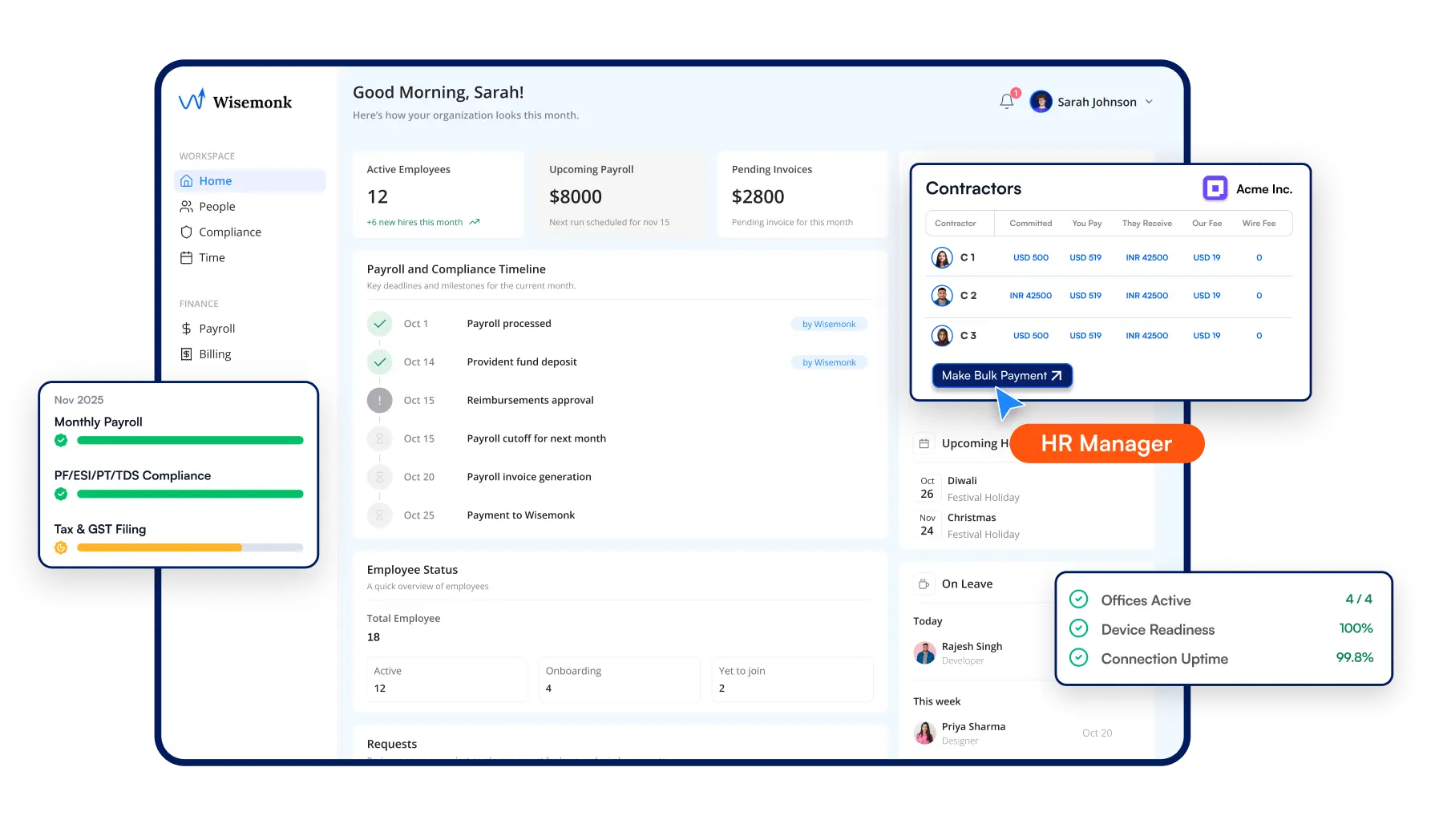
Sobald Sie den richtigen Magento-Entwickler gefunden haben, ist das Letzte, was Sie wollen, in monatelangem Papierkram oder Compliance-Risiken stecken zu bleiben.
So macht Wisemonk EOR es einfach:
- Mieten Sie innerhalb von Tagen, nicht Monaten: Wir kümmern uns um Arbeitsverträge, Gehaltsabrechnungen, EPF, ESI, Trinkgeld, Berufssteuer und alles Einhaltung des indischen Arbeitsrechts. Du konzentrierst dich auf den Aufbau deines Ladens.
- Transparente Preisgestaltung: 99 USD/Mitarbeiter/Monat. Keine versteckten Gebühren, keine Kosten für die Einrichtung eines Unternehmens.
- Engagierter Personalsupport: Jeder Kunde erhält einen eigenen Personalmanager. Müssen Sie einen Bonus bearbeiten, Urlaub abwickeln oder eine Kündigung vornehmen? Wir sind dran.
- Steueroptimierung: Wir strukturieren die Mitarbeitervergütung so, dass sie die Vergütung zum Mitnehmen maximieren, was sich direkt auf die Mitarbeiterbindung auswirkt. Glückliche Entwickler bleiben länger hier.
- Wir haben globalen E-Commerce-Marken dabei geholfen, Magento-Entwickler, Adobe Commerce-Architekten und komplette E-Commerce-Engineering-Teams in Indien einzustellen, ohne die betrieblichen Probleme der Unternehmensgründung oder der Fehlklassifizierung von Auftragnehmern zu haben.
Sind Sie bereit, Ihren nächsten Magento-Entwickler in Indien einzustellen? Sprechen Sie mit unseren Einstellungsexperten für Indien und stellen Sie Ihr Team in weniger als drei Wochen zusammen.
Häufig gestellte Fragen
Welches Maß an Fachwissen kann ich von einem Magento-Entwickler in Indien erwarten, der über Wisemonk eingestellt wurde?
Wisemonk vermittelt die besten 1% Magento-Entwicklertalente aus Indien, die von erstklassigen, oft von VC-finanzierten Produktunternehmen stammen. Unser strenges Screening, einschließlich eingehender Telefongespräche und technischer Bewertungen, gewährleistet außergewöhnliche Fähigkeiten. Dies garantiert, dass hochqualifizierte Entwickler, die von der mittleren bis zur Leitungsebene genau auf Ihr Projekt abgestimmt sind, hochwertige digitale Lösungen liefern.
Warum wird der EOR-Service kontinuierlich benötigt?
Ein EOR, wie Wisemonk, hilft Ihnen bei der Verwaltung der Gehaltsabrechnung, der Einhaltung von Vorschriften, Sozialleistungen und der Personalverwaltung für Ihre Mitarbeiter im Zielland und stellt so die kontinuierliche Einhaltung gesetzlicher und behördlicher Vorschriften sicher, ohne dass eine eigene lokale Niederlassung erforderlich ist.
Was beinhaltet der Rekrutierungsservice?
Wisemonk bietet einen erstklassigen Beratungsservice, der Ihre Anforderungen und Ihren Kontext genau versteht und sicherstellt, dass wir nur die relevantesten und wirklich interessierten Kandidaten für Vorstellungsgespräche vorschlagen. Kunden erhalten detaillierte Informationen über die bisherige Vergütung der Kandidaten und können direkt mit den ausgewählten Personen über Gehalt und langfristige Karriereaussichten verhandeln.
Wie lange dauert es normalerweise, um loszulegen?
Der typische Prozess von der Suche nach Kandidaten bis zum Beitritt dauert etwa 6 bis 8 Wochen, abhängig von den Kündigungsfristen und Auswahlfristen. Das Onboarding bei Wisemonk ist schnell und effizient und dauert in der Regel weniger als eine Woche, sobald der Kandidat finalisiert und die Unterlagen eingereicht wurden
Bieten Sie Garantien für die Erzielung von Geschäftsergebnissen?
Wisemonk bietet Garantien für Servicequalität, Compliance und gegebenenfalls für den Austausch von Talenten. Ihr Unternehmen behält die Kontrolle über Leistung und Arbeitsergebnisse, während Wisemonk administrative und Compliance-Aufgaben übernimmt, um den Erfolg Ihres Teams zu unterstützen.
Wie unterscheidet sich das von Personalbesetzung?
Bei der traditionellen Personalbesetzung sind Talente oft dem Personalunternehmen gegenüber loyal. Dies kann sich auf die Qualität der verfügbaren Kandidaten auswirken und beinhaltet in der Regel hohe, intransparente Unternehmensmargen. Wisemonk verbindet Sie direkt mit den Talenten, sodass Sie das Gehalt direkt aushandeln können. Danach kümmert sich Wisemonk gegen eine geringe Gebühr um die lokale Gehaltsabrechnung und die Einhaltung arbeitsrechtlicher Vorschriften. Wenn Sie mit unseren Gehaltsabrechnungsdiensten nicht zufrieden sind, steht es Ihnen frei, mit demselben Talent über einen anderen Gehaltsabrechnungs- oder EOR-Anbieter zu arbeiten.
Wie unterscheidet sich das vom Outsourcing an ein Dienstleistungsunternehmen?
Das Outsourcing an einen Dienstleister bedeutet in der Regel, dass der Anbieter ein Team oder eine Funktion leitet, wobei Ihr Unternehmen oft weniger direkte Kontrolle hat. EORs ermöglichen es Ihnen, das gesamte Tagesmanagement Ihres Teams zu behalten und sich nur um die rechtlichen und administrativen Aspekte zu kümmern.


.png)







.webp)
.webp)

.webp)
.webp)
.webp)


.webp)
.webp)

.webp)


.webp)


.webp)

.webp)


.webp)



.webp)


.webp)

.webp)

.webp)




.webp)
.webp)

%20Explained.webp)
.webp)



%20(1).webp)
.webp)

%20in%20India%20(2024).webp)

.webp)
.webp)
.webp)


%20(1).webp)



%201.webp)


%20in%20India.webp)


%20(1).webp)


.webp)

.webp)
.webp)
.webp)