














Aditya Nagpal
Written By
Category Employer of Record Services
Read time 5 min read
Last updated May 21, 2026

Employer of Record (EOR) in India: How It Works

employer of record india
TL;DR
  • An Employer of Record (EOR) is a third-party that legally hires employees in India on your behalf, handling payroll, taxes, statutory benefits, and full compliance with Indian labor laws, while you keep full control over the employee's day-to-day work.
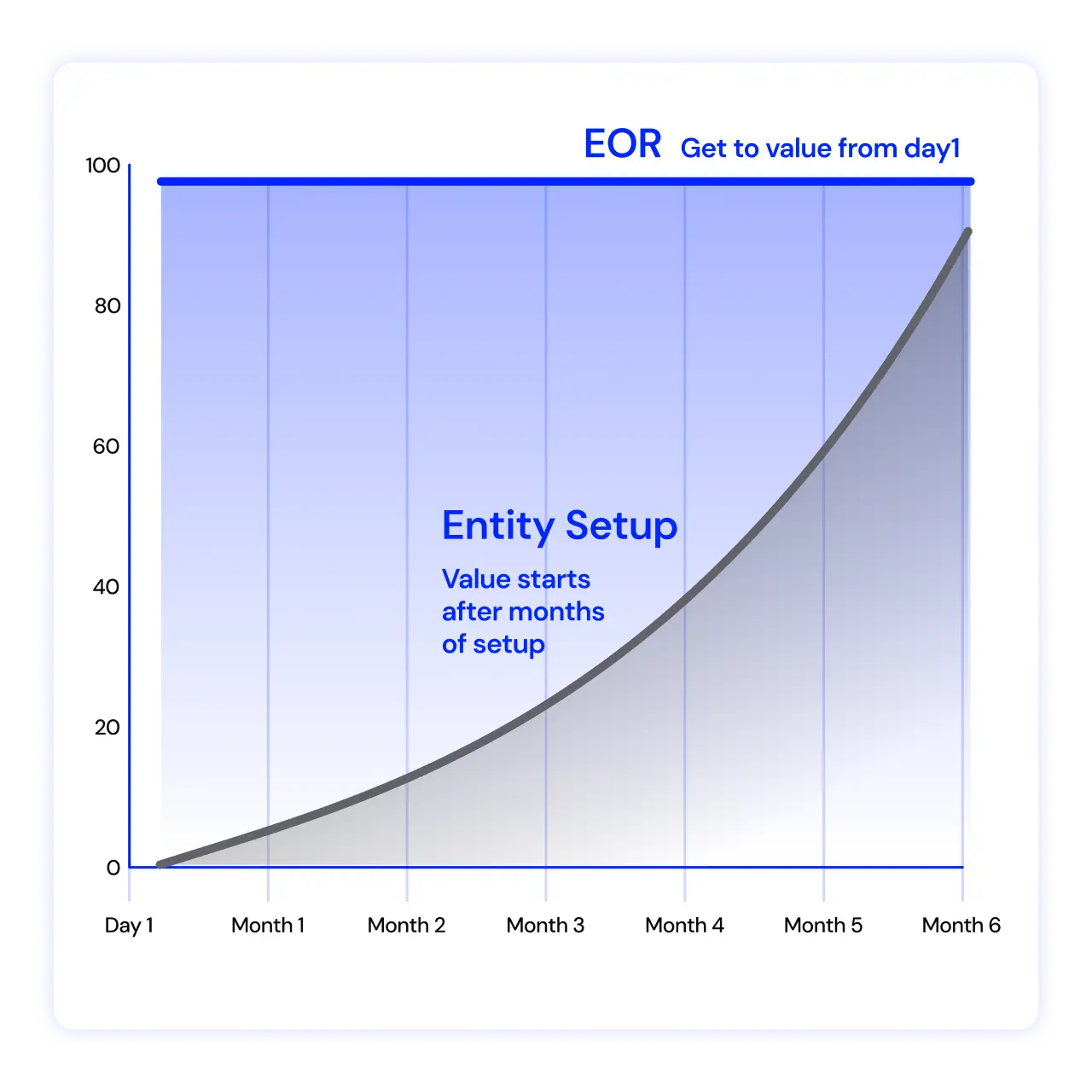
  • You can onboard Indian hires in 24 to 48 hours through an EOR, compared to 4 to 6 months and $15,000 to $25,000 needed to set up your own Indian subsidiary from scratch.
  • Employer of record India costs typically range from $99 to $699 per employee per month, with India-native specialists like Wisemonk and global EOR platforms (Deel, Remote, G-P).
  • An EOR shields your company from Permanent Establishment (PE) tax risk under Article 5 of the US-India tax treaty, but only for delivery, engineering, and back-office roles, not for revenue-generating or contract-signing positions like Country Manager or Head of Sales.
  • Use an EOR for your first 1 to 20 employees in India, then switch to your own subsidiary once you cross 20 to 25 FTEs in a single location or need India-specific sales, billing, or ESOP infrastructure.

Need help with EOR services in India? Reach out to us today!

Discover how Wisemonk creates impactful and reliable content.

You found the perfect engineer in Bengaluru. They're ready to start Monday. But your company has no legal presence in India, no PF account, and no way to legally hire, onboard, or pay them without triggering Permanent Establishment tax exposure.

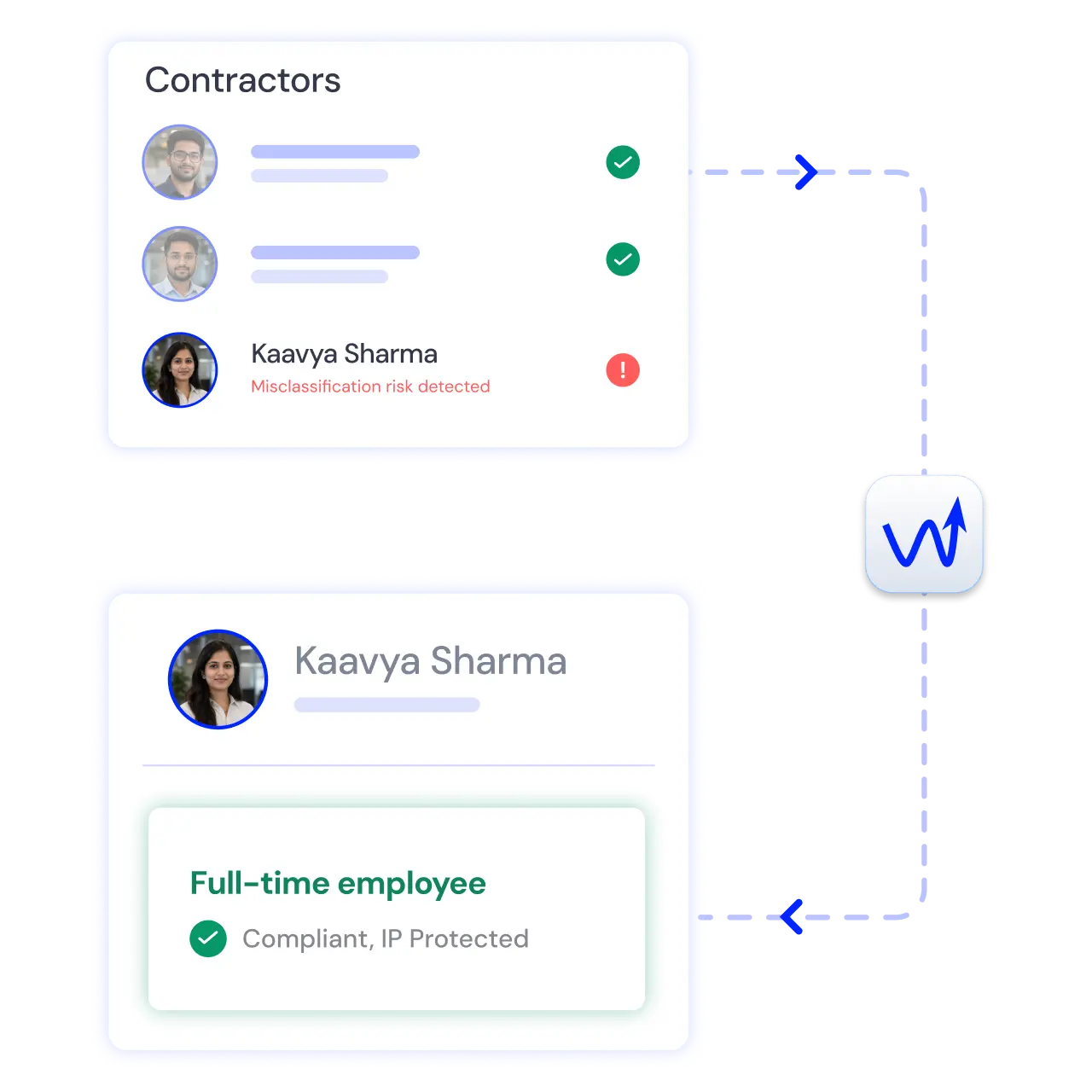
This is where most US, UK, and Canadian founders hit a wall when hiring in India. Setting up an Indian entity to hire even one person takes 4 to 6 months and burns through $15,000 to $25,000 before you've paid anyone. Hiring them as a contractor invites misclassification penalties and back-taxes. And managing PF, ESI, TDS, gratuity, and 28 state-specific labor codes on your own? Not happening.

An Employer of Record (EOR) in India fixes all of it. The EOR legally hires, onboards, pays, and manages compliance for your India team, so you can bring on talent in 48 hours without setting up your own entity.

Here's everything you need to know about hiring and managing employees in India through an EOR in 2026.

What is an Employer of Record (EOR) in India?

An Employer of Record (EOR) in India is a third-party organization that legally hires employees on your behalf, taking on all the employment-related responsibilities like payroll, tax withholding, statutory benefits, and compliance with Indian labor laws.

For foreign companies wanting to hire local talent in India without setting up their own legal entity, an EOR becomes the official employer on paper, while you keep full control over the employee's day-to-day work, projects, and performance.

What does an EOR in India actually do?

An EOR takes on the full stack of employment compliance so you can focus on running your business.

Here's what falls on their plate:

  • Drafting compliant employment contracts in line with the Indian Contract Act and applicable state-specific labor laws
  • Running monthly payroll in INR, including salary payments, payslip generation, and statutory deductions
  • Managing statutory contributions like Employees' Provident Fund (EPF), Employees' Pension Scheme (EPS), Employee State Insurance (ESI), and Professional Tax
  • Handling income tax withholding (TDS) under the Income Tax Act, 1961, and filing returns with Indian authorities
  • Administering mandatory benefits like gratuity, paid leave, maternity benefits, and health insurance, plus optional perks you want to offer
  • Managing offboarding, severance pay, full and final settlements, and exit compliance when an employee leaves

What is an EOR not responsible for?

The EOR is your legal employer, not your operational manager.

These pieces stay with you:

  • Day-to-day work assignments, project management, performance reviews, and team direction
  • Setting the employee's salary, bonuses, and compensation structure (you decide; the EOR processes)
  • Hiring decisions, interviews, and choosing who joins your team
  • Your company's internal tools, IP ownership policies, and confidentiality agreements (though the EOR can include these in the contract)
EOR vs PEO vs Staffing Agency vs Contractor
FeatureEORPEOStaffing AgencyIndependent Contractor
Legal employerEORYou (co-employment)Staffing agencyContractor is self-employed
Need a local entity in India?NoYesNoNo
Handles payroll and tax complianceYesSharedYesNo (contractor handles their own)
Best forHiring full-time employees abroad without an entityCompanies with an existing entity needing HR supportShort-term or project-based staffingProject-based, non-core work
Misclassification riskLowLowLowHigh
Speed to hire1-14 daysMonths (entity needed first)1 to 4 weeksDays

Why do US companies use an EOR to hire in India?

US or foreign companies hire through an EOR in India because it removes every major roadblock, including legal setup, compliance risk, payroll headaches, and timeline delays, between them and the world's second-largest tech talent pool.

Here are the five biggest reasons American founders, HR leaders, and finance teams choose this route in 2026:

1. You can onboard Indian employees in 48 hours instead of waiting 4 to 6 months.

Setting up your own legal entity in India means registering a private limited company with the Ministry of Corporate Affairs, getting a PAN and TAN, opening a local bank account, registering for GST, PF, ESI, and Professional Tax across each state, and filing dozens of documents.

This typically takes 4 to 6 months. An EOR already has all of this in place, so you can hire, send a compliant offer letter, and have your new engineer working on Monday.

2. You save anywhere from $15,000 to $100,000 in year one by skipping entity setup.

Building a local entity isn't just slow, it's expensive. You're looking at $15,000 to $25,000 in initial incorporation, legal, and registration fees, plus ongoing costs for a local director, registered office, accounting firm, statutory audits, and payroll software.

For a small team of 2 to 10 hires, an EOR typically runs $300 to $600 per employee per month, which works out to massive savings in year one and gives you the flexibility to scale down without dissolving an entity.

3. An EOR shields you from Permanent Establishment (PE) risk under the US-India tax treaty.

If your US company has employees in India doing core revenue-generating work, the Indian tax authority can classify your operations as a Permanent Establishment under Article 5 of the US-India Double Tax Avoidance Agreement.

That means your global profits attributable to India become taxable in India, often at 40%-plus rates. Because the EOR is the legal employer, your US entity has no direct employment footprint in India, which significantly reduces PE exposure.

4. The EOR absorbs the entire compliance load: PF, ESI, TDS, gratuity, and the new labor codes.

India is rolling out four consolidated labor codes (Wages, Industrial Relations, Social Security, and OSH) that change how leave, working hours, gratuity, and social security contributions work. Add monthly PF filings, quarterly TDS returns, ESI registrations, and state-specific Professional Tax, and the admin gets brutal fast. The EOR handles all of it, and they're on the hook if something goes wrong.

5. You access elite engineering talent at 30% to 50% of US salary costs.

India has over 5.4 million IT-BPM professionals and ranks as the world's third-largest startup ecosystem, with more than 100 unicorns as of 2025.

A senior software engineer in San Francisco costs roughly $180,000 to $220,000 fully loaded. The same caliber of talent in Bengaluru or Hyderabad lands between $35,000 and $70,000, including all statutory benefits.

That's not offshore-quality work either, it's the same engineers Google, Microsoft, and Stripe are hiring locally.

How does an Employer of Record in India work?

An EOR setup is a three-party relationship between your US company (the client), the EOR provider (the legal employer in India), and the employee (your hire).

You manage what the employee works on, the EOR manages everything legal and administrative, and the employee gets a fully compliant Indian employment contract with all the local benefits and protections they're entitled to.

This structure lets your business operate in India without ever needing your own legal entity.

EOR India Arrangement

Here's exactly how it works, step by step:

  1. You find and select the candidate: You run the interviews, make the hiring decision, and agree on the salary, role, and start date. The EOR doesn't pick your team, you do.
  2. You sign a Master Service Agreement (MSA) with the EOR: This is the commercial contract between your US company and the EOR provider. It covers fees, service scope, IP assignment, data protection, and termination terms.
  3. The EOR drafts and issues the employment contract: The EOR creates a compliant employment agreement in line with Indian labor laws, the Shops and Establishments Act of the relevant state, and statutory rules around leave, notice periods, and gratuity. The employee signs with the EOR, not with your US company.
  4. The EOR onboards the employee and runs payroll setup: They collect PAN, Aadhaar, bank details, and previous employer documents (Form 16, UAN), register the employee for PF and ESI, and set up income tax declarations under the chosen tax regime.
  5. The EOR pays the employee monthly in INR: Salary is paid on a fixed date each month with a compliant payslip showing all statutory deductions (PF, ESI, Professional Tax, TDS). You're invoiced by the EOR in USD or your preferred currency, typically once a month.
  6. The EOR handles ongoing compliance, benefits, and offboarding: This includes monthly statutory filings, annual Form 16 issuance, gratuity accruals, leave tracking, health insurance, and full and final settlement when an employee resigns or is let go.

What contracts are involved: MSA vs Employment Contract?

There are two separate contracts that often get confused. The MSA is the business agreement between you and the EOR. The Employment Contract is the legal employment agreement between the EOR and the employee.

You're not a party to the employment contract, but you typically review it before it goes out.

AspectMaster Service Agreement (MSA)Employment Contract
PartiesYour US company + EOR providerEOR provider + employee
Governing lawUsually US state law or Singapore/UK lawIndian labor laws and state Shops and Establishments Act
PurposeDefines service scope, fees, IP, liability, data protectionDefines salary, role, benefits, notice period, leave, statutory rights
LanguageEnglishEnglish (sometimes bilingual based on state)
TerminationNotice period between you and EORNotice period for the employee, typically 30 to 90 days

How much does an Employer of Record in India cost?

An EOR in India costs between $99 and $699 per employee per month as a service fee, plus the employee's gross salary and roughly 15% to 22% in employer statutory contributions like Provident Fund, ESI, and gratuity.

The exact number depends on the provider you pick, the salary band, and whether the fee is flat or a percentage of payroll.

What pricing models do EORs in India use?

Most EORs in India follow one of three pricing approaches. Picking the right one can save you thousands a year, especially as your team grows.

Pricing ModelHow It WorksBest ForWatch-Outs
Flat monthly feeA fixed dollar amount per employee per month, regardless of salaryCompanies hiring mid-to-senior engineers ($40K+ salaries)Often higher for junior hires; check if benefits admin is included
Percentage of payrollEOR charges 8% to 15% of the employee's gross monthly salarySmaller teams or junior hires with lower salariesCosts scale up fast as salaries rise; can get expensive at senior levels
Hybrid or tieredBase flat fee plus add-ons for benefits, equity, or extra servicesCompanies wanting flexibility and predictable budgetingAdd-on charges can stack quickly; ask for an itemized quote

Pricing varies a lot depending on the type of provider.

Here's what you can expect to pay in 2026:

  • India-native EOR specialists (Wisemonk): Starting at $99 to $399 per employee per month. These providers own their Indian entity, handle all compliance in-house, and are often the lowest total-cost option for India-only hiring.
  • Global EOR platforms (Deel, Remote, Oyster, Multiplier): Typically $499 to $699 per employee per month for India. Deel's India pricing starts around $599/month, with FX fees of 3 to 5 percent on cross-border payments on top.
  • Enterprise EOR (G-P, Atlas): $599 to $1,500+ per employee per month, usually quote-based.

Read more:"Employer of Record (EOR) Cost in India"

Try our fully loaded cost calculator now and take the first step towards building your world-class team in India: Salary Calculator India: Simplify Your Take-Home Pay Calculation.

What compliance does an Employer of Record handle in India?

An EOR in India takes on the full weight of federal and state employment compliance, covering everything from monthly Provident Fund filings to income tax withholding, statutory benefits, and data protection.

This includes both the long-standing labor laws and the newer regulations rolling out in 2026, like the consolidated Labor Codes and the Digital Personal Data Protection (DPDP) Act.

Which federal compliances does an EOR cover?

Federal compliance is non-negotiable, and missing a filing can trigger penalties, interest, and even prosecution of company directors.

Here's what the EOR handles on your behalf:

Compliance AreaWhat the EOR DoesFrequency
Provident Fund (EPF)Registers employee, deducts 12% from salary, contributes 12% employer share, files ECR returnsMonthly (by 15th)
Employees' Pension Scheme (EPS)Routes 8.33% of employer PF contribution to EPS (capped at ₹15,000 basic)Monthly
Employee State Insurance (ESI)Registers eligible employees (gross under ₹21K/month), deducts 0.75% employee + 3.25% employerMonthly (by 15th)
Income Tax (TDS)Withholds tax from salary under Section 192, deposits with government, issues Form 16Monthly deposit, quarterly return, annual Form 16
GratuityAccrues 4.81% of basic salary, manages payout after 5 years of service under Payment of Gratuity ActOngoing accrual, payout on exit
Maternity BenefitsAdministers 26 weeks paid maternity leave under Maternity Benefit Act, 1961As applicable
Statutory BonusPays minimum 8.33% bonus to eligible employees (basic under ₹21K/month)Annual

Read more: Payroll Compliance in India

Which state-level compliances does an EOR handle?

India's 28 states and 8 union territories each have their own employment rules layered on top of federal law.

The EOR handles all of this based on where the employee is physically located:

Compliance AreaNotes
Shops and Establishments ActEach state has its own version. Governs working hours, leave, overtime, and holidays. The EOR registers and renews.
Professional TaxLevied by 21 states (rates vary, max ₹2,500/year). The EOR deducts and remits to state authorities.
Labour Welfare FundApplicable in 16 states. Small contributions from both employer and employee, paid annually or half-yearly.
State-specific minimum wagesWage floors differ by state, skill level, and industry. The EOR ensures the contract meets the local minimum.
Leave entitlementsEarned, casual, and sick leave rules vary by state. The EOR aligns leave policies to state law.

What changed for EOR compliance in 2026: Labor Codes and DPDP Act?

Two big regulatory shifts are reshaping how EORs operate in India this year. Both raise the compliance bar significantly.

The 50% wages rule under the new Labor Codes: India's four consolidated Labor Codes (Wages, Industrial Relations, Social Security, OSH) are being rolled out, and the biggest change is the redefinition of "wages." Basic salary must now be at least 50% of total CTC, which directly increases PF contributions, gratuity accruals, and leave encashment costs. A solid EOR restructures salary breakups to stay compliant while keeping the take-home impact manageable for the employee.

The DPDP Act enforcement timeline: The Digital Personal Data Protection Act, 2023, started phased enforcement in November 2025, with full implementation by May 2027. EORs in India are now treated as "Data Fiduciaries" for employee personal data, meaning they must obtain explicit consent, allow data erasure rights, and notify breaches within 72 hours. The Data Protection Board can impose penalties of up to ₹250 crore (roughly $30 million USD) per violation, so this is not a minor compliance item. Your EOR's data handling practices should be audited before you sign.

What statutory benefits do EOR employees in India receive?

Employees hired through an EOR in India receive the exact same statutory benefits as direct hires at any Indian company, because legally they are full-time Indian employees, not contractors.

The EOR is required by law to provide every benefit mandated by Indian labor laws, and a good provider will also help you layer on competitive non-statutory perks to attract top talent.

BenefitEntitlementNotes
Employees' Provident Fund (EPF)12% employer + 12% employee contribution on basic salaryMandatory if the company has 20+ employees; most EORs cover this from employee #1
Gratuity15 days of basic salary for every completed year of servicePayable after 5 years of continuous service, under the Payment of Gratuity Act, 1972
Employee State Insurance (ESI)3.25% employer + 0.75% employeeOnly applies if gross salary is under ₹21,000/month; covers medical, sickness, and disability
Earned/Privilege Leave15 to 21 days per yearExact entitlement varies by state Shops and Establishments Act
Casual Leave7 to 12 days per yearState-specific; typically used for short personal needs
Sick Leave7 to 12 days per yearState-specific; medical certificate required beyond a threshold
Maternity Leave26 weeks paidUnder Maternity Benefit Act, 1961; applies to first two children
Public Holidays10 to 14 days per yearIncludes 3 national holidays (Republic Day, Independence Day, Gandhi Jayanti) plus state-specific holidays
Statutory Bonus8.33% to 20% of annual basicApplicable to employees earning under ₹21,000/month basic

Which benefits aren't statutory but expected in a competitive offer?

To actually land senior engineers, product managers, or designers in India, you'll need to go beyond the legal minimum.

These aren't required by law, but they're table stakes in any competitive 2026 offer:

  • Group health insurance for the employee, spouse, and 2 children (typical cover: ₹3 to ₹10 lakhs)
  • Group term life insurance and personal accident cover (₹50 lakhs to ₹1 crore is standard for tech hires)
  • Paternity leave (5 to 15 days; not legally required but offered by nearly every modern Indian employer)
  • Work-from-home or hybrid setup allowance for internet, ergonomic chair, and home office equipment
  • Annual learning and development budget ($300 to $1,500 USD for courses, certifications, or conferences)
  • Stock options or RSUs for senior hires (handled separately from the EOR but worth structuring upfront)
  • Mental wellness benefits like therapy reimbursement or apps like Calm or Headspace
  • Flexible PTO or extra vacation days beyond the statutory leave

Read more: Employee Benefits in India

How does an EOR shield US companies from Permanent Establishment (PE) risk in India?

Permanent Establishment is the tax concept that scares CFOs awake at night. Under Article 5 of the US-India Double Tax Avoidance Agreement, if your US company is found to have a "fixed place of business" or a "dependent agent with contract-binding authority" in India, the Indian tax authority can treat your operations as a PE and tax your India-attributable profits at rates exceeding 40%.

An EOR helps you sidestep this by ensuring the legal employer in India is a separate Indian entity, not your US business.

Which three PE triggers does an EOR help you avoid?

PE risk usually gets triggered through one of three doors, and a well-structured EOR engagement closes all of them:

  1. Fixed Place of Business PE: If your US company rents an office, leases a co-working space, or maintains any physical premises in India for ongoing business, you've created a fixed place of business. With an EOR, the employee works remotely from their own location (or a co-working space booked under the EOR's name, not yours), so there's no Indian premises tied to your US entity.
  2. Dependent Agent PE: This triggers when an individual in India habitually negotiates or concludes contracts on behalf of your US company. Because the EOR is the legal employer and the employee's job description is structured around delivery work (engineering, design, support) rather than contract signing, you stay outside this trigger.
  3. Contract-Binding Authority PE: Even without a fixed office, if an India-based person has authority to bind your US company to commercial contracts with customers or vendors, that alone creates a PE. EOR contracts explicitly restrict employees from holding signing authority on behalf of the US client.

Read more: How to Avoid Permanent Establishment Risk in India

When does the EOR shield break and expose you to PE risk?

The EOR shield is strong, but it's not bulletproof. If you hire a Country Manager, Head of India Sales, or VP of Business Development through an EOR, and that person regularly negotiates client deals, signs MOUs, or pitches to enterprise prospects on behalf of your US company, Indian tax authorities can argue the EOR structure is a sham and pierce through to your US entity.

Real example: A US SaaS company hires a "Sales Director, India" through an EOR who closes six enterprise contracts worth $2M each. Even though the EOR is the legal employer, the Income Tax Department can classify this as a Dependent Agent PE and tax the US company on India-attributable profits, plus interest and penalties.

The fix is simple: use an EOR for delivery, engineering, support, and back-office roles. For revenue-generating or contract-signing roles in India, you typically need a subsidiary, branch office, or a carefully structured commissionaire arrangement reviewed by tax counsel.

EOR vs Indian subsidiary: which is right for your company?

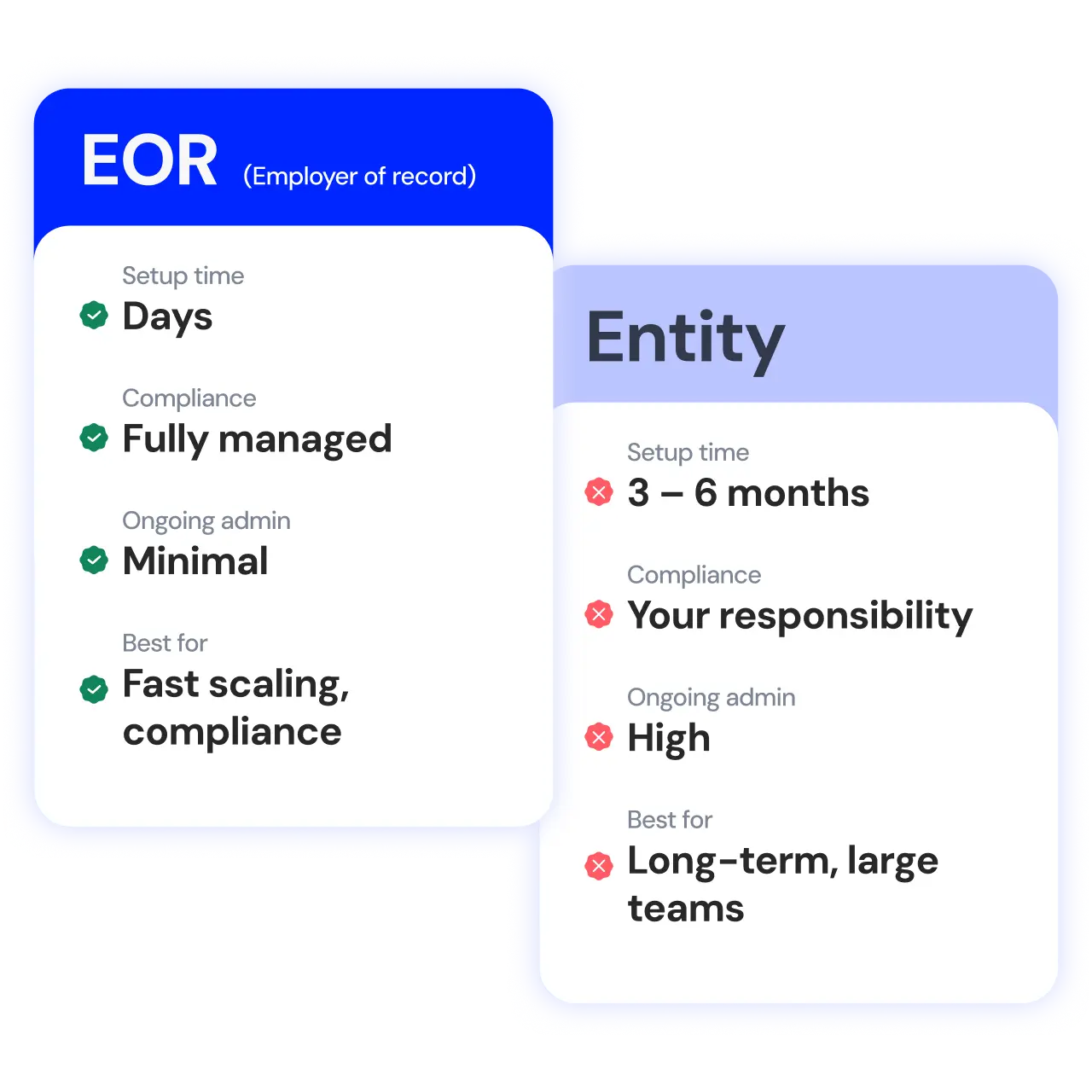
Use an EOR for your first 1 to 20 employees in India. Once you cross 20 to 25 full-time employees in a single location, the math typically flips and setting up your own Indian subsidiary (usually a Private Limited Company) becomes cheaper, more flexible, and worth the operational overhead.

Here's the side-by-side breakdown to help you decide:

FactorEmployer of Record (EOR)Indian Subsidiary (Private Limited Company)
Time to first hire24 to 72 hours3 to 6 months
Year-1 setup cost$0 to $1,000 (one-time onboarding fee)$15,000 to $25,000 (incorporation, legal, registrations)
Annual overheadBundled into EOR fee$20,000 to $40,000 (statutory audit, ROC filings, local director, registered office, accounting)
Per-employee monthly cost$99 to $699 service fee + salary + statutoryOnly salary + statutory (after fixed overhead is absorbed)
Compliance burden on youZero, EOR handles everythingFull responsibility, you hire CA, payroll firm, and legal counsel
Benefits administrationHandled by EORYou design, procure, and manage everything in-house
Multi-state hiringEasy, EOR is registered across statesRequires separate state registrations (PT, S&E, LWF) for each location
Wind-down complexityJust end the contract, 30 to 60 days12 to 18 months to legally dissolve, including tax clearances
IP ownershipStrong (via EOR contract assignment clauses)Strongest (employee signs directly with your Indian subsidiary)
Best forTesting the market, small teams, distributed hiresLong-term commitment, large teams, India-specific operations

When should you switch from an EOR to your own Indian entity?

The switch usually makes sense when one or more of these tip the scales:

  • Team size crosses 20 to 25 FTEs in India, ideally clustered in one or two cities. At that point, the EOR service fees ($30K to $150K+ per year for the team) outweigh the cost of running your own entity.
  • You're planning India-specific products, sales, or revenue activity that requires contract-signing authority, billing Indian customers in INR, or building out a local leadership team. These don't fit the EOR model cleanly.
  • You want full control over equity, ESOPs, IP assignment, and culture. A subsidiary lets you issue Indian-law-compliant stock options, design your own benefits package, and tightly integrate the India team into your global org.
A common pattern in 2026: start with an EOR for the first 12 to 18 months, hit 15 to 20 hires, then begin entity setup in parallel while the EOR continues running payroll. Once your Pvt Ltd is registered, transition employees over in a clean cutover.

Read more: EOR vs Entity in India: Cost, Timeline & When to Switch

How do you choose the right EOR provider in India?

Not every EOR in India is built the same, and the wrong pick can cost you in compliance penalties, hidden fees, or messy offboarding.

Here's the checklist to run every provider through before signing the MSA:

  1. They own their Indian entity (not an aggregator): Some global EOR platforms sublet to local partners in India, which adds a middleman layer, slows down problem-solving, and creates ambiguity on who's legally accountable when something goes wrong.
  2. FX markup is under 1% on USD-to-INR conversion: A 2% to 4% hidden FX margin on a $50K salary can quietly cost you $1,000 to $2,000 per employee per year, so always ask for the exact conversion rate and benchmark it against Google's mid-market rate.
  3. Fee disclosure is fully transparent and itemized: Look for clear line items covering service fee, setup, offboarding, security deposit, benefits admin, and any per-transaction charges; vague "all-inclusive" pricing usually hides surprises in the contract.
  4. Multi-state Shops and Establishments registrations are already in place: If your hires are spread across Bengaluru, Mumbai, Delhi, and Hyderabad, the EOR should already be registered in each state so you're not waiting weeks for paperwork before onboarding.
  5. They push real-time updates on Labor Code and DPDP changes: India's regulatory landscape shifts every quarter in 2026, so your EOR should proactively notify you about salary restructuring, PF rule changes, and data protection deadlines, not just react when you ask.
  6. Clean entity-transition support is part of the offer: When you eventually move to your own Indian subsidiary, the EOR should help with employee transfers, PF account migration, gratuity continuity, and Form 16 reconciliation, ideally without charging exit penalties.
  7. Data residency and DPDP Act compliance are documented: Ask where employee data is stored, who has access, whether they're registered as a Data Fiduciary, and how they handle breach notifications within the 72-hour DPDP window.

How does Wisemonk simplify EOR in India?

Wisemonk is an India-native EOR platform built for foreign companies to hire, pay, and manage talent in India.

Unlike global aggregators that sublet to local partners, we own our entity, run our own payroll infrastructure, and handle every piece of compliance in-house, which means faster onboarding, tighter accuracy, and zero finger-pointing when something needs to get fixed.

Here's what makes working with Wisemonk different:

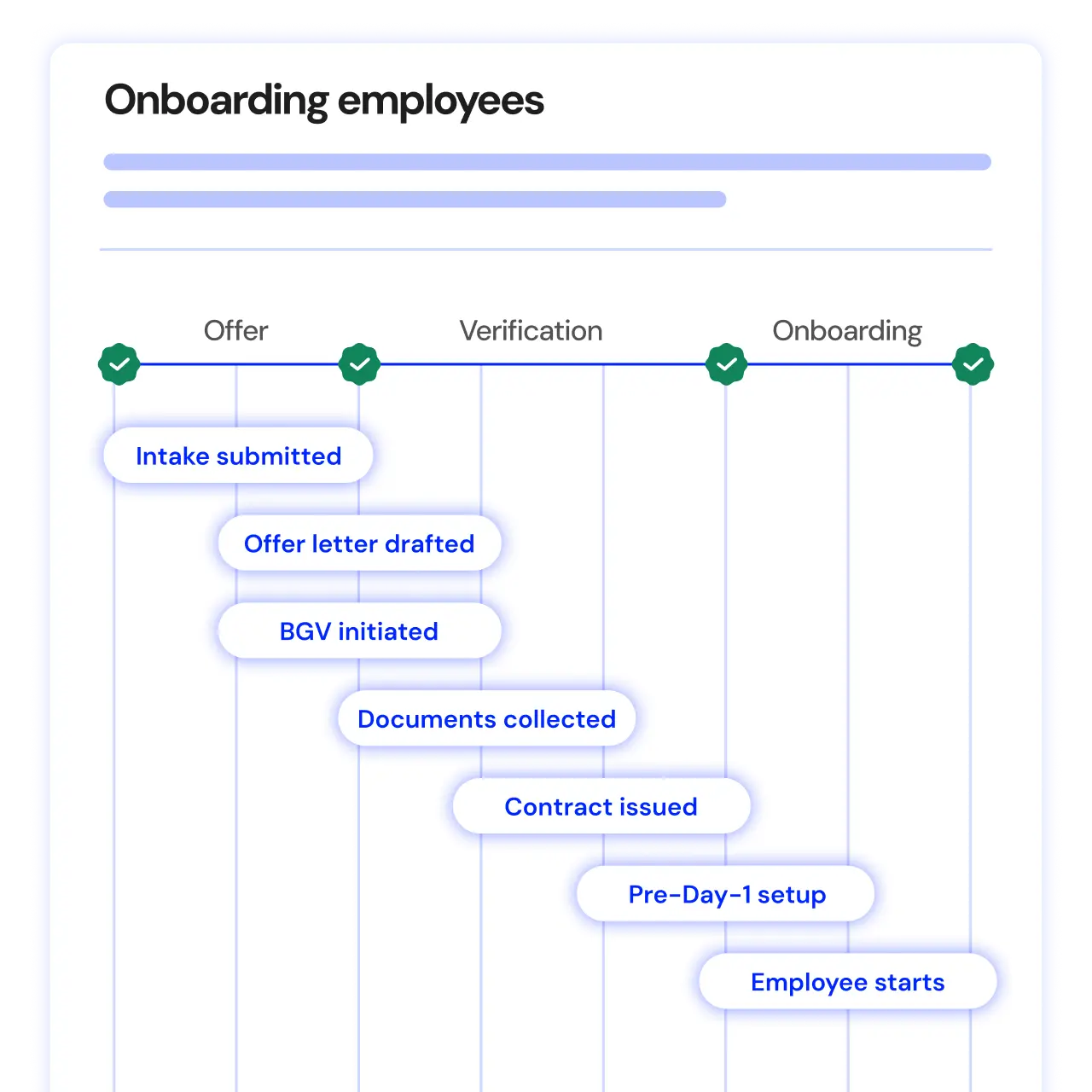
  • 24 to 48-hour onboarding: Send us the offer details and we'll have your new hire signed, registered for PF and ESI, and ready to start, often before competitors finish drafting their contract.
  • Salaries denominated in your local currency, paid to employees in INR: You see and approve salaries in USD, GBP, EUR, or CAD on your dashboard and invoices, while Wisemonk pays your Indian employees in INR as required by Indian law. You get full transparency on the exact exchange rate applied at every transaction, with no hidden FX markups.
  • Flexible payroll cycles: Weekly, bi-weekly, or monthly payroll to your Indian employees, structured exactly how your team is used to being paid, not forced into a one-size-fits-all template.
  • End-to-end compliance, owned by us: PF, ESI, gratuity, TDS, Professional Tax, and Shops and Establishments filings across every state we operate in, plus full DPDP Act and Labor Code readiness.
  • Customizable benefits: Go beyond standard group health with executive-level coverage, mental wellness, life insurance, and WFH allowances designed for senior talent in India.
  • Built-in entity transition support: When you're ready to set up your own Indian subsidiary, we guide the planning, transfer your team cleanly, and preserve continuity on PF, gratuity, and tenure, so you don't lose momentum.
  • Contractor of Record (COR) built in: Pay Indian freelancers compliantly under the same roof, with GST, TDS, and FEMA handled, including foreign remittance agreements for every transaction.
  • Real humans, not just a dashboard: You get an assigned HR specialist who knows your team and your business, alongside a modern platform that keeps everything in one place.

Get Started with Wisemonk

Hire, pay & manage employees in India without an entity.

Frequently asked questions

Is using an EOR legal in India?

Yes, using an EOR is fully legal in India. The EOR acts as the registered legal employer under Indian labor laws, holding valid Shops and Establishments registrations, PF, ESI, and tax registrations. As long as the EOR is a properly incorporated Indian entity and the employment relationship is genuine (not a sham to disguise contractor work), the structure is recognized and widely used by global companies.

How long does EOR onboarding take?

Most reputable EORs like Wisemonk in India can onboard a new hire within 24 to 48 hours once you share the offer details and the candidate submits their documents (PAN, Aadhaar, bank details, previous Form 16). Slower providers can take 1 to 2 weeks. Compare this to 4 to 6 months for setting up your own Indian entity from scratch.

Can an EOR sponsor work visas for foreign nationals in India?

Yes, but it's complex. An EOR can sponsor an Employment Visa for a foreign national being hired in India, provided the role meets the Indian government's threshold (typically a minimum gross salary of USD 25,000 per year and a specialized skill set). Not all EORs offer visa sponsorship, so confirm this upfront if you're hiring expats into India.

What happens to my employees if I switch from EOR to my own entity?

Your employees transfer from the EOR to your new Indian subsidiary through a clean cutover. A good EOR helps with PF account transfers (via Universal Account Number), preserves gratuity tenure, issues final Form 16s, and ensures there's no gap in salary or benefits. The employee signs a fresh contract with your entity, ideally with no loss of seniority or accrued leave.

Can I hire contractors instead of using an EOR?

You can, but only for genuinely independent project-based work. Indian tax authorities aggressively scrutinize misclassified contractors who function like full-time employees (fixed hours, exclusive engagement, integrated into your team). Misclassification can trigger back-payment of PF, gratuity, ESI, penalties, and TDS shortfalls. For full-time roles, an EOR is the safer route.

Does an EOR handle equity/ESOPs for Indian employees?

Equity is typically handled separately from the EOR. Your US parent company issues stock options or RSUs directly to the Indian employee under a global ESOP plan, while the EOR runs salary and statutory benefits. You'll need to navigate Indian tax rules on perquisite valuation at vesting and capital gains at sale, ideally with a tax advisor.

What's the difference between EOR and PEO in India?

An EOR is the legal employer of your team in India, so you don't need your own entity. A PEO is a co-employment model where you have your own Indian entity and the PEO supports HR, payroll, and benefits administration. In short: no entity needed for EOR, entity required for PEO. Most US companies hiring their first 1 to 20 employees in India use an EOR.

Which Indian cities are best for EOR hiring?

Bengaluru is the top destination for engineering and product talent. Hyderabad is strong for engineering and enterprise software roles (Microsoft, Amazon, and Google all have major campuses there). Pune is popular for fintech and automotive tech. Delhi NCR (Gurgaon, Noida) leads for sales, marketing, and consulting talent. Chennai and Mumbai round out the top six.

Ready to build your India team?

Tell us who you're looking to hire. We'll walk you through exactly how the setup works for your company, your timeline, and your budget.

The India'logue

Everything you need for building & scaling remote teams in India

You wire money to workers in India — this newsletter covers everything that comes with it. Tax, GST, IP, ESOPs, cross-border compliance, worker classification, and every regulation in between.

Know more
