.webp)
- Zu den Kostenkomponenten von Employer of Record (EOR) gehören das Gehalt der Arbeitnehmer, die gesetzlichen Leistungen (12% Provident Fund, ESI), EOR-Servicegebühren (5-15% des Gehalts) und Verwaltungskosten für die Einhaltung der Vorschriften.
- Die EOR-Preise liegen zwischen 99 und 599 US-Dollar pro Mitarbeiter und Monat, abhängig von der Betriebszugehörigkeit, dem Standort, der Teamgröße und den Anforderungen der Branche.
- EOR-Anbieter berechnen entweder eine monatliche Pauschalgebühr oder einen Prozentsatz des Bruttogehalts (in der Regel 5 bis 15%). Pauschalgebühren sind besser für Führungskräfte, da Ihre EOR-Kosten auch bei steigenden Gehältern konstant bleiben.
- Wo Sie in Indien einstellen, ist wichtig. In Bangalore sind die Gehälter um 20 bis 40% höher als in Städten wie Pune oder Hyderabad, was sich direkt auf Ihre gesamten Arbeitgeberkosten auswirkt.
- Fragen Sie immer nach einem vollständigen Angebot, bevor Sie unterschreiben. Einrichtungsgebühren, Kautionen, Wechselaufschläge und Ausstiegsgebühren sind die häufigsten versteckten Kosten, die Ihre tatsächliche Rechnung in die Höhe treiben.
Benötigen Sie Hilfe bei EOR-Diensten in Indien? Kontaktieren Sie uns noch heute!
Entdecke wie Wisemonk wirkungsvolle und zuverlässige Inhalte erstellt.
Die Einstellung von Mitarbeitern in Indien ist einer der klügsten Schritte, die ein globales Unternehmen 2026 unternehmen kann. Die Talente sind erstklassig, und die Gehälter sind nur ein Bruchteil dessen, was Sie in den USA oder Großbritannien zahlen würden. Aber hier geraten die meisten Unternehmen ins Stolpern: Sie budgetieren für das Gehalt und vergessen alles andere.
Die meisten globalen Unternehmen stellen in Indien über eine ein Rekordarbeitgeber (EOR), ein Drittunternehmen, das Ihr Team in Indien legal auf Papier beschäftigt und Verträge, Gehaltsabrechnungen, gesetzliche Beiträge und die Einhaltung gesetzlicher Vorschriften abwickelt, während Sie die volle Kontrolle über die eigentliche Arbeit behalten.
Das Problem ist, dass die EOR-Preisgestaltung in Indien alles andere als einfach ist. Einige Anbieter werben für 99 US-Dollar pro Monat. Andere geben 599$ für dieselbe Rolle an. Und dann gibt es noch Einrichtungsgebühren, Kautionen und Währungsaufschläge, die niemand erwähnt, bis Sie sich bereits angemeldet haben.
In diesem Leitfaden wird genau beschrieben, was Sie zahlen müssen, was nach indischem Recht vorgeschrieben ist und worauf Sie achten müssen, bevor Sie etwas unterschreiben.
Was kostet ein Record Employer in Indien eigentlich? [TOC=Kosten von EOR in Indien]
Die Gesamtkosten von Employer of Record (EOR) in Indien hängen von drei Faktoren ab: dem Gehalt des Arbeitnehmers, den obligatorischen gesetzlichen Beiträgen und der EOR-Servicegebühr.
Auf Indien ausgerichtete EOR-Anbieter wie Weiser Mönch normalerweise laden zwischen 99$ und 200$ pro Mitarbeiter pro Monat, während globale EOR-Plattformen für dieselbe Rolle etwa 499 bis 699 US-Dollar verlangen. Diese Lücke ist hauptsächlich auf das Branding zurückzuführen, nicht auf eine bessere Einhaltung der Vorschriften oder den Support in Indien.
Um dies zu verwirklichen: Wenn Sie einen Softwareingenieur auf mittlerer Ebene für ein Bruttogehalt von 2.500 USD/Monat einstellen, werden Ihre monatlichen Gesamtkosten je nach Anbieter und Leistungsauswahl wahrscheinlich zwischen 2.900 und 3.300 USD liegen.
Die gesetzlichen Arbeitgeberbeiträge in Indien belaufen sich auf etwa 15 bis 20% zusätzlich zum Grundgehalt, was deutlich niedriger ist als in Märkten wie Deutschland oder Frankreich. Sie erhalten starkes technisches Talent zu einem Bruchteil der Einstellungskosten in den USA oder Großbritannien.
Eines sollten Sie im Voraus wissen: Die EOR-Preise in Indien sind nicht standardisiert. Einige Anbieter erheben monatliche Pauschalgebühren, andere nehmen einen Prozentsatz der Gehälter in Rechnung, und bei vielen fallen zusätzliche Kosten an, die nicht sofort ersichtlich sind. In den folgenden Abschnitten wird all dies aufgeschlüsselt, damit Sie genau wissen, wofür Sie bezahlen.
Was sind die obligatorischen gesetzlichen Arbeitgeberkosten in Indien? [TOC = Obligatorische gesetzliche Kosten]
Wann Einstellung durch einen eingetragenen Arbeitgeber in IndienZu den obligatorischen gesetzlichen Arbeitgeberkosten gehören der Provident Fund (12% des Grundgehalts), die Employee State Insurance (3,25% des Bruttolohns für berechtigte Arbeitnehmer), Trinkgeld, Gewerbesteuer und gesetzlicher Bonus. Zusammengenommen summieren sich diese Beiträge auf das Bruttogehalt eines Arbeitnehmers um etwa 15 bis 20%.
Folgendes zahlen Sie tatsächlich:
- Vorsorgefonds (PF): Sowohl der Arbeitgeber als auch der Arbeitnehmer zahlen 12% des Grundgehalts zuzüglich Pflegegeld. Dies ist für Unternehmen mit 20 oder mehr Mitarbeitern obligatorisch. Stellen Sie sich das als indische Version eines 401 (k) vor. Von Ihren 12% gehen 8,33% in das Rentensystem (EPS) und der Rest in den EPF.
- Staatliche Arbeitnehmerversicherung (ESI) Der Arbeitgeber trägt 3,25% zum Bruttolohn bei, und der Arbeitnehmer trägt 0,75% bei. Diese Sätze gelten für Arbeitnehmer, die bis zu 21.000$ pro Monat verdienen (228,21 USD/Monat). Für höher verdienende Techniker gilt ESI in der Regel nicht, und die meisten Arbeitgeber bieten stattdessen eine private Gruppenkrankenversicherung an.
- Trinkgeld: Dies ist eine gesetzliche Pauschalzahlung, die den Mitarbeitern beim Ausscheiden geschuldet wird. Unter Indiens aktualisierte Arbeitsgesetzbücher, Festangestellte benötigen immer noch 5 Jahre ununterbrochenen Dienst, während befristete und vertragsgebundene Mitarbeiter nun schon nach einem Jahr anspruchsberechtigt sind. Ihre EOR stellt diesen Monat zur Verfügung, sodass Sie später keine überraschenden Verbindlichkeiten haben müssen.
- Gewerbesteuer (PT): Eine kleine staatliche Beschäftigungssteuer. Die Steuersätze variieren je nach Bundesstaat und sind im Allgemeinen bescheiden, aber in den meisten indischen Bundesstaaten ist die Einhaltung der Steuersätze Pflicht.
- Gesetzlicher Bonus: Gemäß dem Payment of Bonus Act haben berechtigte Mitarbeiter Anspruch auf einen jährlichen Bonus. Ein guter EOR berücksichtigt dies vom ersten Tag an in Ihrer monatlichen Kostenaufschlüsselung.
Basierend auf unserer Erfahrung Verwaltung der Gehaltsabrechnung in Indien Bei mehreren globalen Unternehmen haben wir festgestellt, dass die gesetzlichen Beiträge in der Regel das Bruttogehalt um 15 bis 20% aufstocken. Bei Führungspositionen im Technologiebereich sollten Sie ein Budget von eher 25 bis 30% einkalkulieren, wenn Sie die private Krankenversicherung mit einbeziehen, was Kandidaten auf dem hart umkämpften indischen Technologiemarkt standardmäßig erwarten.
Was erheben EOR-Anbieter in Indien als Servicegebühr? [TOC=EOR-Preismodell]
Die EOR-Servicegebühr deckt Gehaltsabrechnung, Compliance, Arbeitsverträge, Personalmanagement und alle gesetzlichen Unterlagen ab.

Die meisten EOR-Anbieter in Indien verwenden eines von drei Preismodellen:
- Monatliche Pauschalgebühr: Ein fester Betrag pro Mitarbeiter, unabhängig von seinem Gehalt. Ein Anbieter kann eine Pauschalgebühr von 150 USD pro Mitarbeiter und Monat erheben, die alles von Anfang bis Ende abdeckt. Dies bietet Ihnen vorhersehbare Kosten und ist die klügere Wahl, wenn Sie planen, die Gehälter im Laufe der Zeit zu erhöhen, da Ihre EOR-Gebühr auch bei steigender Vergütung gleich bleibt.
- Prozentsatz des Bruttogehalts: Die EOR-Gebühr wird als Prozentsatz des monatlichen Bruttogehalts jedes Mitarbeiters berechnet, in der Regel zwischen 5 und 15% Dies kann für Nachwuchskräfte mit niedrigeren Gehaltsstufen funktionieren, aber es wird schnell teuer. Ein Aufschlag von 15% auf einen erfahrenen Entwickler von 10.000$ pro Monat kostet 1.500$ pro Monat, weit mehr als bei Alternativen mit Pauschalgebühren.
- Hybrid-Modell: Einige Anbieter kombinieren eine feste monatliche Gebühr mit einem Prozentsatz des Bruttogehalts und bieten so ein ausgewogenes Verhältnis zwischen Berechenbarkeit und Flexibilität.
Aufgrund unserer Erfahrung in der Zusammenarbeit mit mehreren globalen Unternehmen empfehlen wir immer wieder Pauschalpreise für Anmietungen in Indien. Indiens Tech-Gehälter steigen schnell, und die Festlegung einer monatlichen Pauschalgebühr schützt Sie davor, dass sich die EOR-Kosten jedes Mal erhöhen, wenn Sie eine verdiente Gehaltserhöhung gewähren.
Schauen Sie sich unsere an Kostenrechner für Mitarbeiter So können Sie Ihre genauen Einstellungskosten in Indien sehen, bevor Sie sich zu etwas verpflichten.
Auf welche versteckten Gebühren sollten Sie bei EOR India-Verträgen achten? [TOC=EOR Versteckte Gebühren]
Die beworbene EOR-Servicegebühr ist selten das, was Sie am Ende tatsächlich zahlen. Bei den meisten EOR-Verträgen in Indien fallen zusätzliche Gebühren an, die nicht im Gesamtpreis enthalten sind. Wenn Sie nicht im Voraus danach fragen, werden sie auf Ihrer Rechnung ausgewiesen.
Folgendes sollten Sie bei der Auswahl eines EOR beachten:
- Einrichtungs- und Onboardinggebühren: Viele EOR-Anbieter erheben eine einmalige Einrichtungsgebühr für die Vertragsvorbereitung, Konformitätsprüfungen und Systemintegration. Diese liegen in der Regel zwischen 500 und 2.000 USD oder mehr pro Mitarbeiter. Einige Anbieter verzichten bei größeren Teams darauf, sodass es sich immer lohnt, zu verhandeln.
- Rückerstattbare Kaution: Anbieter können eine rückzahlbare Kaution verlangen, die häufig einem Monatsgehalt zuzüglich EOR-Gebühren für die Kündigungsfrist entspricht. Sie wird zurückgezahlt, wenn der Mitarbeiter ausscheidet, aber es bindet Kapital, das anderweitig verwendet werden könnte, insbesondere wenn Sie mehrere Mitarbeiter gleichzeitig einstellen.
- Gebühren für den Geldwechsel: Dies ist derjenige, der die meisten Unternehmen überrascht. EOR-Plattformen berechnen bei der Bearbeitung internationaler Gehaltsabrechnungen Aufschläge von 2 bis 10% über den mittleren Marktkursen. Sie werden diesen Betrag nicht als Einzelposten sehen, da er in die Umrechnung selbst eingebettet ist. Bei einem Team von 10 bis 15 Mitarbeitern kann sich das auf Tausende von Dollar pro Jahr summieren.
- Ausreise- und Offboarding-Gebühren: Die Offboarding-Gebühren decken den Papierkram und die Einhaltung der Vorschriften ab. Sie sind in Verträgen oft nicht spezifiziert, entsprechen aber in ihrer Höhe den Einrichtungsgebühren. Fragen Sie immer, was finanziell passiert, wenn ein Mitarbeiter kündigt oder gekündigt wird, bevor Sie unterschreiben.
- Verwaltungsgebühren für Leistungen: Einige Anbieter umfassen Verwaltung der Leistungen in ihrer Grundgebühr. Andere erheben separate Gebühren für die Verwaltung von Krankenversicherungen, Urlaubstagen oder zusätzlichen Vergünstigungen. Klären Sie dies im Voraus ab, insbesondere, wenn Sie beabsichtigen, Leistungen anzubieten, die über die gesetzlichen Bestimmungen hinausgehen, um starke Kandidaten anzuziehen.
Aus unserer Erfahrung in der Zusammenarbeit mit Unternehmen, die umgestiegen sind Wisemonk EOR Bei anderen Anbietern sind Überraschungsgebühren die häufigste Beschwerde.
Die Lösung ist einfach: Fragen Sie vor der Unterzeichnung eines EOR-Vertrags nach einer vollständigen Kostenaufschlüsselung, die alle Szenarien abdeckt, einschließlich Onboarding, laufendem Management und Offboarding. Ein Anbieter, der zögert, Ihnen das zu geben, ist einen Anbieter, von dem es sich lohnt, Abstand zu nehmen.
Wie variieren die EOR-Kosten in Indien je nach Stadt und Rolle? [TOC=EOR-Kosten variieren]
Ihre EOR-Kosten in Indien sind keine einzelne Zahl. Sie variieren je nachdem, wo sich Ihr Mitarbeiter befindet und welche Rolle er innehat, da sich beide direkt auf das Gehalt auswirken, das Sie zahlen, und das Gehalt macht den Großteil Ihrer Gesamtkosten aus.
Die Stadt macht einen großen Unterschied
Die Lage spielt eine wichtige Rolle, da Bengaluru und Hyderabad 20 bis 40% mehr bieten als kleinere Städte. Diese Gehaltslücke fließt direkt in Ihre gesamten Arbeitgeberkosten ein, da gesetzliche Beiträge wie PF und ESI als Prozentsatz des Gehalts berechnet werden.
Hier ist ein ungefähres Bild der Gehälter von Softwareingenieuren auf mittlerer Ebene in den wichtigsten Technologiestädten Indiens im Jahr 2026:
- Bangalore führt mit 20 bis 35 LPA (21,7.000$ — 38.000$ pro Jahr), gefolgt von Hyderabad mit etwa 18 bis 30 LPA (21,6.000$ — 35,9 K $), Pune mit 15 bis 25 LPA (18,0 K — 29,9 K $) und Delhi-NCR mit 15 bis 25 LPA (18,0 000$ — 29,9 K $). [Glastür]
- Unternehmen, die sich für Pune und nicht für Bangalore entscheiden, nennen häufig 15 bis 20% niedrigere Betriebskosten, geringere Fluktuationsraten und eine ausgeprägte Produktentwicklungskultur. Hyderabad befindet sich in einer ähnlichen Position und ist besonders beliebt, wenn es darum geht, Entwicklungsteams effizient zu skalieren.
- Wenn das Budget knapp ist, bieten Tier-2-Städte wie Indore, Coimbatore oder Jaipur noch niedrigere Gehaltserwartungen, obwohl der Talentpool für Führungskräfte im Vergleich zu den großen Metropolen geringer ist.
Role Drives kosten genauso viel wie der Standort
Eine Einstellung eines Kundensupports in Pune kostet nur einen Bruchteil dessen, was ein leitender Backend-Ingenieur in Bangalore tut. Wenn Sie ein prozentuales EOR-Preismodell verwenden, wird dieser Unterschied schnell größer.
Ein Entwickler auf mittlerer Ebene für 140.000€ pro Monat (1.680 $/Monat) führt einmalig zu Gesamtarbeitgeberkosten von etwa 165.000€ bis 175.000€ pro Monat (1.980—2.100 $ pro Monat) Beiträge und Leistungen werden hinzugefügt. Ein leitender Backend-Ingenieur für 250.000€ pro Monat (3.000 USD/Monat) erhöht diese Kosten auf 290.000 bis 310.000€ pro Monat (3.480$ — 3.720$ pro Monat).
Das Praktische zum Mitnehmen: Wenn Sie ein erfahrenes Ingenieurteam aufbauen, bietet Ihnen Bangalore den umfassendsten Talentpool, allerdings zu einem Preis. Hyderabad und Pune bieten einen starken Mittelweg in Bezug auf Qualität und Kosten. Und wenn Ihre Stellen weniger vom Dienstalter abhängig sind, können Tier-2-Städte Ihr Einstellungsbudget erheblich überfordern.
Erste Schritte mit Wisemonk EOR [TOC=Wähle Wisemonk EOR]
Wenn Sie ein globales Unternehmen sind und in Indien mieten, die Kostenfrage besteht eigentlich aus zwei Fragen in einer: Was wird es kosten und wird der Anbieter tatsächlich liefern? Wir haben gesehen, dass zu viele Unternehmen den zweiten Teil unterschätzen.
Wisemonk EOR beginnt um 99$ pro Mitarbeiter und Monat ohne versteckte Gebühren, ohne Wechselkursaufschläge und mit einer klaren Kostentransparenz, der globale Teams vertrauen können. Das ist deutlich niedriger als bei globalen Plattformen wie Deel oder Remote, die 499 bis 699 US-Dollar für dieselbe Einstellung in Indien verlangen.
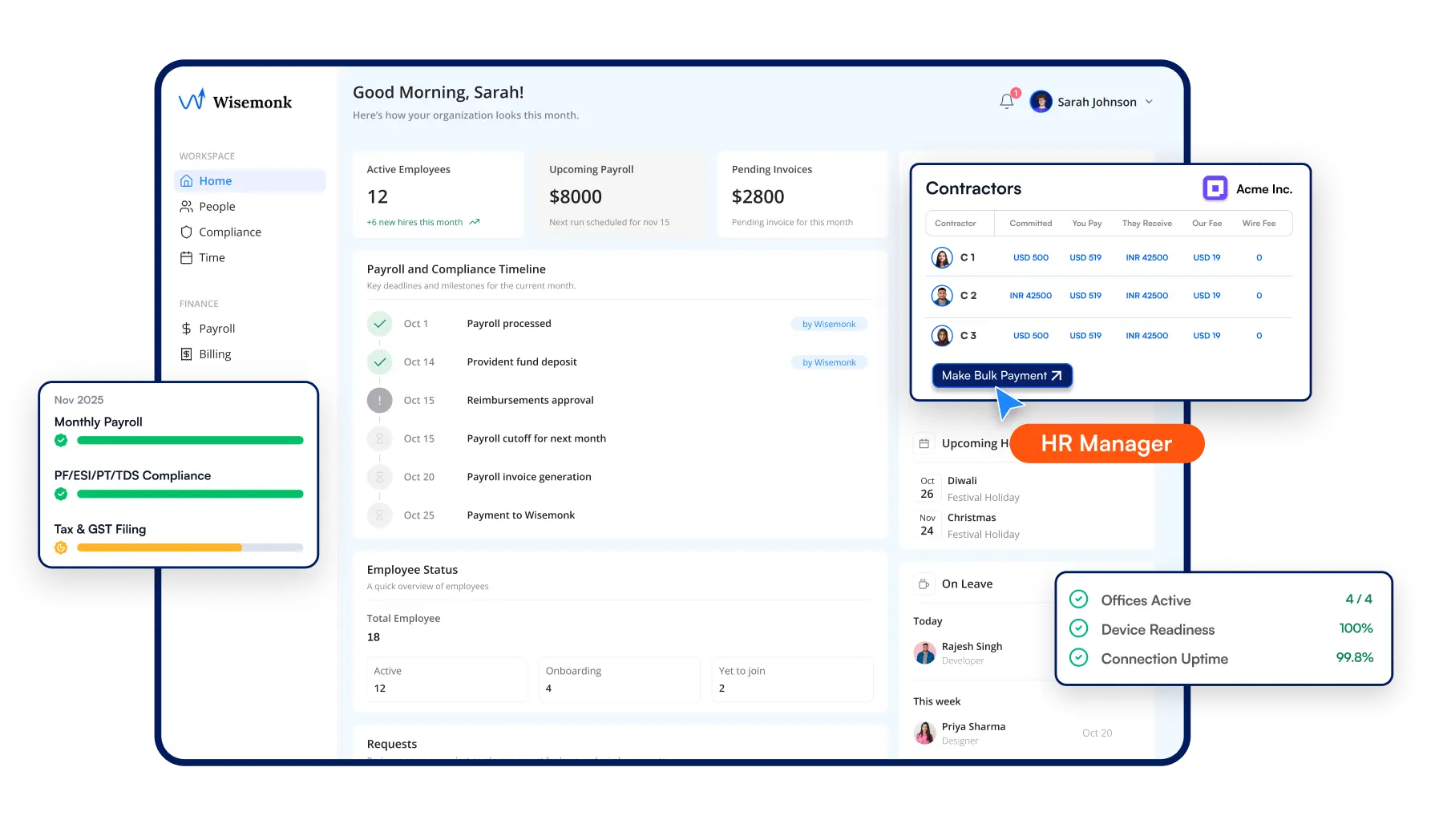
Aber die Preisgestaltung ist nur ein Teil der Gründe, warum über 300 globale Unternehmen uns vertrauen, wenn es um die Verwaltung ihrer Teams in Indien geht. Folgendes erhalten Sie tatsächlich mit Wisemonk EOR:
- Transparente Preisgestaltung ohne versteckte Gebühren. Alle Kosten werden vor der Unterzeichnung klar beschrieben.
- Ein engagierter Personalmanager für Ihre Mitarbeiter, keine Ticketwarteschlange oder ein Chatbot.
- Umfassendes Fachwissen, das nur in Indien verfügbar ist, zu den Themen Compliance auf Bundesstaatsebene, PF, ESI, TDS, Trinkgeld und die Aktualisierungen des Arbeitsgesetzbuches von 2026.
- Steueroptimierung, durch die das Einkommen der Mitarbeiter erhöht wird, was direkt die Mitarbeiterbindung verbessert.
- Schnelles Onboarding, sodass Ihr erster Mitarbeiter innerhalb von Tagen (unter 24 Stunden) und nicht in Monaten live sein kann.
Neben EOR bieten wir auch umfassende Lohn- und Gehaltsabrechnung, Verwaltung von Auftragnehmern, Beschaffung von Ausrüstung, Registrierung des Unternehmens und Office-Setup-Unterstützung für Aufbau von Offshore-Teams oder Global Capability Centers (GCCs) in Indien. Unsere Services sind darauf ausgelegt, jeden Aspekt Ihrer Expansion in Indien zu vereinfachen, sodass Sie sich auf die Skalierung Ihres Unternehmens konzentrieren können, während wir uns um die Komplexität von Compliance, Personalwesen und Betrieb kümmern.
Sind Sie bereit, eine klare, detaillierte Kostenaufschlüsselung für Ihr Team in Indien zu erhalten? Sprechen Sie noch heute mit unseren Einstellungsexperten für Indien!
Häufig gestellte Fragen
Wie viel kostet es, einen eingetragenen Arbeitgeber zu verwenden?
Die Gesamtkosten für den Einsatz eines renommierten Arbeitgebers in Indien beinhalten das Bruttogehalt des Arbeitnehmers, die gesetzlichen Arbeitgeberbeiträge in Höhe von 15 bis 20% zusätzlich zum Gehalt und die EOR-Servicegebühr. Auf Indien spezialisierte Anbieter wie Wisemonk EOR beginnen bei 99 USD pro Mitarbeiter und Monat, während globale Plattformen in der Regel 499 bis 699 USD für dieselbe Stelle verlangen.
Was ist ein Rekordarbeitgeber in Indien?
Ein registrierter Arbeitgeber (Employer of Record, EOR) in Indien ist ein Drittunternehmen, das Ihr in Indien ansässiges Team legal auf Papier beschäftigt und Arbeitsverträge, Gehaltsabrechnungen, gesetzliche Unterlagen und die Einhaltung der indischen Arbeitsgesetze abwickelt. Sie behalten die volle Kontrolle über die tägliche Arbeit des Mitarbeiters, während der EOR alle rechtlichen und administrativen Pflichten des Arbeitgebers übernimmt.
Wie berechnet man die Unternehmenskosten eines Mitarbeiters in Indien?
CTC (Cost to Company) in Indien beinhaltet das Bruttogehalt des Arbeitnehmers zuzüglich aller gesetzlichen Beiträge auf Arbeitgeberseite wie Provident Fund (12% des Grundgehalts), ESI, Trinkgeldzahlungen und alle zusätzlichen Leistungen. Ein einfacher Ausgangspunkt besteht darin, 15 bis 25% zum Bruttogehalt hinzuzurechnen, um die Gesamtkosten des Arbeitgebers zu ermitteln, je nach Dienstalter der Stelle und dem angebotenen Leistungspaket.
Ist EOR in Indien legal?
Ja, die Dienste von Employer of Record (EOR) sind legal und werden in Indien häufig genutzt. EORs agieren als rechtmäßiger Arbeitgeber von Arbeitnehmern und kümmern sich im Namen der Kundenunternehmen um Gehaltsabrechnung, Personalverwaltung, Sozialleistungen und Compliance-Angelegenheiten.
Welche Preismodelle verwenden EOR-Anbieter?
Zu den gängigen EOR-Preismodellen gehören pauschale monatliche Gebühren pro Mitarbeiter, der Prozentsatz des Mitarbeitergehalts und Hybridmodelle, die beide Ansätze kombinieren. Jedes Modell hat seine Vor- und Nachteile und bietet ein unterschiedliches Maß an Vorhersagbarkeit und Skalierbarkeit.
Was ist eine EOR-Gebühr?
Eine EOR-Gebühr ist die monatliche Gebühr, die ein Arbeitgeber von Record Provider für die Verwaltung von Gehaltsabrechnung, Compliance, Arbeitsverträgen und Personalverwaltung in Ihrem Namen in Rechnung stellt. Sie wird entweder als monatliche Pauschalgebühr pro Mitarbeiter oder als Prozentsatz des Bruttogehalts des Mitarbeiters erhoben, der in der Regel zwischen 5 und 15% liegt.
Wie ist die EOR-Preisgestaltung im Vergleich zur Gründung einer juristischen Person in Indien?
EOR-Dienste sind im Allgemeinen kostengünstiger und schneller zu implementieren als die Gründung einer juristischen Person, insbesondere bei kurzfristigen Projekten oder bei der Erprobung neuer Märkte.

.png)











.webp)
.webp)

.webp)
.webp)
.webp)


.webp)
.webp)

.webp)


.webp)

.webp)

.webp)


.webp)



.webp)

.webp)

.webp)
.webp)




.webp)
.webp)

%20Explained.webp)

.webp)



%20(1).webp)
.webp)

%20in%20India%20(2024).webp)

.webp)
.webp)
.webp)


%20(1).webp)



%201.webp)


%20in%20India.webp)
%20(1).webp)


.webp)

.webp)
.webp)
.webp)