.webp)
- Das W-4-Formular bestimmt die Höhe der Bundeseinkommensteuer, die vom Gehaltsscheck eines Mitarbeiters einbehalten wird, auf der Grundlage seines Anmeldestatus, der Anzahl der Angehörigen und anderer Anpassungen, um eine genaue Einbehaltung sicherzustellen
- Im Jahr 2026 enthält das W-4-Formular erweiterte Arbeitsblätter für Abzüge, eine erhöhte Steuergutschrift für Kinder, getrennte Zeilen für Angehörige und andere Gutschriften, ein neues Kontrollkästchen für Steuerbefreiungen sowie aktualisierte Quellensteuertabellen und Berechnungen
- Mitarbeiter füllen das W-4 in fünf Schritten aus: Angabe persönlicher Daten, Angabe mehrerer Jobs, Angabe von Angehörigen, weitere optionale Anpassungen und Unterzeichnung des Formulars zur Bestätigung
- Alle Mitarbeiter müssen bei Aufnahme einer neuen Stelle ein W-4-Formular ausfüllen und sollten es jährlich oder nach wichtigen Veränderungen im Leben wie Heirat, Scheidung oder Geburt eines Kindes überprüfen und aktualisieren, um eine korrekte Quellensteuer zu gewährleisten
Sind Sie verwirrt über die Einbehaltung von W-4 oder die Einhaltung der Gehaltsabrechnungen? Kontaktiere uns.
Entdecke wie Wisemonk wirkungsvolle und zuverlässige Inhalte erstellt.
Stellen Sie sich das vor: Sie haben gerade einen neuen Job bekommen oder ein bedeutendes Lebensereignis durchgemacht. Inmitten der Aufregung (oder des Chaos) wird Ihnen ein W-4-Formular präsentiert. Was ist dieses Dokument und warum ist es wichtig?
Das W-4-Formular oder die Quellensteuerbescheinigung für Mitarbeiter bestimmt, wie viel Bundeseinkommensteuer von Ihrem Gehaltsscheck einbehalten wird. Es geht darum, das richtige Gleichgewicht zu finden — zu wenig einbehalten bedeutet, dass im April Steuern fällig werden, während zu viel bedeutet, dass der Regierung ein zinsloses Darlehen gewährt wird.
Es ist entscheidend, es richtig zu machen. Für Mitarbeiter hilft ein genaues, aktuelles W-4 dabei, Überraschungen bei der Steuererklärung zu vermeiden. Für Arbeitgeber gewährleistet eine angemessene Quellensteuer die Einhaltung der IRS-Vorschriften und verhindert Strafen.
In diesem Artikel werden wir den Zweck des W-4 untersuchen, hervorheben, was sich für 2026 geändert hat, und dir zeigen, wie du ihn richtig ausfüllst. Denn seien wir ehrlich — niemand möchte unvorbereitet durch die Steuersaison gehen.
Das W-4-Formular, das offiziell als Quellensteuerbescheinigung für Mitarbeiter bekannt ist, erfüllt einen wichtigen Zweck. Arbeitnehmer verwenden es, um Arbeitgebern anhand von Faktoren wie Anmeldestatus, Angehörigen und anderen Anpassungen mitzuteilen, wie viel Bundeseinkommensteuer von jedem Gehaltsscheck einzubehalten ist. Das IRS verlangt von allen Mitarbeitern, dass sie ein W-4-Formular ausfüllen, damit der korrekte Steuerbetrag das ganze Jahr über einbehalten wird.
Was ist der Zweck des W-4-Formulars im Jahr 2026? [TOC=Zweck des W-4-Formulars]
Der Hauptzweck des W-4-Formulars bleibt derselbe: sicherzustellen, dass Arbeitgeber die korrekte Bundeseinkommensteuer einbehalten, damit die Arbeitnehmer weder Bundeseinkommensteuer schulden noch über ihre tatsächliche Steuerpflicht hinaus zu viel bezahlen.
Zu den Hauptzwecken des W-4-Formulars im Jahr 2026 gehören:
- Bereitstellung von Informationen über den Anmeldestatus eines Arbeitnehmers, Angehörige und andere Anpassungen zur Berechnung des entsprechenden Betrags der einzubehaltenden Bundeseinkommensteuer
- Unterstützung der Mitarbeiter dabei, bei der Einreichung ihrer jährlichen Steuererklärung keine hohen Steuerbeträge zu schulden oder eine erhebliche Rückerstattung zu erhalten
- Sicherstellung, dass das Quellensteuersystem der tatsächlichen Steuerschuld des Mitarbeiters und den geltenden Steuersätzen genau entspricht
- Ermöglicht es den Mitarbeitern, ihre Quellensteuer an Veränderungen ihrer persönlichen oder finanziellen Situation anzupassen
- Aufrechterhaltung der Einhaltung der IRS-Vorschriften und Vermeidung möglicher Strafen für Arbeitnehmer und Arbeitgeber
- Wir ermöglichen es Arbeitgebern, ihr Gehaltsabrechnungssystem zu verwalten und sicherzustellen, dass die Mitarbeiter die genaue Steuereinbehaltung rechtzeitig abschließen
Was hat sich am W-4-Formular 2026 geändert? [toc=2026 Aktualisierungen]
Das W-4-Formular wurde für das Steuerjahr 2026 aufgrund des One Big Beautiful Bill Act (OBBBA) mehrfach geändert. Diese Aktualisierungen zielen darauf ab, die Genauigkeit der Einbehaltung der Bundeseinkommensteuer zu verbessern und das Formular an die neuen Steuerbestimmungen anzupassen. Hier sind die wichtigsten Änderungen, die Sie beachten sollten:
- Erweitertes Arbeitsblatt zu Abzügen mit neuen Einträgen für qualifizierte Tipps, Überstundenvergütung und Zinsen für Pkw-Darlehen
- Höhere Steuergutschrift für Kinder von 2.000$ bis 2.200$ pro qualifiziertem Kind
- Aufteilung von Schritt 3 in die Zeilen 3 (a) für die Beantragung von Angehörigen und 3 (b) für die Beantragung anderer Kredite
- Neues Kontrollkästchen für den Steuerbefreiungsstatus in Schritt 1 (c), wodurch die Notwendigkeit ersetzt wird, „Exempt“ manuell zu schreiben
- Aktualisierte Steuertabellen und Quellenberechnungen um den von der OBBBA eingeführten Änderungen Rechnung zu tragen
Es ist wichtig, dass sich sowohl Arbeitnehmer als auch Arbeitgeber mit diesen Änderungen am W-4-Formular für das Steuerjahr 2026 vertraut machen.
Arbeitnehmer sollten ihre W-4-Formulare überprüfen und aktualisieren, um eine korrekte Quelleneinbehaltung zu gewährleisten, während Arbeitgeber ihre Gehaltsabrechnungssysteme aktualisieren müssen, um den neuen Formularen und Berechnungen Rechnung zu tragen.
Wie füllt man jeden Schritt des W-4 aus? [TOC = Wie füllt man aus]
Durch unsere praktische Arbeit zur Unterstützung von Unternehmen bei der Gehaltsabrechnung und Einhaltung der Vorschriften funktioniert das W-4-Formular so, um Ihren Steuereinbehalt zu ermitteln.
Das W-4-Formular ist unterteilt in fünf Schritte, die jeweils einem bestimmten Zweck dienen, um eine genaue Einbehaltung der Bundeseinkommensteuer sicherzustellen. Lassen Sie uns jeden Schritt untersuchen, um seine Rolle zu verstehen:
Schritt 1: Persönliche Daten
Im ersten Schritt geben Sie Ihre wichtigsten persönlichen Daten an, darunter Ihren vollständigen Namen, Ihre Adresse, Ihre Sozialversicherungsnummer (SSN) und Ihren Anmeldestatus (ledig, getrennt verheiratet, gemeinsam verheiratet oder Haushaltsvorstand).
Schritt 2: Mehrere Jobs oder mehrere Jobs des Ehepartners
Als Nächstes geben Sie an, ob Sie mehr als einen Job haben oder ob Sie verheiratet sind, die Einreichung gemeinsam einreichen und Ihr Ehepartner auch arbeitet, und Sie können den Schätzer verwenden unter www.irs.gov/W4App oder das Arbeitsblatt für mehrere Jobs für zusätzliche Genauigkeit.
Schritt 3: Angehörige in Anspruch nehmen
Wenn Ihr Einkommen 200.000 USD oder weniger beträgt (400.000 USD oder weniger, wenn Sie einen gemeinsamen Antrag stellen), können Sie in diesem Schritt verlangen, dass Angehörige Ihren Steuereinbehalt reduzieren, indem Sie die Anzahl der berechtigten Kinder unter 17 Jahren mit 2.000 USD und anderer unterhaltsberechtigter Personen mit 500 USD multiplizieren.
Schritt 4: Weitere Anpassungen (optional)
Dieser Abschnitt ermöglicht zusätzliche Anpassungen:
- 4 (a) Sonstige Einnahmen: Zusätzliche Einnahmen wie Arbeitslosengeld oder Einkommen aus selbständiger Tätigkeit melden
- 4 (b) Abzüge: Machen Sie andere Abzüge als den Standardabzug geltend, um Ihren Steuereinbehalt zu reduzieren (siehe Arbeitsblatt Abzüge auf Seite 3 des W-4-Formulars)
- 4 (c) Zusätzliche Einbehaltung: Zusätzliche Einbehaltung pro Zahlungsperiode beantragen
Wenn Sie diesen Schritt ausführen, können Sie Ihre Steuereinbehaltung besser an Ihre Steuersituation anpassen.
Schritt 5: Hier unterschreiben
Schließlich unterschreiben und datieren Sie das Formular, um es zu validieren, da das W-4 ohne Ihre Unterschrift nicht gültig ist.
Indem Sie jeden Schritt des W-4-Formulars genau ausfüllen, stellen Sie Ihrem Arbeitgeber die Informationen zur Verfügung, die für die Berechnung des entsprechenden Betrags der Bundeseinkommensteuer erforderlich sind, der von Ihrem Gehaltsscheck einbehalten werden muss. So stellen Sie sicher, dass Ihr Einbehalt Ihrer tatsächlichen Steuerschuld genau entspricht.
Was ist der Unterschied zwischen einem W-4 und einem W-2? [TOC=W-4 gegen W-2]
Nachdem wir zahlreiche Unternehmen bei der Lohn- und Gehaltsabrechnung und der Einhaltung der Steuervorschriften unterstützt haben, haben wir festgestellt, dass es sowohl für Arbeitgeber als auch für Arbeitnehmer von entscheidender Bedeutung ist, den Unterschied zwischen den Formularen W-4 und W-2 zu verstehen.
- Das W-4 wird von neuen Mitarbeitern zu Beginn der Beschäftigung abgeschlossen, um zu bestimmen, wie viel Bundeseinkommensteuer von jeder Lohnperiode einzubehalten ist, basierend auf dem Anmeldestatus, Angehörigen und anderen Anpassungen. Der Arbeitgeber verwendet diese Informationen, um den entsprechenden Quellensteuerbetrag zu berechnen.
- Das W-2 wird dem Arbeitnehmer zum Jahresende vom Arbeitgeber ausgestellt und fasst sein Einkommen und die Höhe der im Laufe des Jahres einbehaltenen Steuern zusammen. Die Genauigkeit des W-2 hängt von den Informationen auf dem W-4 ab.
Die Arbeitgeber sind für die Erhebung von W-4, die Berechnung der Quellensteuer und die Generierung von W-2 verantwortlich. Verwandte Formulare, wie das W-4P für Renten und W-4R für unregelmäßige Zahlungen, dienen ähnlichen Zwecken zur Bestimmung des Steuereinbehalts in bestimmten Situationen.
Immer noch verwirrt zwischen den Steuerformularen für Arbeitnehmer? Lesen Sie unseren ausführlichen Leitfaden unter W-9 gegen W-2 um Klassifizierungs-, Zurückbehaltungs- und Compliance-Risiken zu verstehen.
Wann sollten Sie Ihr W-4 aktualisieren? [TOC = Wann muss aktualisiert werden]
Im Rahmen unserer kontinuierlichen Arbeit, Unternehmen bei der Einhaltung von Gehaltsabrechnungen und Steuervorschriften zu unterstützen, haben wir aus erster Hand erkannt, wie wichtig es ist, die W-4-Formulare auf dem neuesten Stand zu halten. Durch die Überprüfung und Aktualisierung Ihres W-4-Formulars wird sichergestellt, dass die einbehaltene Bundeseinkommensteuer korrekt ist, sodass Sie zum Steuerzeitpunkt keine Steuern schulden oder eine unerwartete Steuerrückerstattung erhalten.
Verschiedene Lebensereignisse sollten eine W-4-Überprüfung auslösen, da sie Ihre Steuersituation erheblich beeinflussen können:
- Heiraten oder sich scheiden lassen
- Aufnahme eines neuen Kindes durch Geburt oder Adoption
- Einen neuen Job beginnen, den bestbezahlten Job wechseln oder ein zusätzliches Einkommen erzielen
- Ihr Ehepartner beginnt oder beendet die Arbeit
- Erhalt eines großen Bonus oder einer Erbschaft
- Beantragung von Steuergutschriften oder Abzügen, die Sie zuvor noch nicht gewährt haben
Die IRS empfiehlt, Ihr W-4 jährlich zu überprüfen, um sicherzustellen, dass die Quellensteuer korrekt ist, auch wenn Sie keine wesentlichen Veränderungen in Ihrem Leben erlebt haben.
Mitarbeiter, die den Ausnahmestatus beantragen, müssen bis zum 15. Februar eines jeden Jahres ein neues W-4 einreichen. Arbeitgeber müssen die überarbeiteten W-4 spätestens in der ersten Gehaltsabrechnungsperiode einführen, die mehr als 30 Tage nach Erhalt endet. Teilen Sie Ihrem Arbeitgeber die W-4-Änderungen umgehend mit, um steuerliche Überraschungen zu vermeiden.
Wenn Sie sich nicht sicher sind, wie Sie Ihren W-4 anpassen sollen, wenden Sie sich an einen Steuerberater oder verwenden Sie das Tool zur Schätzung der Steuereinbehaltung des IRS.
Aber was sind die Konsequenzen, wenn Ihre W-4-Einbehaltung falsch ist? Lassen Sie uns im nächsten Abschnitt die möglichen Auswirkungen untersuchen.
Was passiert, wenn Ihre W-4-Quellensteuer falsch ist? [TOC=Was passiert, wenn falsch]
Eine falsche W-4-Quellensteuer kann erhebliche Auswirkungen sowohl auf Arbeitnehmer als auch auf Arbeitgeber haben. Es ist ein häufiges Problem, das zu finanziellen Belastungen und Compliance-Problemen führen kann, aber es ist auch eines, das mit den richtigen Kenntnissen und Tools leicht vermieden werden kann.
Wenn Ihre W-4-Einbehaltung falsch ist, können Sie Folgendes erwarten:
- Übermäßiges Zurückhalten: Sie erhalten zum Steuerzeitpunkt eine höhere Rückerstattung, aber das ganze Jahr über erhalten Sie weniger Geld zum Mitnehmen. Es ist, als würde man der Regierung ein zinsloses Darlehen geben.
- Untereinbehaltung: Bei der Einreichung Ihrer Steuererklärung können Sie mit einer erheblichen Steuerbelastung rechnen und möglicherweise mit Unterzahlungsstrafen rechnen, wenn Sie Steuern in Höhe von mehr als 1.000 USD schulden und Ihre Quellensteuer und Ihre geschätzten Steuerzahlungen weniger als 90% Ihrer Steuerschuld für das laufende Jahr oder 100% der Verbindlichkeiten des Vorjahres abdecken (110%, wenn Ihr AGI 150.000 USD übersteigt).
- Strafen: Das Einreichen einer W-4 ohne angemessene Grundlage, die zu einer unzureichenden Einbehaltung führt, kann zu einer Strafe von 500 USD für den Mitarbeiter führen.
Um Ihre W-4-Einbehaltung genau richtig zu machen, bietet die IRS ein Online-Tool namens Tax Withholding Estimator an, mit dem Sie die Zahlen auf der Grundlage Ihrer individuellen Situation ermitteln können. Es ist, als hätten Sie einen Steuerberater in der Tasche, ohne den hohen Preis.
Wenn Sie feststellen, dass Ihr W-4 ausgeschaltet ist, senden Sie Ihrem Arbeitgeber so schnell wie möglich ein aktualisiertes Formular. Sie müssen diese Änderungen spätestens in der ersten Gehaltsabrechnungsperiode in Kraft setzen, die 30 oder mehr Tage nach Erhalt Ihres neuen Formulars endet.
Können Sie den Ausnahmestatus für den W-4 beantragen? [TOC=Status „Ausgenommen“]
Die meisten Mitarbeiter kommen zwar nicht für den Ausnahmestatus in Frage, aber es ist wichtig, dass Sie die Bedingungen und Anforderungen für die Beantragung einer Befreiung auf Ihrem W-4-Formular kennen.
Um den Ausnahmestatus zu beantragen, müssen Sie die beiden folgenden Bedingungen erfüllen:
- Sie hatten im Vorjahr keine Bundeseinkommensteuerpflicht, was bedeutet, dass Sie keine Steuern schuldeten oder dass Ihnen alle einbehaltenen Steuern erstattet wurden.
- Sie gehen davon aus, dass Sie im laufenden Jahr keine Bundeseinkommensteuerpflicht haben werden, was bedeutet, dass Sie davon ausgehen, keine Steuern zu zahlen oder eine Rückerstattung aller einbehaltenen Steuern zu erhalten.
Wenn Sie diese Kriterien erfüllen, können Sie den Ausnahmestatus auf Ihrem W-4 beantragen, indem Sie auf dem W-4-Formular 2023 in das Feld unter Schritt 4 (c) „AUSGENOMMEN“ schreiben.
Beachten Sie, dass eine Ausnahme nur für ein Kalenderjahr gültig ist und jährlich erneuert werden muss, indem Sie bis zum 15. Februar ein neues W-4-Formular einreichen.
Wenn ein Arbeitnehmer nicht fristgerecht eine neue Steuerbefreiung W-4 einreicht, muss der Arbeitgeber wieder Quellensteuern einbehalten, als ob es sich bei dem Arbeitnehmer um einen einzigen Antragsteller ohne weitere Anpassungen handeln würde.
Es ist wichtig zu beachten, dass die meisten Mitarbeiter keinen Anspruch auf einen Ausnahmestatus haben.
Als Arbeitgeber ist es wichtig, genaue Aufzeichnungen über die W-4-Formulare Ihrer Mitarbeiter zu führen und Ihr Gehaltsabrechnungssystem umgehend zu aktualisieren, wenn ein Mitarbeiter den Ausnahmestatus beantragt oder ein neues W-4-Formular einreicht, um Compliance-Probleme und mögliche Strafen zu vermeiden.
Wie kann Wisemonk das W-4-Management für Arbeitgeber vereinfachen? [TOC=Wie Wisemonk hilft]
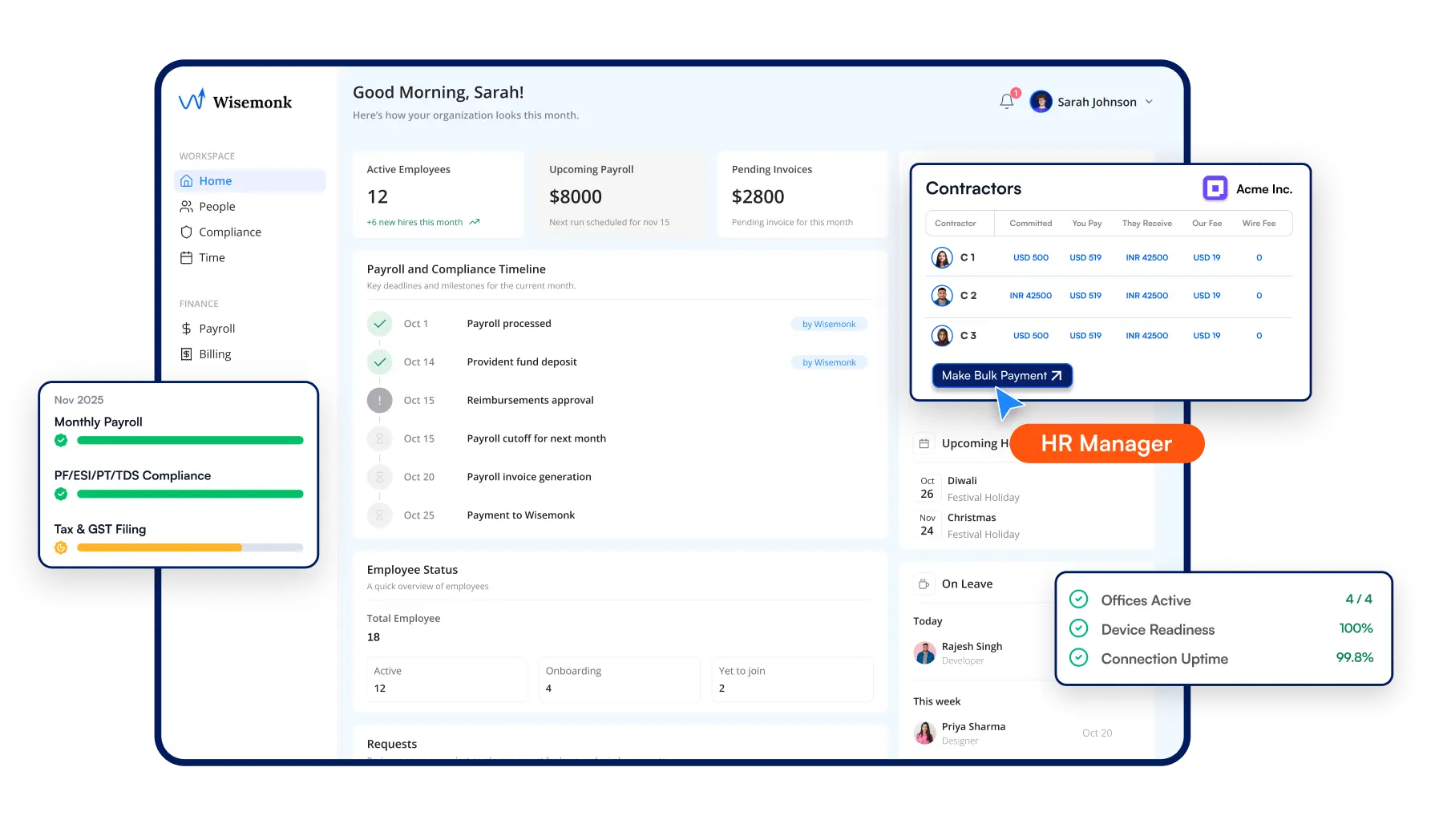
Weiser Mönch ist ein vertrauenswürdiger Rekordarbeitgeber (EOR) das hilft globalen Unternehmen Mitarbeiter einstellen, bezahlen und verwalten reibungslos, ohne eine lokale Einheit einzurichten. Unsere Spezialisten wickeln Gehalts- und Steuerabrechnungen präzise ab und sorgen so für die vollständige Einhaltung der Arbeits- und Steuergesetze.
So unterstützen wir dein Team:
- Präzise Klassifizierung von Arbeitern: Wir helfen bei der korrekten Klassifizierung von Arbeitnehmern, um sicherzustellen, dass das richtige Formular (W-9 oder W-2) verwendet wird, sodass Strafen bei einer Fehlklassifizierung vermieden werden.
- Steuereinbehaltung und Berichterstattung: Wir verwalten die Einkommensteuereinbehaltung und reichen in Ihrem Namen W-2- und 1099-Formulare beim IRS ein.
- Lösungen für globale Gehaltsabrechnungen: Wir kümmern uns um die Selbstständigkeitssteuer, die FICA-Steuer und andere Gehaltsabrechnungsanforderungen für Mitarbeiter und Auftragnehmer.
- Kontinuierlicher Compliance-Support: Wir bieten kontinuierliche Unterstützung, damit Ihr Unternehmen den sich ständig ändernden IRS-Vorschriften entspricht.
Wir haben erfolgreich über 2.000 Mitarbeiter in Teams integriert und das Vertrauen von mehr als 300 Unternehmen weltweit gewonnen. Obwohl wir in Indien konkurrenzlos sind, expandieren wir auch schnell in wichtigen Märkten wie den USA, Großbritannien und darüber hinaus. Wisemonk ist Ihr vertrauenswürdiger Partner für die Einstellung von Mitarbeitern in Indien und die Unterstützung des globalen Wachstums.
Sind Sie bereit, die Compliance- und Gehaltsabrechnung zu vereinfachen? Überlassen Sie Wisemonk Ihre Lohn- und Gehaltsabrechnung und die Einhaltung der Steuervorschriften mit Zuversicht. Buchen Sie noch heute eine kostenlose Beratung.
Häufig gestellte Fragen
Was sagt das Formular W-4 einem Arbeitgeber?
Das Formular W-4 teilt einem Arbeitgeber mit, wie viel Bundeseinkommensteuer er vom Gehaltsscheck eines Arbeitnehmers einbehalten muss. Es enthält Informationen wie den Anmeldestatus, Angehörige, mehrere Jobs und andere Quellenanpassungen, sodass die Gehaltsabrechnung die korrekte Bundeseinkommensteuer berechnen kann, die gemäß den IRS-Regeln einbehalten wird.
Müssen Mitarbeiter jedes Jahr ein neues Formular W-4 ausfüllen?
Mitarbeiter müssen nicht jedes Jahr einen neuen W-4 einreichen, es sei denn, sie beantragen eine Befreiung von der Quellensteuer. Es wird jedoch empfohlen, ihn jährlich zu überprüfen, insbesondere nach Änderungen des Anmeldestatus, der Angehörigen, des Einkommens oder der persönlichen oder finanziellen Situation, die sich auf die Steuerpflicht auswirken.
Wie oft können Mitarbeiter ihr Formular W-4 in einem Jahr anpassen?
Mitarbeiter können ihr W-4 im Laufe des Jahres so oft wie nötig aktualisieren. Änderungen sollten nach Ereignissen wie dem Beginn einer neuen Stelle, mehreren Arbeitssituationen, zusätzlichem Einkommen oder Verschiebungen der Steuergutschriften vorgenommen werden, um eine möglichst genaue Quelleneinbehaltung zu gewährleisten und Steuerschulden zu vermeiden.
Was ist der Unterschied zwischen einem Formular W-4 und einem Formular W-4P?
Das Formular W-4 gilt für Löhne und teilt den Arbeitgebern mit, wie viel Bundeseinkommensteuer einzubehalten ist. Das Formular W-4P gilt für Renten und Renten. Beide Formulare helfen bei der Bestimmung des Steuereinzugsstatus, gelten jedoch gemäß den Vorschriften des Internal Revenue Service für unterschiedliche Einkommensquellen.
Warum ist es wichtig, das W-4-Formular regelmäßig zu überprüfen und zu aktualisieren?
Die Aktualisierung eines W-4 gewährleistet eine genaue Quelleneinbehaltung und verringert das Risiko von Strafen bei Unterzahlung oder unerwarteter Steuerabrechnungen. Änderungen der finanziellen Situation, Steuergutschriften, der Status einer gemeinsamen Einreichung oder mehrere Jobs können sich darauf auswirken, wie viel Steuern Sie schulden und wie hoch Ihre mögliche Steuerrückerstattung ist.
Was ist der Unterschied zwischen einem W-2 und einem W-4?
Ein W-4 wird von Mitarbeitern ausgefüllt, um die Einkommensteuereinbehaltung des Bundes zu ermitteln. Ein W-2 wird von den Arbeitgebern nach Jahresende ausgestellt und enthält die Gesamtlöhne, die einbehaltene Bundeseinkommensteuer, die Sozialversicherungs- und Medicare-Steuern, die im laufenden Jahr gezahlt wurden.
Was passiert, wenn ich ein W-4 nicht ausfülle?
Wenn ein neuer Arbeitnehmer keinen W-4 einreicht, müssen Arbeitgeber die Bundeseinkommensteuer einbehalten, als ob der Arbeitnehmer ledig wäre, ohne dass Anpassungen vorgenommen werden. Dieses standardmäßige Quellensteuersystem kann zu einem höheren Steuereinbehalt, einem geringeren Nehmerlohn oder einer höheren Steuerrückerstattung bei der Besteuerung führen.


.png)











.webp)
.webp)


.webp)
.webp)
.webp)


.webp)
.webp)

.webp)


.webp)


.webp)

.webp)


.webp)


.webp)


.webp)

.webp)

.webp)




.webp)
.webp)

%20Explained.webp)

.webp)


%20(1).webp)

.webp)

%20in%20India%20(2024).webp)

.webp)
.webp)
.webp)


%20(1).webp)




%201.webp)


%20in%20India.webp)


%20(1).webp)


.webp)

.webp)
.webp)
.webp)